22% Revenue Growth Last Year... U.S. Sanctions Proved Ineffective
Meng Wanzhou, Once Detained in Canada, Vows to Continue Investments and Lead in the AI Era
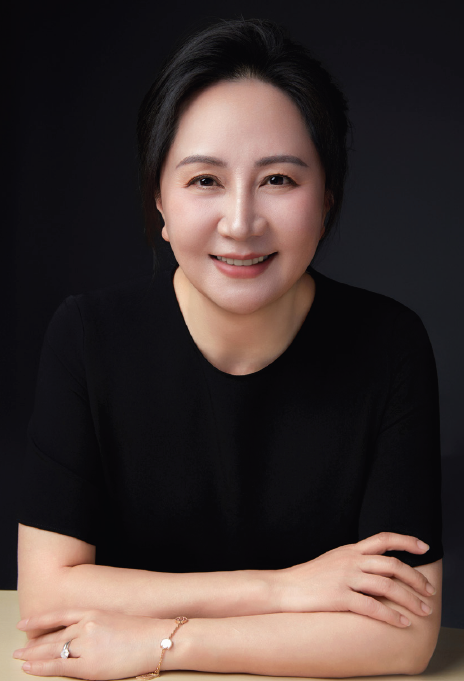 Meng Wanzhou, Huawei's rotating chairwoman. She was detained in Canada for an extended period by the United States and later released. Photo by Huawei
Meng Wanzhou, the rotating chairwoman of Chinese information technology company Huawei, emphasized that U.S. sanctions have not brought Huawei down.
On the 31st of last month, through the 2024 Huawei Annual Report greeting, she showcased the achievements made in preparation for the era of artificial intelligence (AI).
According to her expression, the snow on the mountaintop can be interpreted as U.S. regulations, and the spring breeze as Huawei. Chairwoman Meng endured the hardship of being detained in Canada for three years by the U.S. government before being released and returning home in 2021. She is a symbolic figure in the U.S.-China technology conflict. She is the daughter of Huawei founder Ren Zhengfei.
Despite being blocked by the West due to U.S. sanctions, Huawei's revenue last year increased by 22.4% compared to the previous year, closely approaching the 2020 revenue level before U.S. regulations. In the smartphone sector, it also reclaimed the number one position in China.
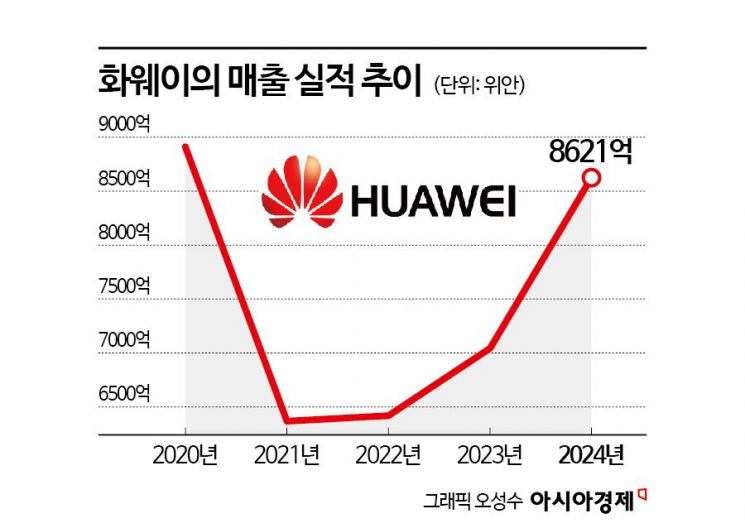
Huawei has achieved results in most of its businesses based on AI, including smartphones, telecommunications equipment, AI semiconductors, and autonomous driving systems. Although U.S. regulations began before the AI era fully took off, Huawei reversed the situation in the AI era.
Meng also emphasized that U.S. sanctions actually helped them develop further. She stated, "All progress is hard-earned. I thank all our global customers who have empowered us to keep moving forward." Since exports to the Western world have been blocked, Huawei has focused on developing new markets both domestically and abroad, signaling its intention to cherish newly secured customers and supply chains.
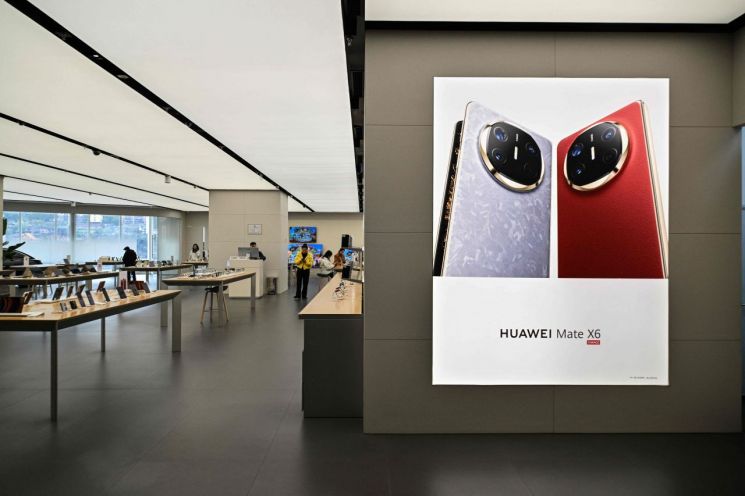
Chairwoman Meng said, "The changes brought by AI are astonishing and spreading rapidly," and expressed confidence that "demand for AI computing power will surge over the next decade, which will provide new opportunities for Huawei."
She emphasized Huawei's stance of "not pursuing short-term trends or market bubbles but focusing on building solid foundational technologies and continuous innovation." Meng further revealed plans to "expand long-term and strategic investments in foundational technology fields over the next three years despite global economic uncertainties," in preparation for AI competition with the U.S. Last year, Huawei invested 20.8% of its revenue in research and development (R&D), more than twice the level of Samsung Electronics.
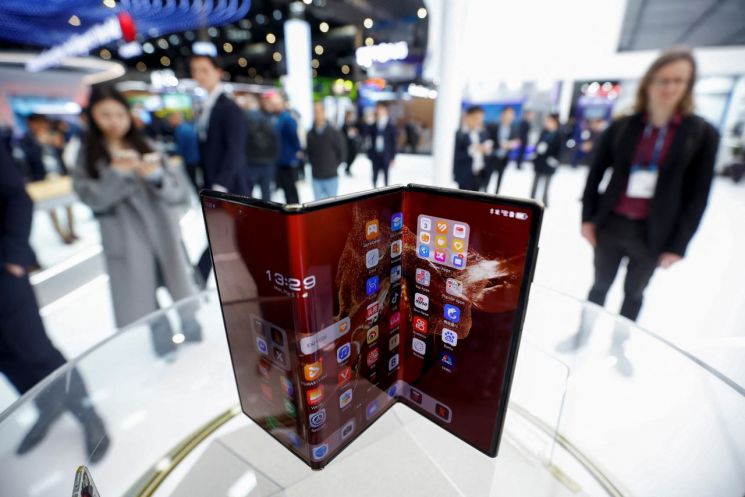
Chairwoman Meng stated, "A great tree grows from a small sapling," and pledged to dedicate efforts to securing fertile soil for the blossoming of the computing industry. This is tantamount to a declaration of continued large-scale investment.
Huawei’s graphics processing unit (GPU) Ascend is known to have served as the foundation for the development of DeepSeek’s inference AI model R1. China is almost the only country in the world developing GPUs independently to counter the U.S.
Chairwoman Meng also revealed that Ascend and the Kunpeng central processing unit (CPU) for servers have attracted 6.65 million developers and over 8,500 partners. This number exceeds the 1.5 million CUDA developers in China mentioned by Jensen Huang, CEO of NVIDIA, in January.
© The Asia Business Daily(www.asiae.co.kr). All rights reserved.
![Clutching a Stolen Dior Bag, Saying "I Hate Being Poor but Real"... The Grotesque Con of a "Human Knockoff" [Slate]](https://cwcontent.asiae.co.kr/asiaresize/183/2026021902243444107_1771435474.jpg)


















