Two Out of Three Infants Under One Year at Risk of Infection...
The High 'Price Barrier'
Galicia, Spain, Which Introduced NIP, Sees 82% Drop in Infant Hospitalization Rates
Although the respiratory syncytial virus (RSV) preventive antibody injection 'Beyfortus,' which can be administered to all newborns and infants under 12 months of age, has been launched, the cost of up to 1.2 million KRW is becoming an obstacle to widespread vaccination. Accordingly, some argue that it should be considered for inclusion in the National Immunization Program (NIP) to address social health inequalities.
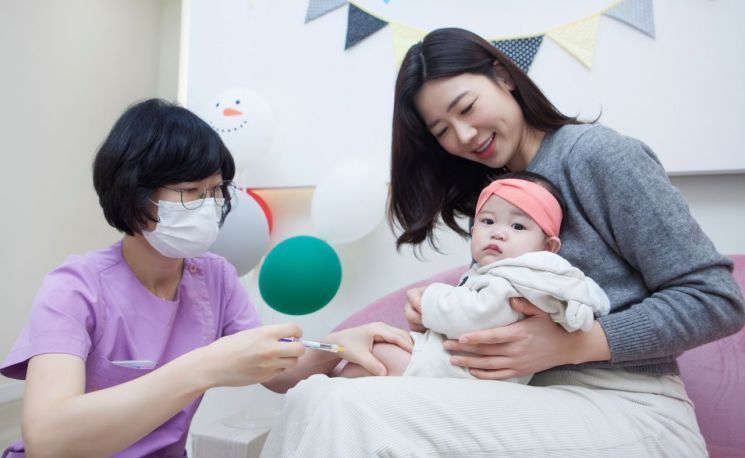 An 8-month-old infant is receiving an RSV antibody injection (Beyfortus) at a hospital in Dongdaemun-gu, Seoul. SK Bioscience
According to Sanofi Korea on the 1st, the average cost per dose of Beyfortus is about 600,000 KRW. Beyfortus is typically administered immediately after birth to infants born between October and March, the RSV season. On the other hand, infants born outside the season can receive the vaccination around October, just before the RSV season begins. Meanwhile, children under 24 months who belong to the high-risk group for RSV can receive an additional dose timed with the second RSV season.
RSV is a type of acute respiratory virus with high transmissibility, infecting two out of three infants under one year old. Unlike adults, who usually experience only cold symptoms, newborns and infants may require hospitalization. It is considered one of the leading causes of hospitalization in infants and young children because it causes respiratory infections, including common pneumonia and bronchiolitis. Especially since there is currently no treatment for RSV, the importance of prevention is further emphasized.
Beyfortus, launched by Sanofi on February 5, is the first preventive antibody injection in Korea that can be administered to all infants and young children. It is characterized by being available to all newborns and infants during the season regardless of underlying health conditions. Previously, RSV preventive antibody injections were only available to infants such as preterm babies and those with congenital heart disease.
A Spanish study published in the medical journal The Lancet revealed that hospitalization due to RSV decreased by 82% in infants under six months who received Beyfortus compared to those who did not.
Overseas, government support for Beyfortus vaccination has already begun. Galicia, Spain, became the first in the world in 2023 to include Beyfortus in the NIP. The Australian state of Miles has allowed free Beyfortus vaccination for all infants under eight months during the RSV season since April 15 last year. The United States has also included Beyfortus in the Vaccines for Children (VFC) program targeting low-income families.
Professor Yoon Ki-wook, an infectious disease specialist in the Department of Pediatrics at Seoul National University College of Medicine, said, "Infectious diseases pose a risk of spreading beyond individuals to society as a whole, so prevention is paramount." He added, "If infection prevention options for infants remain in the out-of-pocket market, low-income families may forgo vaccination, which can lead to social health inequalities." He further suggested, "Active policy changes by the government are required to protect the health of infants and reduce the burden on families through vaccination."
© The Asia Business Daily(www.asiae.co.kr). All rights reserved.

















