Sharing Pension Receipts Since 2001 to Criticize the System
"Excessive Fiscal Burden on Generations Yet to Be Born"
Lee Jun-seok, a lawmaker from the Reform New Party, criticized the structure of the National Pension, saying, "If welfare policies are implemented that shift future tax and fiscal burdens onto the next generation to gain current votes, it is no different from a Ponzi scheme." On the 30th, Lee mentioned a photo circulating on the internet related to National Pension receipts on his social media (SNS), stating, "A person who started receiving pension benefits in 2001 has received a total pension amount of about 118 million KRW over 23 years as of January 2024, but the amount this person paid in pension premiums was only about 6.57 million KRW over 99 months."
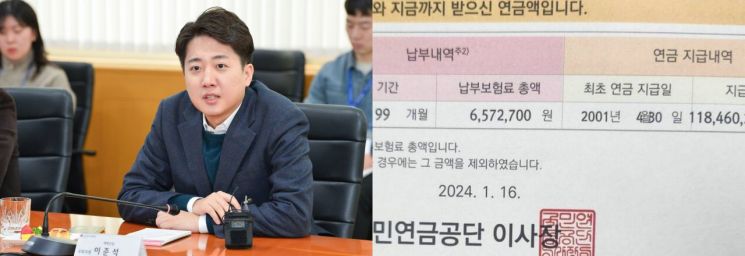 Lee Jun-seok, a member of the Reform New Party, criticized the National Pension structure, saying, "If welfare policies are implemented by shifting future tax and fiscal burdens to gain current votes, it is no different from a Ponzi scheme." Lee Jun-seok Facebook
He continued, "This result far exceeds a simple rate of return and inflation rate," adding, "In 1993, when this person started paying into the pension, the price of a bottle of soju was 377 KRW; in 2001, when pension receipt began, it was 700 KRW; and currently, it is about 1,370 KRW. Prices have roughly quadrupled, but the pension amount received is 20 times the amount paid." Lee compared the current National Pension Act amendment to a 'Ponzi scheme.'
He argued, "If welfare policies are implemented that shift future tax and fiscal burdens onto children who have not yet been born or who cannot exercise political rights to gain current votes, it is no different from a Ponzi scheme." The Ponzi scheme Lee referred to is a method of paying returns to investors using the money invested by new investors without generating any actual profit. Multi-level financial fraud cases, commonly known as 'pyramid schemes,' are typical examples.
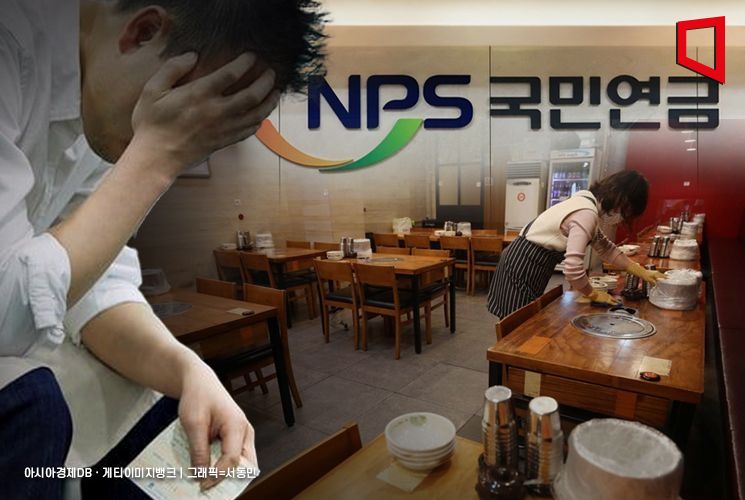 Finally, he warned, "In the future, South Korea will enter a typical jar-shaped population structure, making it difficult for future generations at the top to bear the pension burden of the older generation," adding, "This jar will inevitably break." He also emphasized, "Any welfare can only have legitimacy when it is based on justice and sustainability," and raised his voice, saying, "In the current serious low birthrate situation, it is irresponsible to impose excessive financial burdens on generations that have not yet been born." Asia Economy
Lee stated, "The design of the National Pension system was based on the optimistic assumption that birth rates would remain high over the long term and simultaneously included some income redistribution functions within the pension system," adding, "However, this income redistribution function should only apply among people living in the same era to be fair. A structure that excessively draws on the income of future generations to guarantee the retirement of the current generation is neither just nor fair."
Finally, he warned, "South Korea will enter a typical jar-shaped population structure, making it difficult for future generations to bear the pension burden of the older generation," adding, "This jar will inevitably break." He emphasized, "Any welfare can only have legitimacy when it is based on justice and sustainability," and raised his voice, saying, "In the current serious low birthrate situation, shifting excessive fiscal burdens onto generations not yet born is irresponsible."
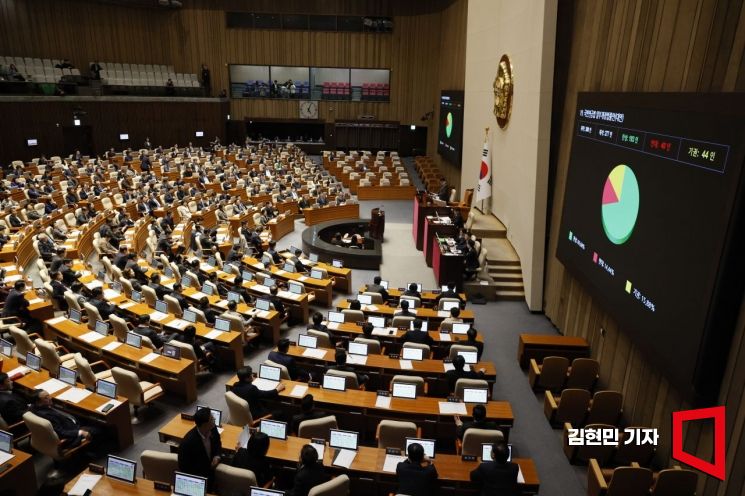 Meanwhile, recently, the ruling and opposition parties agreed on a revision to the National Pension Act (parameter reform plan) that includes raising the insurance premium rate, which corresponds to the "money paid," from the current 9% of monthly income to 13% starting in 2026, and increasing the income replacement rate, or the "money received," from 41.5% to 43%. This agreement passed the National Assembly plenary session on the 20th, but 83 out of 277 members present voted against or abstained. Photo by Kim Hyun-min
Meanwhile, recently, the ruling and opposition parties agreed on an amendment to the National Pension Act (parameter reform plan) that raises the insurance premium rate, which corresponds to the 'money paid,' from the current 9% of monthly income to 13% starting in 2026, and increases the income replacement rate, which corresponds to the 'money received,' from 41.5% to 43%. This agreement passed the National Assembly plenary session on the 20th, but 83 out of 277 members present voted against or abstained. The reform plan has faced strong opposition, especially among young people, amid criticism that the younger generation will bear a relatively greater burden.
© The Asia Business Daily(www.asiae.co.kr). All rights reserved.



















