Three Out of Ten Workers Aged 55 and Older Earn Below Minimum Wage
Korea Labor Institute: "Policy Support Needed for Elderly Workers"
Among wage workers aged 55 and older, the proportion of 'low-wage workers' earning below the minimum wage was found to be as high as 30%.
The Korea Labor Institute released a report titled "The Reality of Low-Income Elderly Labor and Policy Responses" on the 30th.
The report analyzed the status of elderly low-wage workers, including wages, and the entry paths into low-income jobs for the elderly, based on the Ministry of Employment and Labor's "Employment Status Survey by Employment Type" and the Korean Labor Panel.
The low-wage criterion applied was the OECD standard of "labor income less than two-thirds of the median wage." This corresponds to a level below the minimum wage since the significant minimum wage increase in 2018.
The proportion of low-wage workers among all wage workers gradually decreased from the high 20% range in the past. It was 21.9% in 2018, 19.2% in 2019, and 20.2% in 2023.
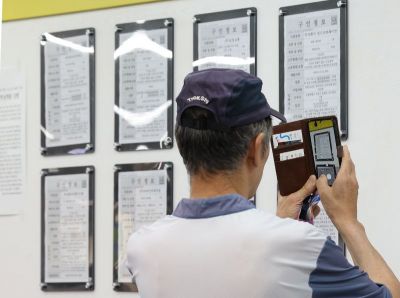 A citizen is looking at job information at the Seoul Western Employment Welfare Plus Center. Photo by Yonhap News
However, when narrowed down to wage workers aged 55 and older, the trend was reversed. The proportion was 30.9% in 2019, 30.2% in 2021, and 33.0% in 2023, exceeding the overall proportion by more than 10 percentage points.
Among both all wage workers and elderly wage workers, the proportion of low-wage workers was nearly twice as high for women compared to men.
By industry, the proportion of low-wage workers slightly decreased from 2018 to 2023 across all industries, but for those aged 70 and older, the proportion was over 80%.
The health and social welfare services sector, which has a relatively high proportion of elderly workers, was particularly poor. The wage increase rate was lowest for men aged 55 and older working in the health and social welfare industry, and the absolute wage amount was lowest for women aged 55 and older working in the same industry.
The report suggested, "Considering Korea's old-age income security system, tailored policy support is needed to ensure that elderly workers can secure the necessary level of labor income at each stage."
It continued, "Extending the employment period of main jobs has the effect of mitigating the decrease in labor income. While extending the retirement age is the most effective, reemployment also reduces income loss compared to reentry into the labor market."
Additionally, "Policies should also be considered to reduce the number of workers engaged in low-income jobs before retirement age and to support elderly individuals who require labor income even after the old-age pension eligibility age," adding, "From a long-term perspective, it is necessary to significantly expand vocational training to increase the productivity of the elderly and prepare to utilize elderly labor across all sectors of the labor market."
© The Asia Business Daily(www.asiae.co.kr). All rights reserved.

















