Supreme Court: "Merchants and Financial Institutions Are Victims"
"No Exemption from Punishment"... Case Remanded
The Supreme Court ruled that in crimes involving the unauthorized use of a relative's credit card, merchants and financial institutions can also be victims, so the exemption from punishment between relatives (the kinship exemption) cannot be immediately applied to exempt the offender from punishment.
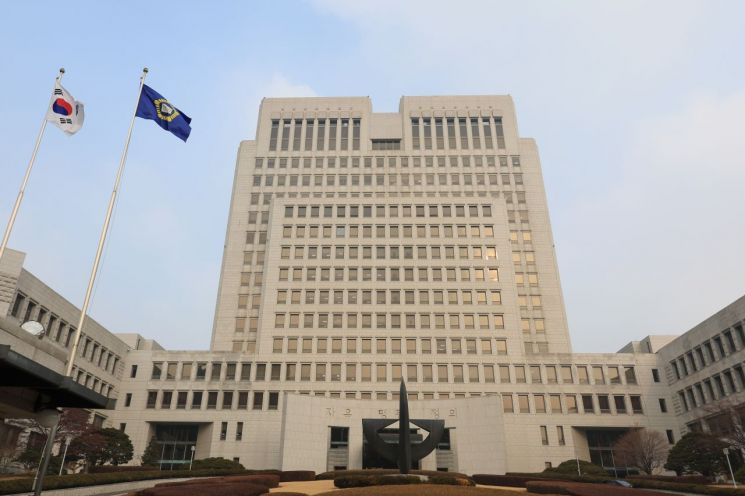
According to the legal community on the 30th, the Supreme Court's First Division (Presiding Justice No Tae-ak) overturned the second trial ruling that exempted Mr. A, in his 30s, from punishment for computer-related fraud on the 13th, and remanded the case to the Changwon District Court.
Mr. A was indicted on charges of embezzling 77.32 million won by using the personal information, credit card password, and account number of his sister-in-law, with whom he lived, in December 2021, receiving cash through a 'card kkang' business. It was investigated that Mr. A committed this crime to fund internet gambling and cryptocurrency investments. Additionally, Mr. A was charged with embezzling about 120 million won of company funds and fraudulently selling used goods to swindle 130,000 won.
The first trial sentenced Mr. A to 1 year and 8 months in prison, and the second trial sentenced him to 1 year and 5 months. However, the appellate court found him guilty of embezzlement and used goods fraud but exempted him from punishment for the crime of using his sister-in-law's card, citing the kinship exemption clause in the Criminal Act.
The Supreme Court took a different view. It stated, "There is sufficient reason to see that the prosecutor indicted the defendant for computer-related fraud with the victims being merchants or lending financial institutions," and added, "The lower court should have exercised its right to request clarification to clearly identify who the victims were before deciding on the applicability of the kinship exemption."
The Supreme Court's judgment is that the victims of credit card theft crimes are the merchants and financial institutions who provide goods and services or lend money, believing the card use to be legitimate. Previously, the prosecution also stated in its investigation report, "In computer-related fraud, the ultimate victims are the card or account holders, but the direct victims are the card companies or financial institutions, so the kinship exemption cannot be applied."
Earlier, the Constitutional Court ruled in June last year that the kinship exemption clause was unconstitutional. In response, the Supreme Court said, "If the retroactive effect of the constitutional unconstitutionality ruling is recognized in this case, it would cause criminal disadvantages to those who had their sentences exempted under that clause," and added, "This clause should be considered to have lost its effect from the day the constitutional unconstitutionality ruling was made."
© The Asia Business Daily(www.asiae.co.kr). All rights reserved.
![Clutching a Stolen Dior Bag, Saying "I Hate Being Poor but Real"... The Grotesque Con of a "Human Knockoff" [Slate]](https://cwcontent.asiae.co.kr/asiaresize/183/2026021902243444107_1771435474.jpg)
















