Uncollected Insurance Premiums Reach 356 Billion KRW Due to Exclusion from Assessment
Welfare Points for General Workers Subject to Income Tax and Health Insurance Premiums
Are Civil Servants the Only Exception?... Controversy Over Preferential Treatment and Discrimination
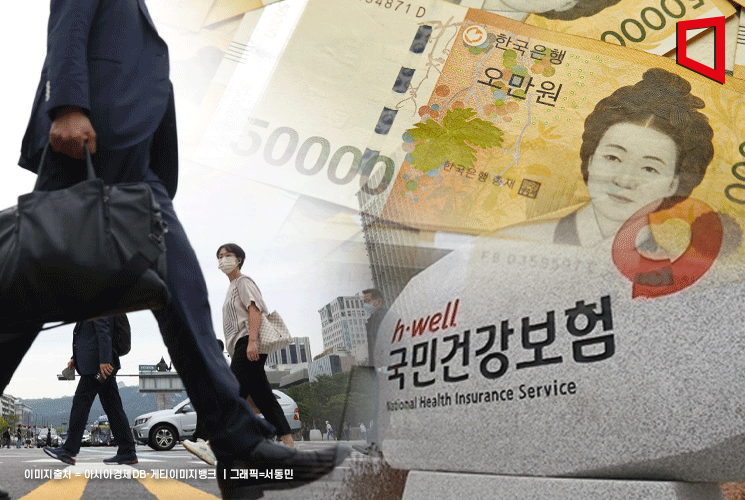
As welfare points, which civil servants effectively receive as part of their salary, are excluded from the health insurance premium base, health insurance authorities estimate that the unpaid health insurance premiums over the past five years amount to approximately 356 billion KRW. There is ongoing controversy over fairness and equity, as health insurance premiums are imposed on welfare points for general workers but not for civil servants.
On the 28th, according to an analysis by National Assembly Health and Welfare Committee member Kim Seon-min (Justice Innovation Party), who inquired with the National Health Insurance Corporation using data on civil servant welfare point allocations received from the Ministry of Personnel Management and the Ministry of the Interior and Safety, welfare points paid to national civil servants (2020?2024) and local civil servants (2019?2023) over the past five years totaled 5.182528 trillion KRW. This figure excludes welfare points paid to constitutional institutions (courts, Board of Audit and Inspection, etc.) and civil servants in metropolitan and provincial offices of education, so the actual amount is even larger when these are included.
The health insurance authorities estimated that if the same standards applied to general workers had been applied to civil servants’ welfare points, approximately 356 billion KRW in additional insurance premiums could have been collected. This implies a significant contribution to the stability of the health insurance finances. Although both general workers and civil servants receive welfare points, a double standard is applied when it comes to imposing income tax and health insurance premiums.
The Supreme Court has repeatedly confirmed through several rulings that welfare points provided by companies to employees as part of employee benefits, while not considered ordinary wages under the Labor Standards Act, are included within the scope of earned income under the Income Tax Act. Accordingly, tax authorities and health insurance authorities impose earned income tax and health insurance premiums on welfare points for general workers in private companies, public enterprises, and public institutions.
However, civil servants’ welfare points are excluded not only from income tax but also from income subject to health insurance premiums. This is because the government classifies civil servants’ welfare points as 'goods expenses' rather than 'personnel expenses.'
The Ministry of Economy and Finance and the Ministry of the Interior and Safety, following a legal interpretation by the Ministry of Government Legislation, have defined civil servants’ welfare points, monthly fixed position allowances, and specific task expenses as welfare expenses and goods expenses with specific purposes under budget guidelines, rather than personnel expenses. This means that these are considered reimbursements for actual expenses rather than remuneration for labor, thereby avoiding tax obligations.
Accordingly, civil servants do not pay income tax on welfare points as they are classified as non-taxable income under the Income Tax Act. Moreover, under the Health Insurance Act, which imposes health insurance premiums only on remuneration, civil servants are exempt from paying health insurance premiums on welfare points. This has sparked controversy over preferential treatment and discrimination.
Civil servants’ welfare points were introduced as a pilot project in 2003 and have been implemented across all central government departments since January 2005. For local civil servants, the welfare system started in Seoul in 2005 and has since expanded. In 2024, the average welfare points paid per national civil servant amounted to 524,000 KRW.
Welfare points are equivalent to civil servants’ income and can be used like cash for medical treatment fees at hospitals and clinics, medication costs, eyeglass purchases, academy tuition fees, book purchases, accommodation fees during travel, movie and theater tickets, and flower delivery services for anniversaries.
© The Asia Business Daily(www.asiae.co.kr). All rights reserved.


















