Jeju has been replacing palm trees with other species since 2021
Palm tree removal expected to be completed by early April
Palm trees criticized for vulnerability to strong winds
Contact with power lines has caused power outages
To create a tropical atmosphere, the palm trees planted as street trees throughout Jeju in the 1980s are no longer visible.
Jeju City announced on the 28th that it is carrying out a street tree species renewal project by removing 117 'Washington palm trees' planted along a 1.2 km section from Jeju-si Tapdong E-Mart to Jeju Port Imhang-ro and replacing them with trees such as Ipop trees.
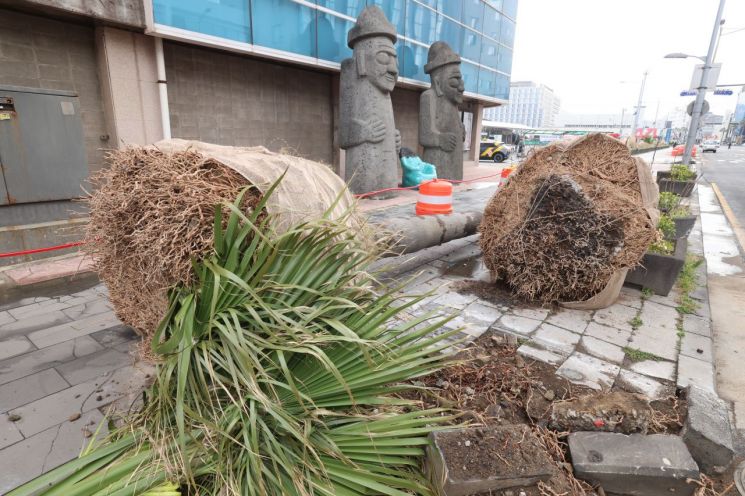
Since 2021, Jeju City has been replacing palm trees within Jeju-si with other trees such as Ipop trees, hydrangeas, and Mongna trees. The removal of palm trees in this area is expected to be completed by early April.
Once this work is finished, about half of the total 1,325 palm trees across 20 sections in Jeju-si will be replaced with other trees. Palm trees have been planted as street trees in Jeju since around 1982.
However, palm trees grow quickly and can reach heights of 15 to 27 meters, equivalent to a three-story apartment building, raising safety concerns. In the case of the Tapdong palm trees, the street tree flowerbeds have aged, and the Washington palms are taller than the flowerbeds, making them vulnerable to strong winds.
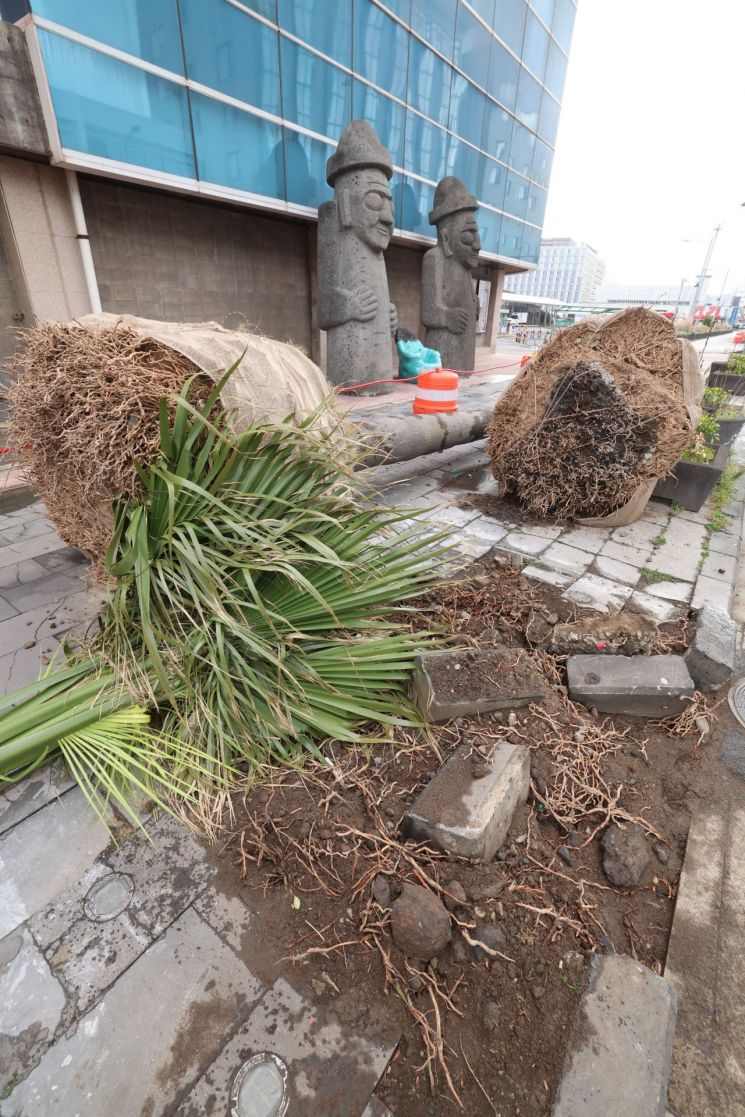
During typhoons, palm trees often break or are uprooted and fall, and the sharp leaves or flower stalks pose a threat to pedestrian safety. Tall palm trees also sometimes come into contact with power lines, causing power outages.
Meanwhile, as of the end of last year, out of a total of 122,924 street trees in Jeju Province, only 3,334 are palm trees, accounting for about 2.7%.
© The Asia Business Daily(www.asiae.co.kr). All rights reserved.


















