Masaki Kashiwara, a specially appointed professor at the Research Institute for Mathematical Sciences at Kyoto University in Japan, will become the first Japanese person to receive the Abel Prize, known as the "Nobel Prize of Mathematics."
On the 27th, Kyodo News and Nihon Keizai Shimbun (Nikkei) reported that the Norwegian Academy of Science and Letters announced on the 26th (local time) that Professor Kashiwara is this year's Abel Prize laureate, stating that he "has opened the door to new mathematics for over half a century."
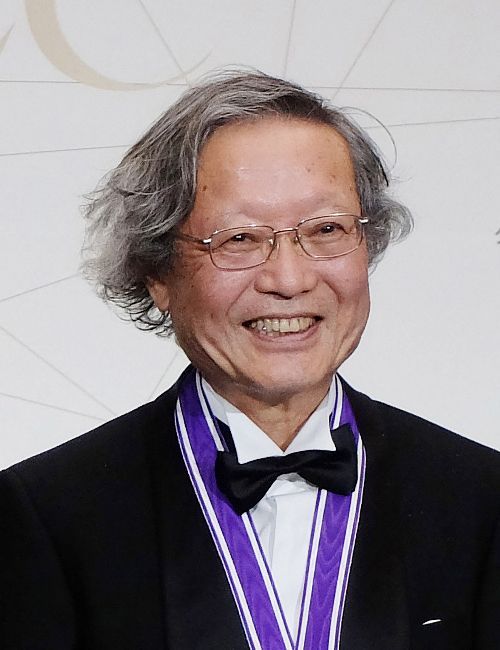
The Academy said, "He has proven astonishing theorems (general propositions proven true) in ways no one had imagined."
In an interview with the Academy, Professor Kashiwara said, "I can't believe it," and "I feel that my 50 years of research have been recognized."
The award ceremony will be held on May 20th in Oslo, Norway. The prize money is 7.5 million kroner (approximately 1.04175 billion KRW).
The Abel Prize is named after the Norwegian mathematician Niels Henrik Abel and has been awarded since 2003. Unlike the Fields Medal, which is given to mathematicians under 40 years old who are expected to achieve future academic success, the Abel Prize recipients tend to be older as it recognizes academic achievements. This is the first time a Japanese person has received the Abel Prize.
Professor Kashiwara was born in 1947 in Ibaraki Prefecture, Honshu, and graduated from the University of Tokyo. He has conducted research at Kyoto University and Nagoya University. Nikkei explained that Professor Kashiwara established the theory of "D-modules," which can be applied in a wide range of fields, contributing to the advancement of modern mathematics.
Professor Kashiwara also has ties with Korea. He serves as a KIAS Scholar at the Heo Jun Lee Mathematical Challenges Research Institute of the Korea Institute for Advanced Study (KIAS) and continues research collaborations with Korean mathematicians.
© The Asia Business Daily(www.asiae.co.kr). All rights reserved.

















