Recent U.S. Egg Exports Are Only Initial Shipments to Secure Market Share
Difficult to Secure Export Volume Due to Rising Domestic Egg Demand
The Ministry of Agriculture, Food and Rural Affairs announced on the 27th that "there has been no official request for egg exports at the level of the U.S. government."
In a press release on the same day, the ministry explained, "Recent egg exports were only initial shipments led by the private sector to secure market share, exporting processed fresh eggs to the U.S., and there were no official negotiations between countries."
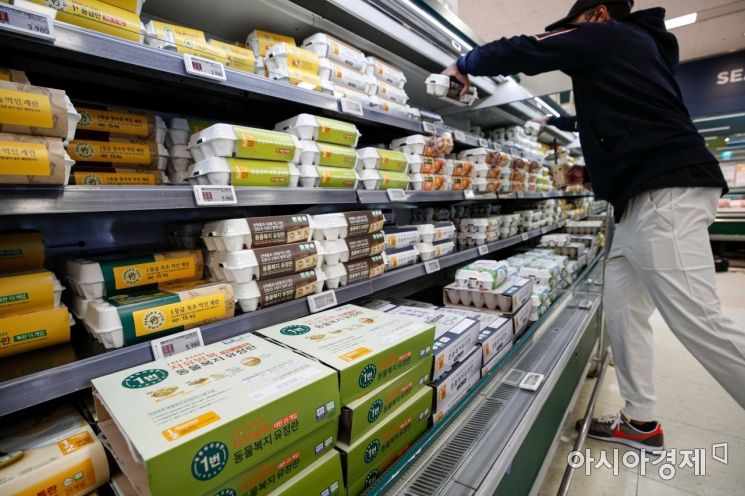
An official from the ministry stated, "Due to supply instability and price increases caused by the outbreak of highly pathogenic avian influenza in the U.S., the private export industry requested exports to the U.S. through the egg production industry," adding, "Accordingly, in March, two domestic companies exported 40 tons (about 600,000 eggs) of processed fresh eggs, which is about 0.06% of the monthly average egg production." He further noted, "Currently, due to the domestic outbreak of highly pathogenic avian influenza virus, export of edible fresh eggs is impossible under U.S. sanitary and quarantine regulations."
According to the ministry, the export industry also expects additional egg exports to the U.S. to be limited. This is because the supply price for processed fresh eggs demanded by the U.S. industry is 233 KRW per special egg, which inevitably exceeds the domestic delivery price (217 KRW) when considering transportation costs and taxes.
The government explained that domestic egg production is increasing and prices are being maintained stably. According to observations by the Korea Rural Economic Institute, the number of laying hens and daily egg production in March 2025 are expected to be 77.58 million heads and 49.72 million eggs, respectively, representing increases of 2.0% and 3.5% compared to the same month last year. This situation is projected to continue until May.
An official from the ministry said, "In mid-March, the average farm gate price for eggs was 4,763 KRW for 30 special eggs, and the consumer price was 6,329 KRW, which are increases of 2.1% and 2.6% respectively compared to the same period last year, maintaining stability," adding, "The rise in consumer prices in mid-March this year is due to the base effect of the government’s fiscal intervention from March to May last year to keep egg consumer prices low for price stabilization."
However, the ministry plans to implement measures to resolve supply and demand instability factors caused by sporadic additional outbreaks in laying hen farms during the migratory bird northward season and increased speculative demand due to prolonged discount events mainly at large supermarkets. First, biosecurity management will be strengthened by conducting nationwide disinfection centered on poultry farms to prevent further spread of highly pathogenic avian influenza. Additionally, the ministry intends to curb speculative demand by encouraging restraint in egg discount events.
© The Asia Business Daily(www.asiae.co.kr). All rights reserved.

















