32 Projects in Four Key Areas: Employment and Start-ups, Living Welfare, Culture and Education, Participation and Communication
Budget of 10.3 Billion KRW Allocated for Exam Fee Support, Youth Meal Assistance, Youth Portal, and On-site Communication
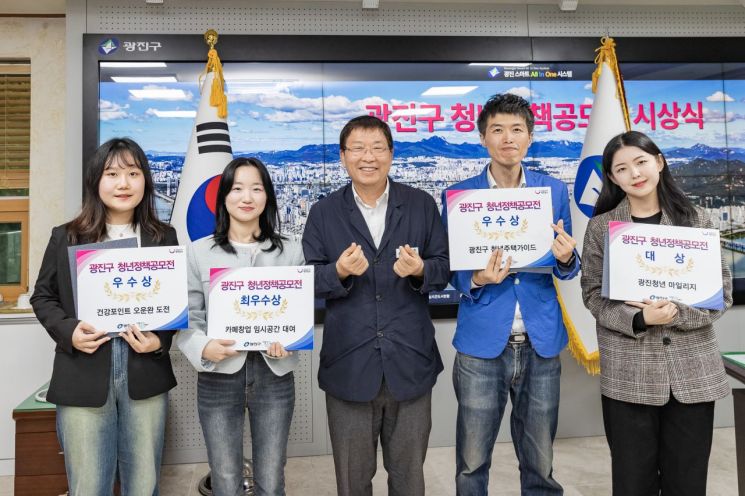
Gwangjin-gu (Mayor Kim Kyung-ho) has established the ‘2025 Youth Policy Implementation Plan’ to promote the happy and healthy lives of young people and is now launching full-scale operations.
According to the district, as of the end of last year, the youth population aged 19 to 39 in Gwangjin-gu was 114,779, accounting for 34.6% of the total population of 331,963. This means that one out of every three residents is a young person. Among Seoul’s autonomous districts, Gwangjin-gu ranks third after Gwanak-gu and Yeongdeungpo-gu. Accordingly, the district has prepared comprehensive support measures covering housing, welfare, culture, and other aspects of young people’s lives with a budget of 10.3 billion KRW this year.
The district will promote 32 projects across four areas to assist young people: ▲employment, start-ups, and jobs ▲living welfare ▲culture and education ▲participation and communication.
First, it will support exam fees for language proficiency tests for unemployed youth. This year, young people who take language, national technical qualification, or Korean history proficiency tests will be reimbursed up to 150,000 KRW per person. Benefits will be provided to 1,000 young people aged 19 to 39 who have been registered residents of Gwangjin-gu for more than one month. The Youth Start-up Space, a space for young entrepreneurs, is actively operating. For a monthly fee of 30,000 to 50,000 KRW, users can freely use shared offices, workspaces, and meeting rooms. The Youth Challenge Support Project is also popular. This project helps young people who have given up on job searching by providing educational programs lasting from 5 to 25 weeks. It promotes youth employment through close counseling, case management, confidence recovery, career exploration, and job competency enhancement.
The district also focuses on young people’s living welfare. Through the ‘Gwangjin-type Youth Monthly Rent Support’ project, it provides housing cost support to young people struggling with housing issues. It offers 200,000 KRW per month for up to 12 months to young people who meet the following criteria: ▲below 150% of median income ▲deposit of 80 million KRW or less and monthly rent of 600,000 KRW or less ▲assets of 130 million KRW or less. The district also carefully supports young people who do not qualify for the ‘Temporary Special Youth Monthly Rent Support.’ It provides lunchboxes to unemployed single-person households. To ease the burden caused by irregular eating habits and rising food prices, meal kits, fruits, and convenience foods are provided once a month for three months. A total of 400 people, 100 per quarter, will be supported.
Additionally, the district helps young people enjoy a healthy cultural life. Cultural vouchers are provided to 500 young people aged 24 to 29 whose income is below 120% of the median income. Each person receives a voucher card worth up to 100,000 KRW to encourage participation in local cultural, artistic, and sports activities. Lifelong education vouchers are given to 800 residents aged 19 and over. Priority is given to vulnerable groups, issuing lifelong education use rights worth 350,000 KRW per person.
Communication with youth through online and offline channels is also active. A youth welfare center supporting daily life, learning, and relationship building is being established. It will be a space for rest, hobbies, and cultural sharing. Participation and communication are strengthened through the Youth Portal, which provides an overview of youth policies, the Gwangjin Youth Network for idea discovery and policy proposals, and the operation of the Seoul Youth Center Gwangjin. The popular Youth Communication On-site Mayor’s Office from last year will continue.
Kim Kyung-ho, Mayor of Gwangjin-gu, said, “We have prepared youth policies that help with real-life issues such as housing and culture to support young people’s independence and happy lives. We hope for much interest and participation,” adding, “We will continue to communicate and support so that young people can grow and thrive as healthy members of society.”
© The Asia Business Daily(www.asiae.co.kr). All rights reserved.

















