Accompanied Decline Due to Weakness in Healthcare Stocks
European Markets in the Spotlight as 'Alternative to U.S. Investments'
Focus on U.S. February PCE Price Index
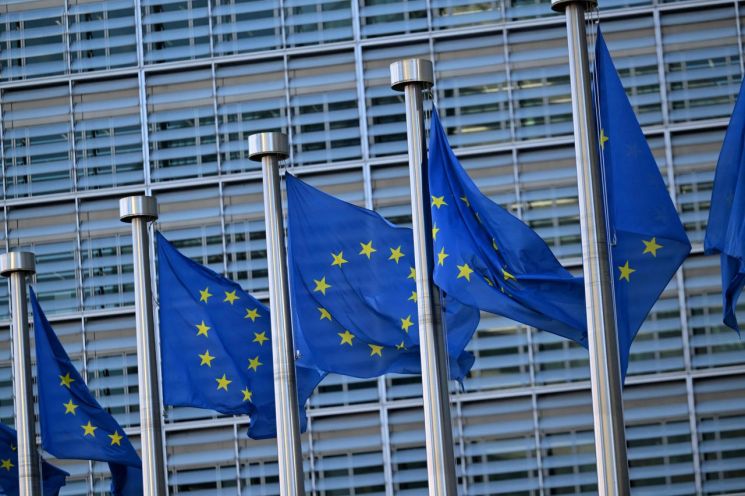
European stock markets fell in early trading on the 26th (local time) due to weakness in healthcare stocks. However, concerns over a downturn in the U.S. stock market caused by Trump’s tariff policies have kept investors’ expectations for European stocks as an alternative investment intact.
As of 7:21 PM Korean time on the day, Germany’s DAX index was trading at 22,891.23, down 0.95% from the previous session. France’s CAC index fell 0.9% to 8,035.22, and the UK’s FTSE index was down 0.04% at 8,660.74.
The decline was attributed to the poor performance of healthcare stocks. Major pharmaceutical companies such as Novo Nordisk, Novartis, and Roche showed losses of 1-2%, causing the healthcare index to hit its lowest level in two months, according to U.S. news agency Reuters.
On the other hand, energy stocks showed some positive momentum as oil prices reached a three-week high. May delivery West Texas Intermediate (WTI) crude oil closed at $69.00 per barrel on the New York Mercantile Exchange on the 25th, down 0.16% from the previous session’s near-month contract. After four consecutive days of gains, profit-taking led to a pause in the upward trend.
Among other individual stocks, Polish game company CD Projekt’s shares plunged 10% after announcing that the release of the popular game series "Witcher 4" would be after December 31, 2026. Although no specific release date was given, it is expected to be sometime after 2027. Italy’s TV group MFE rose 1% following reports that it is considering acquiring German broadcaster ProSieben. ProSieben’s stock also rose 3.9%.
Expectations for European stocks remain valid amid the Trump administration’s tariff policies. Reuters noted that the pan-European STOXX 600 index is likely to deliver its best quarterly performance in two years. The main reason is optimism about Europe’s largest economy driven by Germany’s record-sized fiscal stimulus package. Investors turning their attention to markets outside the U.S. due to the impact of U.S. tariff policies is also a positive factor for Europe.
In the UK, investors breathed a sigh of relief as the February consumer price inflation rate slowed significantly to 2.8%, below expectations. On the same day, UK Chancellor of the Exchequer Rachel Reeves was scheduled to deliver the "Spring Statement." The statement is expected to include government spending cuts worth billions of pounds aimed at reducing the UK’s fiscal deficit.
Phil Webster, portfolio manager at Columbia Threadneedle Investments, said, "Europe is still undervalued and generally attractive," adding, "Key sectors such as financials, healthcare, and industrials are fundamentally cheap."
Meanwhile, the market is focusing on the February core Personal Consumption Expenditures (PCE) price index to be released on the 28th. Excluding volatile food and energy prices, the core PCE price index shows the underlying trend in inflation and is the inflation gauge most closely watched by the U.S. Federal Reserve (Fed).
© The Asia Business Daily(www.asiae.co.kr). All rights reserved.

















