If Training Is Refused, Service as Active-Duty Soldier Possible at Half the Term
Concerns Over Medical Service Gaps at Local Health Centers
About 250 trainees who enlisted in the military this year to become public health doctors (Gongbo-ui) are reportedly showing signs of refusing job training. They intend to serve as active-duty soldiers by using the punishment regulation that if they do not receive job training, they will be enlisted as active-duty soldiers instead of Gongbo-ui. However, the government has stated that it will not allow this.
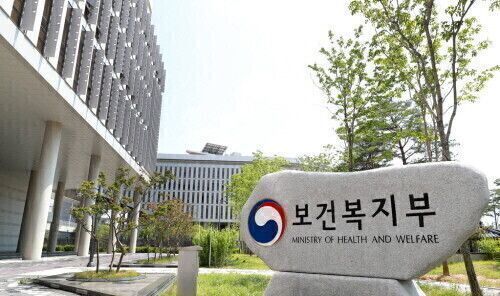
According to the government and the medical community on the 26th, the Ministry of Health and Welfare attempted to survey the preferred deployment areas of 248 trainees currently undergoing three weeks of basic military training after being selected as Gongbo-ui, but the process did not proceed normally. The usual procedure of surveying preferred locations during the job training course after completing training was suddenly conducted at the training camp, which caused some trainees to resist.
The Gongbo-ui system is a program where doctors, dentists, and Korean medicine doctors engage in public health work as a substitute for military service. Typically, after selecting Gongbo-ui, they complete three weeks of basic military training and then gather in one place where the Minister of Health and Welfare conducts centralized job training. At this session, preferred locations are collected and assigned to cities and provinces through a lottery, followed by detailed assignments to cities, counties, and districts. According to the 'Special Measures Act for Health and Medical Care in Farming and Fishing Villages,' if Gongbo-ui refuse to participate in job training without justifiable reasons, the Ministry of Health and Welfare must notify the Military Manpower Administration, and under the Military Service Act, their Gongbo-ui status is canceled and they are enlisted as active-duty soldiers.
However, while the active-duty service period continues to decrease and treatment improves, the Gongbo-ui service period is 36 months, twice that of active-duty soldiers, and they must work in remote areas such as islands, leading to a continuous decline in preference for Gongbo-ui. Recently, the number of medical students enlisting as active-duty soldiers before starting residency training and being incorporated as medical officer candidates has been increasing, causing the number of newly incorporated medical Gongbo-ui to decrease from 814 in 2017 to 255 last year.
Once becoming a medical officer candidate, active-duty enlistment is generally not possible in principle, but by refusing job training, active-duty enlistment is possible, and it is known that four people did not participate in job training last year using this loophole.
This year, a similar number of Gongbo-ui were selected as last year, but due to the resignation of residents amid medical-government conflicts last year, many were forcibly selected before completing their training, increasing the desire to enlist as active-duty soldiers. Some who resisted the preferred location survey procedure yesterday are reported to have already received legal interpretations from a law firm stating that refusal of job training allows active-duty enlistment.
However, the Ministry of Health and Welfare is aware of these movements among Gongbo-ui and is devising measures to prevent desertion, as failure to deploy Gongbo-ui on time could cause gaps in regional medical services. To conduct efficient training, this year job training will be switched to an online format. Conducting online training instead of on-site job training is expected to make it difficult to explicitly enforce 'non-attendance' or 'refusal.' The Ministry plans to re-conduct the preferred location survey for trainees, negotiate deployment with local governments, and complete the deployment of Gongbo-ui by early next month.
© The Asia Business Daily(www.asiae.co.kr). All rights reserved.

















