Introducing Bicycles, Baseball, and Other Western Innovations
Devoted to Educational Missionary Work
Churches at the Forefront of Anti-Japanese and Anti-Communist Movements
62 Teachers and Students Refused Shrine Worship
66 Members Martyred by North Korean Forces at One Church
Over 6,000 Missionaries and Their Families Came to Korea
About 600 of Them Are Buried in Korea
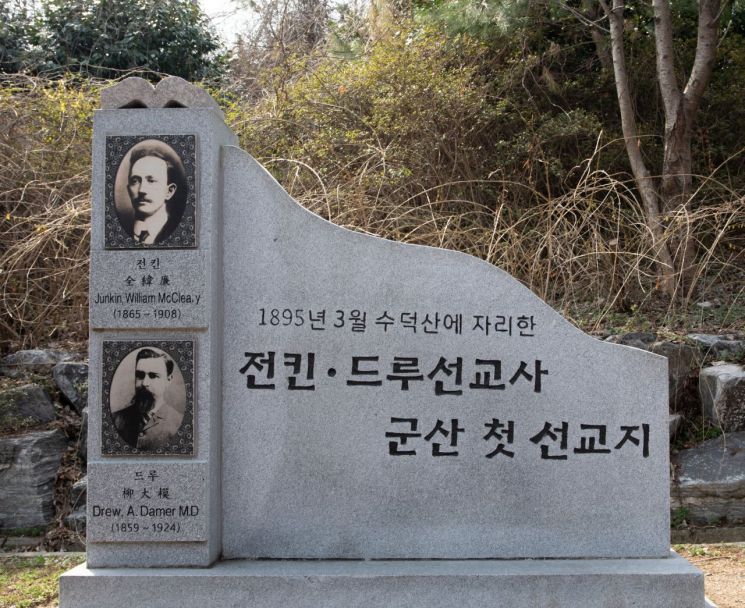 A monument commemorating the first mission of missionaries Jeonkin and Drew in Gunsan. Provided by the Korea Church Federation
This year marks the 140th anniversary of Korean Christianity. It is based on the arrival of missionaries Underwood and Appenzeller, officially dispatched by the American Northern Presbyterian Church and Northern Methodist Church respectively, at Jemulpo Port on April 5, 1885. At that time, Western new knowledge and medical science were spread through the missionaries, equal education without social discrimination was implemented, and the churches they established inspired both faith and patriotism, greatly influencing opposition to shrine worship and the independence movement. The Korea Christian Federation conducted a modern cultural heritage exploration in Gunsan, Gangyeong, and Gongju on the 24th and 25th of last month.
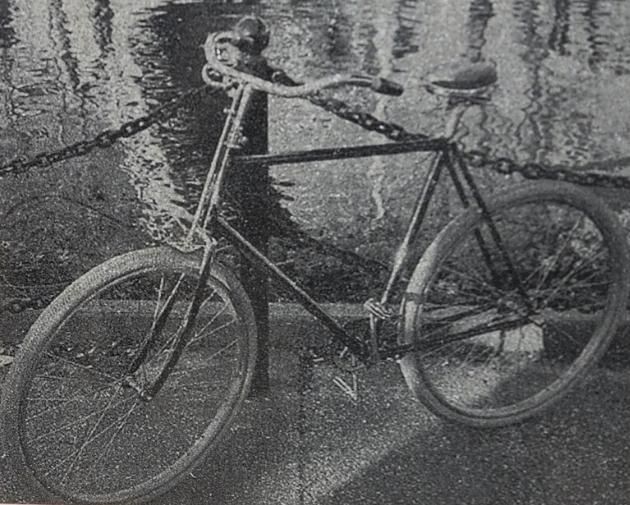 A painting of the Rambler bicycle brought by missionary John Penkin in 1894 is displayed behind the Gunsan Missionary Monument. Photo by Seo Mideum
The first person to introduce bicycles to Joseon was William Jenkins (Korean name Jeon Wilyeom, 1865?1908), the first missionary in the Honam region. Jenkins landed in Gunsan in 1895 together with medical missionary Alessandro Drew (Yu Daemo, 1859?1926) and established churches, hospitals, and schools. The ‘Rambler bicycle’ he brought at the time is said to be the first bicycle to set foot on Joseon soil.
The introduction of baseball to Korea also came through Gunsan Youngmyung School (currently Gunsan Jeil High School), which Jenkins founded. Gunsan Youngmyung School, established by Jenkins in 1903, taught a wide range of subjects including science, history, geography, music, and art based on Christian faith. Baseball was introduced as part of physical education activities at that time. This tradition sparked a baseball boom in Gunsan, and later, in July 1972, during the high school baseball finals, Gunsan Commercial High School, trailing Busan High School 4-1, made a comeback in the bottom of the 9th inning to win 5-4, earning the nickname ‘Master of Comebacks, Gunsan Commercial High School.’ The game was even made into a movie titled ‘Now! From This Moment.’ Today, a baseball street still exists in Gunsan.
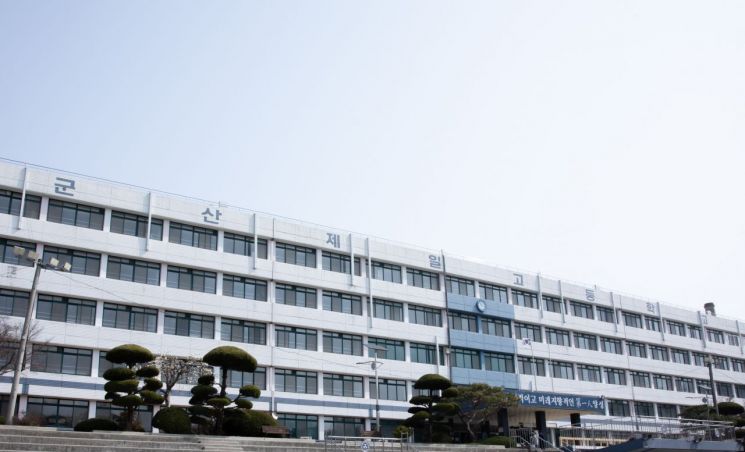 The old building of Gunsan Yeongmyeong School (currently Gunsan Jeil High School), established by missionary Jeon Kin in 1903, is scheduled to be remodeled to create a history museum. Provided by the Korea Christian Federation
Gunsan Youngmyung School was a key player in the March 5th Independence Movement. In February 1919, Kim Byung-su (1898?1951), who graduated from Youngmyung School and was working at Severance Medical School, received the Declaration of Independence from Lee Gap-seong (1889?1981), one of the 33 national representatives, and on February 20th, he met with Youngmyung School teacher Park Yeon-se (1883?1944) in Gunsan to plan the uprising. The March 5th Independence Movement was the first such movement in the Honam region, starting with 50 teachers and students at the Youngmyung School playground and reportedly growing to about 500 participants.
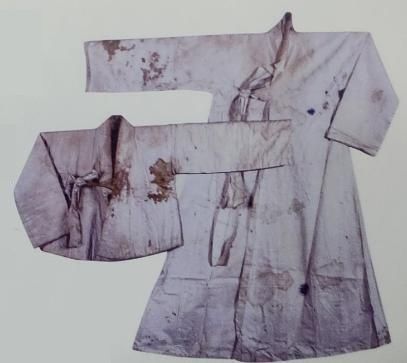 The blood-stained garment worn by Moon Yong-gi, a teacher at Gunsan Yeongmyeong School who led the April 4, 1919 Iksan Manse Movement, at the time of his martyrdom on site. Rephotographed exhibit at Gunsan Jeil High School.
According to William Bull, Jenkins’ sister and a missionary, Moon Yong-gi (1878?1919), a teacher at Gunsan Youngmyung School at the time, led the April 4th Iksan Independence Movement, which involved about 1,000 participants, and was martyred by Japanese military police who cut off both his hands. After his right hand, which was waving the Taegeukgi (Korean national flag), was cut off, he picked up the flag and waved it with his left hand. When his left hand was also severed, he shouted ‘Long live Korean independence’ and died after being stabbed in the chest. Gunsan Jeil High School, the successor of Youngmyung School, recognized this historical value and was selected in 2021 by the Jeollabuk-do Office of Education for a history museum construction project, planning a major renovation of the exhibition hall.
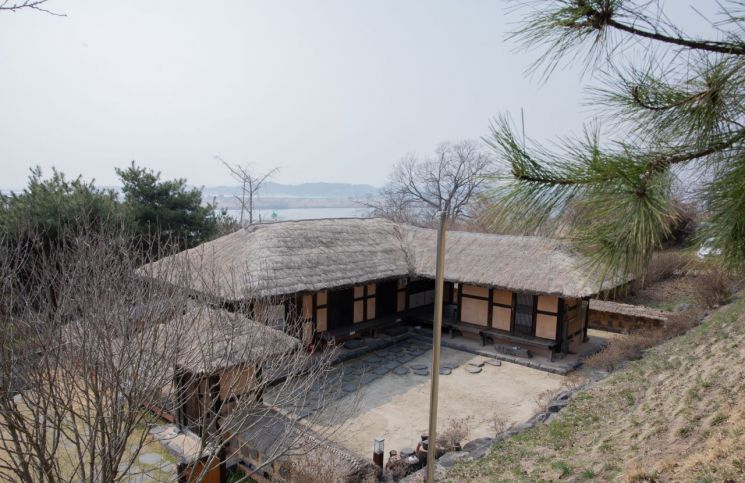 The 'ㄱ'-shaped Ganggyeong Baptist Church, established by missionary Edward Polling on February 9, 1896, in Ganggyeong-eup, Nonsan-si, Chungnam Province. Provided by the Korea Church Federation
The first Baptist church in Joseon, Gangyeong Baptist Church, led opposition to shrine worship and sent a strong message throughout the Korean church. Established in the shape of the Korean letter ‘ㄱ’ (with separate seating for men and women) on February 9, 1896, by missionary Edward Polling (1864?1960) in Gangyeong-eup, Nonsan-si, Chungnam Province, Gangyeong Baptist Church had its property confiscated by the Japanese colonial government and was even disbanded, suffering the greatest damage from shrine worship. In May 1943, the Japanese government closed the Dong-A Christian Church denomination, a Baptist denomination, and confiscated its property.
This atmosphere spread to nearby churches as well. On October 11, 1924, Kim Bok-hee, a teacher at Gangyeong Public Elementary School, and 62 students who attended Gangyeong Holiness Church were dismissed and expelled for refusing to participate in shrine worship. This was the first incident of refusing shrine worship on grounds of faith and patriotism, and it is evaluated to have somewhat delayed the Japanese plan to expand shrine worship nationwide.
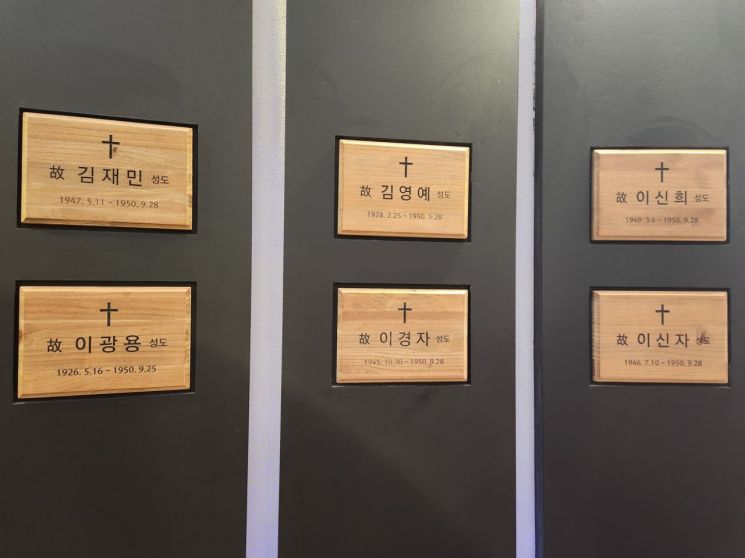 Next to Byeongchon Holiness Church, there is a memorial hall where the biographies of church members who were victims of the North Korean army during the Korean War are recorded. Among them, 31 are children. Photo by Seo Mideum
Churches in the Gangyeong area also took the lead in anti-communism following anti-Japanese sentiment. Gangyeong Port, along with Wonsan Port, was one of the two major ports in Joseon, and Gangyeong Market was one of the three major markets along with Pyongyang and Daegu, with much external exchange and openness. For this reason, Protestantism took root well, but during the Korean War, ideological conflicts were severe, and many Christians suffered at the hands of North Korean forces. At Byeongchon Holiness Church, located a 10-minute drive from Gangyeong Holiness Church, 66 believers lost their lives to North Korean troops on September 27?28, 1950. Thirty-five adults and 31 children and infants were killed for refusing to abandon their faith on the grounds that Christianity was an obstacle to communism. A memorial site honoring the victims was established next to the church.
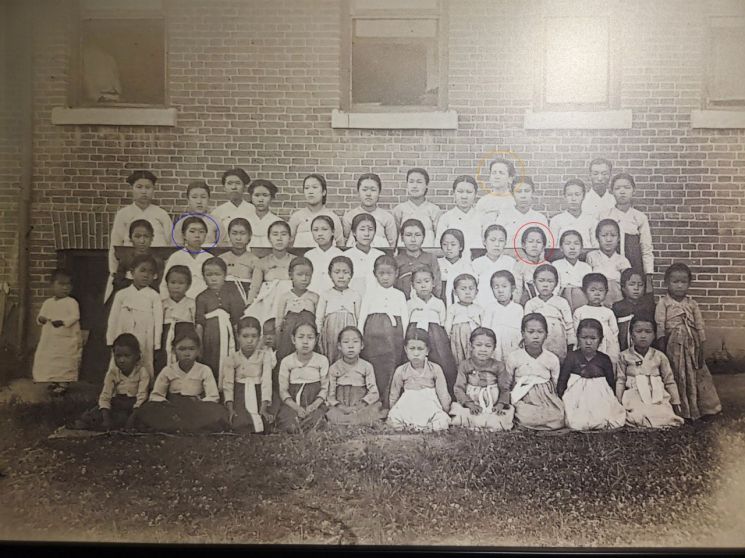 Missionary Sa Aeri-shi (yellow circle at the back) commemorative photo with Yu Gwansun (red circle) and Seo Eunsoon (blue circle). Rephotographed from Gongju Christian Museum archives.
Alice Hammond Sharp (Sa Aerishi, 1871?1972), who operated Gongju Youngmyung School with her husband Robert Sharp (1872?1906) from 1904, took special care of Yu Gwan-sun during her childhood. Yu Gwan-sun, who studied at Youngmyung School from age 13 in 1914 until the following year, entered Ewha Hakdang as a scholarship student through Sa Aerishi’s arrangement. A relatively recent discovery of a photo from Yu Gwan-sun’s time at Youngmyung School was exhibited at Gongju Jeil Church, which she attended. In the group photo, you can also find Seo Eun-soon, a classmate of Yu Gwan-sun and the wife of poet Lee Sang-hwa, known for the poem ‘Does Spring Come to the Stolen Fields?’
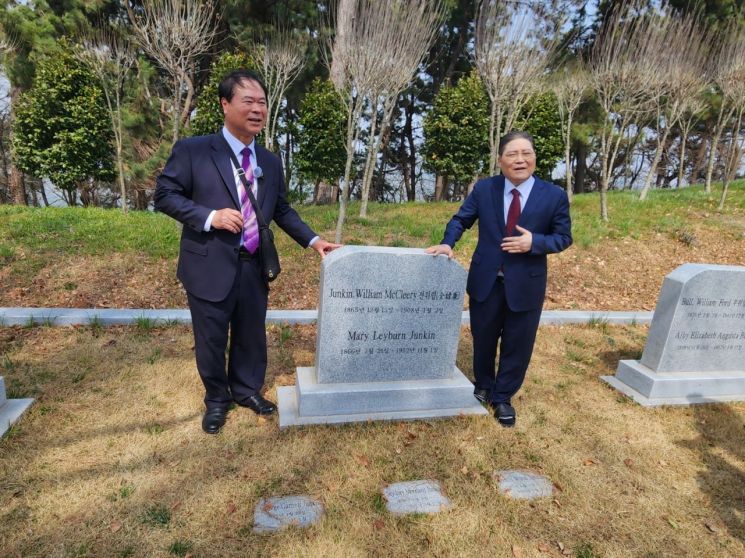 Senior Pastor Seo Jong-pyo of Gunsan Jungdong Church (left in the photo) is explaining in front of the family tomb of Senior Pastor So Gang-seok of Sae Eden Church, Missionary Jeon Kin and his wife, and their three sons. Photo by Seo Mideum
Over 140 years of Christian history, it is estimated that about 6,000 foreign missionaries and their families set foot on Korean soil. Among them, about 600 were buried in Korea, but due to poor management, many graves have been lost or their exact burial sites remain unknown. The graves of missionary Jenkins and his wife, who founded Gunsan Youngmyung School, and their three sons who died of endemic diseases, were neglected and their exact burial locations were lost until 2022, when Pastor Seo Jong-pyo of Gunsan Jungdong Church provided financial support to establish a memorial grave near Guam Church in Guam-dong, Gunsan, which Jenkins founded. ‘Gungmeol’ is the old name of Guam-dong in Gunsan, and Jenkins reportedly said during his lifetime, ‘I am Jeon of Gungmeol. When I die, please bury me in Gungmeol.’
So Kang-seok, former chairman of the Korea Christian Federation and senior pastor of Sae Eden Church, stated, “It is certain that the remains of missionary Jenkins are buried somewhere in Gunsan, but they have not yet been found. This is the responsibility of the entire Korean church. We will do our best to honor the will of the missionaries who came to this land 100 years ago.”
© The Asia Business Daily(www.asiae.co.kr). All rights reserved.
![Clutching a Stolen Dior Bag, Saying "I Hate Being Poor but Real"... The Grotesque Con of a "Human Knockoff" [Slate]](https://cwcontent.asiae.co.kr/asiaresize/183/2026021902243444107_1771435474.jpg)


















