"Organic Communication with Creditors Is Crucial from the Early Stages of Rehabilitation"
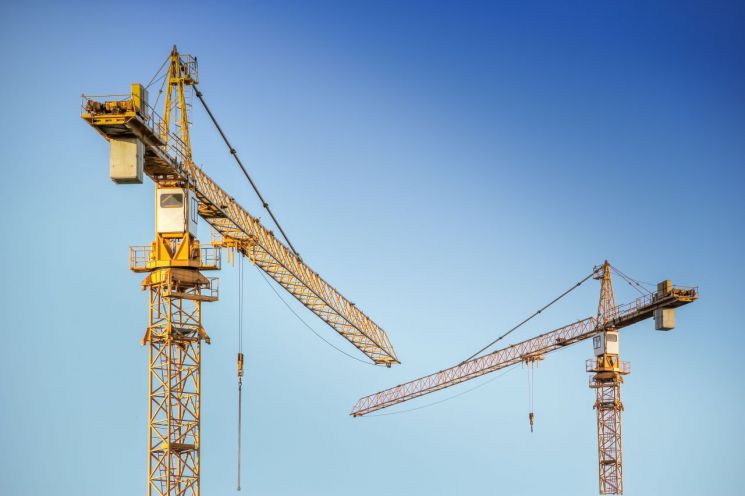
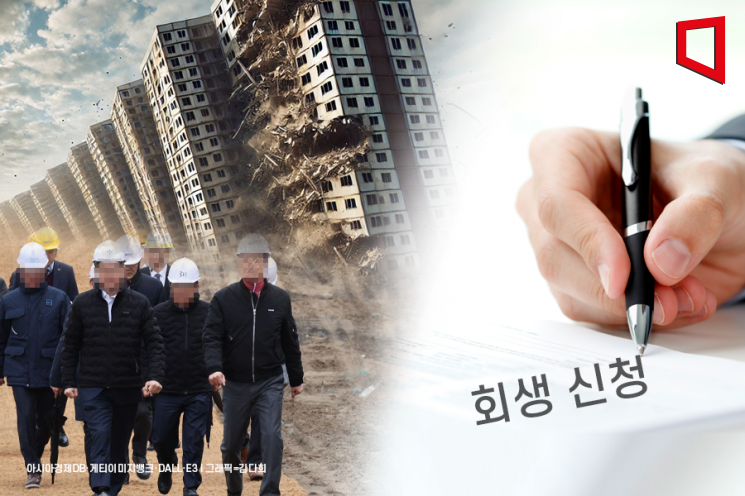
Mid-sized construction companies ranked between 50th and 200th in construction capability evaluations are consecutively filing for court receivership. Concerns are growing that the 'mass bankruptcy of construction companies' crisis, which showed signs in 2024, may fully materialize in 2025.
According to the announcements of rehabilitation and bankruptcy cases published on the court's website from October 1, 2024, to March 24, 2025, the number of construction companies filing for rehabilitation (based on the Ministry of Land, Infrastructure and Transport’s construction company information inquiry) were ▲6 in October 2024 ▲11 in November 2024 ▲7 in December 2024 ▲20 in January 2025 ▲15 in February 2025 ▲14 in March 2025 (up to the 24th). A clear increasing trend is observed in 2025.
Impact of Rising Financial Costs and Economic Downturn
In particular, rehabilitation filings by mid-sized construction companies stand out. Seven companies including Shindonga Construction (58th in construction capability), Sambu Tokon (71st), Daewoo Shipbuilding & Marine Engineering Construction (83rd), Daejeo Construction (103rd), Samjeong Enterprise (114th), Angang Construction (116th), and Byeoksan Engineering (180th) have all entered rehabilitation procedures. A judge from the Seoul Rehabilitation Court said, "It is still somewhat early to conclude that mass bankruptcies have become a reality, but it is true that the number of rehabilitation filings by construction companies has noticeably increased compared to other industries this year."
The increase in rehabilitation filings by construction companies is analyzed to be due to a combination of prolonged real estate market downturn, soaring construction costs, high interest rates, and rising unsold housing units. A chief judge at the Seoul Rehabilitation Court stated, "Almost all recent construction company rehabilitation cases cite two common reasons: first, increased financial costs due to rising interest rates following COVID-19, and second, profitability deterioration caused by the construction market slump and unsold housing issues."
In fact, most construction companies that have entered rehabilitation procedures have debt ratios exceeding dangerous levels. The industry considers a debt ratio over 200% as risky and over 400% as potentially insolvent. According to the Financial Supervisory Service, as of the end of 2023, Daewoo Shipbuilding & Marine Engineering Construction’s debt ratio was 838.8%, Sambu Tokon’s was 838.5%, and Shindonga Construction’s was 428.8%.
Numerous Construction Companies Reaching Risk Levels
There are also many companies that have not yet filed for rehabilitation but have reached risky levels. Hanyang Industrial Development (91st) recorded a debt ratio of 820%, Isu Construction (85th) 817%, Daebang Industrial Development (77th) 513%, and Dongwon Construction Industry (65th) 344%, all exceeding the 'risky' threshold.
The construction industry suffers a fatal blow when unsold housing units occur. Experts believe that since construction involves many 'contingent liabilities' arising from construction responsibilities, going through rehabilitation procedures to resolve these can be a meaningful choice. They also emphasize the importance of maintaining a financial condition that ensures the company’s long-term sustainability by organically communicating with creditors from the early stages of rehabilitation.
A chief judge with extensive experience in rehabilitation cases said, "Unlike other industries where profits decrease by about 10-20% during a downturn, construction immediately turns to losses when unsold housing occurs. Ultimately, the key is to create a structure that allows the company to survive, and for this, active communication and cooperation with creditors from the early stages of rehabilitation are essential."
Attorney Heo Seung-jin of Law Firm Taepyungyang (age 46, Judicial Research and Training Institute class 37) also said, "Since construction is an order-based industry, if rehabilitation procedures are prolonged, relationships with existing clients may be severed, making survival itself difficult. It is necessary to find ways to conclude the procedures as quickly as possible, such as pursuing mergers and acquisitions (M&A) with companies that have construction demand."
Reporter An Jaemyung, Legal Newspaper
※This article is based on content supplied by Law Times.
© The Asia Business Daily(www.asiae.co.kr). All rights reserved.