An Average of 100 Microplastics Released per 1g of Gum
To Reduce Microplastics...
"It Is Better to Chew One Piece of Gum for a Longer Time"
A study has found that hundreds to thousands of microplastics can be released from a single piece of chewing gum, mixing with saliva and potentially being ingested.
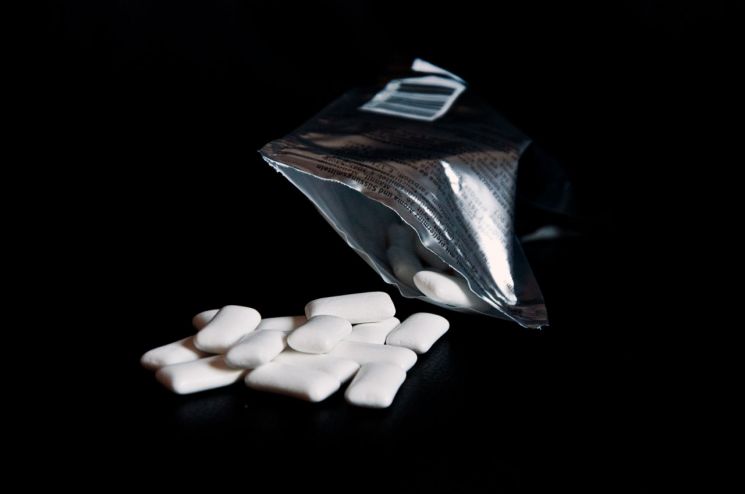
On the 25th (local time), according to CNN and others, a research team led by Professor Sanjay Mohanty at the University of California, Los Angeles (UCLA) revealed preliminary research results investigating how many microplastics can be ingested when chewing natural and synthetic gum. Microplastics refer to plastic fragments ranging in size from 1μm (micrometer; 1μm is one-millionth of a meter) to 5mm.
Typically, gum is made from a rubber base, sweeteners, flavorings, and other ingredients. Natural gum products use plant-based polymers such as chicle or other tree saps, while synthetic gum uses a synthetic rubber base made from petroleum-based polymers.
The study used a total of 10 types of gum, including 5 brands of synthetic gum and 5 brands of natural gum. The research team had participants chew the gum and then collected saliva samples to measure the rate and amount of microplastics released.
The results showed that an average of 100 microplastics were released per gram of gum. Some gums released up to 637 microplastics per gram. The average number of microplastics contained in 1g of synthetic gum was 104, while natural gum contained 96. Most microplastics were released within the first 2 minutes of chewing, and 94% of the total microplastics were released within 8 minutes of chewing.
The research team noted that there has been little research on microplastics related to gum compared to the amount of gum consumed. Professor Mohanty explained, "This study is not meant to alarm people. Scientists do not know whether microplastics are safe, but they know that people are exposed to plastics in daily life. That is what we wanted to investigate."
The team explained that if one wants to reduce the possibility of microplastic exposure, it is better to chew a piece of gum for a longer time. They said, "The release of microplastics is not due to enzymes in saliva but rather the strong abrasive action during chewing."
Professor Mohanty stated that in this experiment, only microplastics larger than 20μm could be identified due to equipment limitations. He noted that smaller particles might not have been detected and that additional research is needed to accurately assess the possibility of nanometer-sized plastic release.
Meanwhile, this study is scheduled to be presented at the American Chemical Society Spring Meeting held in San Diego, USA, on the 26th.
© The Asia Business Daily(www.asiae.co.kr). All rights reserved.

















