KDCA and Korean Society of Antimicrobial Therapy
Release Clinical Pathway Guidelines
for Antibiotic Use in Long-term Care Hospitals
The Korea Disease Control and Prevention Agency (KDCA) announced on the 26th that it has published the "Guidelines for Infectious Disease Diagnosis and Antibiotic Use in Long-term Care Hospitals" in collaboration with the Korean Society of Antimicrobial Therapy.
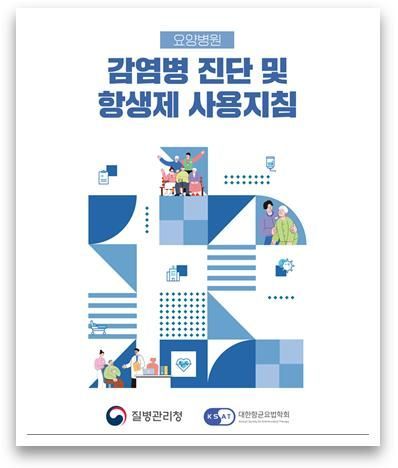
These guidelines were developed to support the appropriate use of antibiotics in long-term care hospitals. Considering the shortage of personnel for appropriate antibiotic use and diagnostic infrastructure in these hospitals, the guidelines were created in the form of clinical pathways that allow the antibiotic prescription process to be viewed at a glance, thereby enhancing their practical use in the field.
Appropriate antibiotic use management is a method that supports optimal antibiotic use, including the selection of suitable antibiotics, treatment duration, and administration routes, and is presented as an important means to overcome the antibiotic resistance crisis.
According to a survey conducted by the KDCA in 2023 on antibiotic use in domestic long-term care hospitals (2020?2022), the amount of antibiotic use in long-term care hospitals was higher than in acute care hospitals, but the appropriateness of antibiotic prescriptions was low (35.2%). Additionally, in a nationwide survey of physicians in long-term care hospitals, most medical staff responded that "management of appropriate antibiotic use within long-term care hospitals (88.9%)" and "development of infection disease treatment guidelines tailored to long-term care hospitals (84.9%)" were necessary to improve antibiotic prescription appropriateness.
In response, the KDCA reflected the characteristics of long-term care hospitals, which need to comprehensively treat various infections in elderly patients with weakened immunity, and developed clinical pathway-type guidelines covering four types of diseases commonly occurring in long-term care hospitals: hospital-acquired pneumonia, urinary tract infections, skin and soft tissue infections, and pressure ulcer infections. These guidelines include clinical symptoms, diagnostic tests, and empirical and therapeutic antibiotic selections, and were published as posters and booklets for easy reference by medical staff in long-term care hospitals during clinical practice.
Posters were produced with one copy per infection type, and the booklet contains clinical pathways for all four infections in one volume. These guidelines can be downloaded directly from the KDCA website.
The Korean Society of Antimicrobial Therapy stated, "The significance of these guidelines lies in the fact that medical staff from long-term care hospitals participated in the development process, making them easy to use in clinical practice within long-term care hospitals."
Jiyoung Mi, Director of the KDCA, said, "This new, simple, and easy-to-use guideline is expected to serve as a guide for appropriate antibiotic use," adding, "We will continue to develop clinical pathway-type guidelines for various infections to support the smooth establishment of appropriate antibiotic use in medical institutions."
© The Asia Business Daily(www.asiae.co.kr). All rights reserved.

















