Five-Year Plan Established... 2.8 Billion KRW Invested, 1% Reduction Annually
RFID Meters for Apartment Complexes, Reduction Machines for Businesses
Encouraging Citizen Participation Through Target Management and Competitions
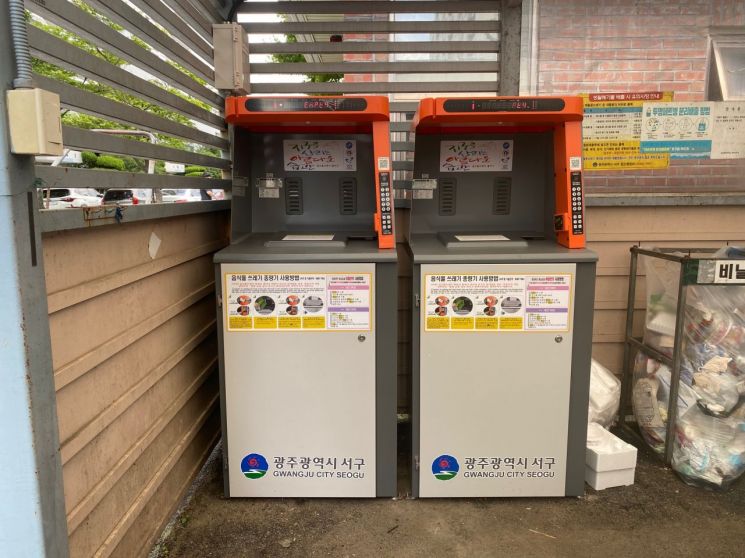
The city of Gwangju announced on the 25th that it has established a comprehensive five-year plan (2025?2029) to reduce food waste and will begin full-scale implementation starting this year.
To achieve the goals of the comprehensive plan, the city has set the slogan “Opportunity City Gwangju, a Sustainable Future with 1% Change,” aiming to reduce food waste by 1% (1,530 tons annually) each year.
Over the next five years, until 2029, a total of 2.8 billion KRW will be invested in three main areas with eight detailed projects: ▲expanding infrastructure such as RFID and food waste reduction machines, ▲strengthening suppression at the source for households and businesses, and ▲enhancing education and publicity for students and citizens.
First, to “expand reduction infrastructure,” 510 RFID-based food waste meters will be distributed to 30,600 households in apartment complexes. These RFID meters use a radio frequency system to measure the amount of food waste disposed of by each household and charge fees based on the amount discarded. Not only are they highly effective in reducing waste, but citizens can also conveniently dispose of food waste using issued cards.
For businesses that generate large amounts of food waste, such as restaurants and group cafeterias, 150 food waste reduction machines will be supplied. These machines process food waste directly at the source through methods such as drying or fermentation. They are highly effective in reducing waste, and the remaining by-products can be used as compost.
To “strengthen suppression at the source,” citizen participation policies such as apartment complex food waste reduction competitions and target management systems currently being promoted by local districts will be expanded. These policies encourage citizens to voluntarily reduce food waste at home and in businesses, offering incentives to those who achieve a reduction compared to the previous year.
Apartment complexes that achieve outstanding results in the food waste reduction competition will receive not only existing incentives such as fee reductions and prize money but also additional rewards such as a commendation plaque from the mayor to encourage participation. In addition, exemplary cases will be promoted through channels such as the BIS (Bus Information System), electronic billboards, and elevator monitors.
To expand the target management system for businesses, essential participation groups will be formed in each district, and cooperation with related organizations such as the Office of Education and the Korea Foodservice Industry Association will be strengthened to promote policies in schools and restaurants. Furthermore, additional incentives will be provided to outstanding businesses to encourage participation.
New reduction policies will also be pursued, such as a pilot project linking large supermarkets with local food banks to donate fresh food, targeting businesses with high food waste generation.
For “enhancing education and publicity,” the city will collaborate with the Gwangju Climate and Energy Promotion Agency’s team of professional instructors to expand on-site resource circulation education for students and citizens to 250 sessions per year. Field trips to local environmental infrastructure sites (landfills and food waste recycling facilities) will also be conducted so participants can experience waste treatment processes firsthand.
Seasonal reduction campaigns will be activated during periods of high food waste generation, such as holidays and kimchi-making season, and customized publicity activities will be carried out in cooperation with the Office of Education, the Korea Foodservice Industry Association, and others.
Jung Mikyung, head of the Resource Circulation Division, stated, “Reducing food waste requires the interest and participation of citizens,” and added, “Gwangju City will continue to promote reduction policies in cooperation with local districts and related organizations.”
Meanwhile, an analysis of food waste reduction policies implemented by Gwangju City over the past six years (2018?2023) showed that in 2023, the amount of food waste generated was 151,422 tons, a decrease of 22,423 tons compared to 2018 (173,845 tons). Treatment costs were also reduced by approximately 2.2 billion KRW.
© The Asia Business Daily(www.asiae.co.kr). All rights reserved.

















