10 Hub Shelters and 14 Simple Shelters: Over 370,000 Users
Four Additional Simple Shelters to Open This Year in Gwangmyeong, Yongin, Ansan, and Hwaseong
Enhancing Convenience and Expanding Programs for Shelter Users
Evolving Into a Comprehensive Support Platform Beyond a Rest Area
Gyeonggi Province operates the largest number of 24 mobile worker rest shelters nationwide, with a total of approximately 370,000 users last year, marking a 51% increase compared to 2023 (around 240,000 users).
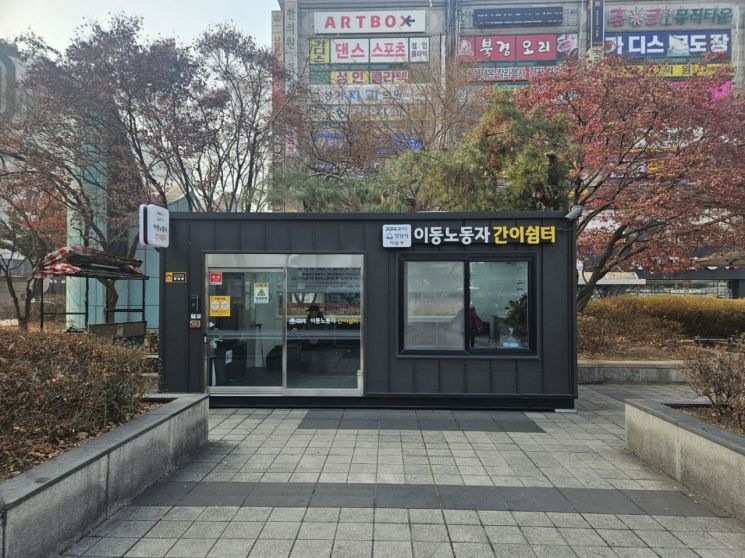
According to Gyeonggi Province on the 25th, the shelters are operated in two types: hub-type (10 locations), which provide spacious areas and various services, and simple-type (14 locations), which focus on accessibility and easy rest. Last year's usage statistics show that the simple shelters had a usage rate of 63% (about 230,000 users), higher than the hub shelters (37%, about 130,000 users).
Based on this, the province plans to add four simple shelters this year in areas with high foot traffic such as station plazas and commercial area public parking lots in Gwangmyeong, Yongin, Ansan, and Hwaseong.
Convenience of shelter use will also be enhanced. The entry management system will be automated through QR codes or mobile authentication to simplify usage procedures and prevent illegal or unauthorized use, thereby improving the safety and systematization of the shelters. Collected usage data will be analyzed to flexibly adjust operating hours, and opening on weekends and late nights, when workers find it difficult to find rest spaces, is also being actively considered.
Gyeonggi Province aims to develop the shelters from simple rest spaces into comprehensive support platforms by expanding various programs such as labor counseling, education, health checkups, and self-help groups, and by establishing networks linking local infrastructure and labor-related organizations.
Additionally, to ensure the sustainability of the shelters, regular public-private cooperation meetings and reporting sessions will be institutionalized. Through this, communication among users, local residents, related institutions, and organizations will be strengthened, and opinions on shelter operations will be collected and reflected in policies.
Jo Sang-gi, Director of the Labor Rights Division of Gyeonggi Province, said, “We will continue to improve and expand the shelters so that they can become hubs where mobile workers can constantly communicate and receive welfare and support beyond just resting spaces. We will do our best to guarantee rest spaces for mobile workers and improve their quality of life.”
Meanwhile, the current hub-type shelters in Gyeonggi Province are located in 10 places including Suwon, Seongnam, Gwangju, Hanam, Siheung, Gwangmyeong, Bucheon, Anyang, Uiwang, and Pocheon, while the simple-type shelters are installed in 14 locations including Goyang (2 locations), Paju (2 locations), Guri, Gwangmyeong, Yongin, Ansan (2 locations), Seongnam, Icheon, Namyangju (2 locations), and Hwaseong.
© The Asia Business Daily(www.asiae.co.kr). All rights reserved.

















