"Preparing for the Worst-Case Scenario"
As the Trump administration in the United States prepares to implement a strong protectionist policy known as "reciprocal tariffs," our government has mobilized all diplomatic efforts for a last-minute persuasion campaign to prevent a tariff bomb. In particular, during a recent visit to the U.S., our officials actively explained that the effective tariff rate under the Korea-U.S. Free Trade Agreement (FTA) is close to zero, and it is reported that the U.S. side expressed understanding of Korea's situation.
A senior official from the Ministry of Trade, Industry and Energy told reporters on the 24th, "At the ministerial talks between the two countries, U.S. Secretary of Commerce Wilbur Ross understood and confirmed that the effective tariff rate under the Korea-U.S. Free Trade Agreement (FTA) is 0%," adding, "The U.S. showed a response indicating they now understand issues they had previously misunderstood or unresolved."
The official said, "The second meeting between Minister Ahn Duk-geun and Secretary Ross, held three weeks after their first, was conducted in a friendly atmosphere," and added, "Especially, the purchase contract of U.S.-made aircraft engines by Korean Air helped create a positive atmosphere with the U.S. side."
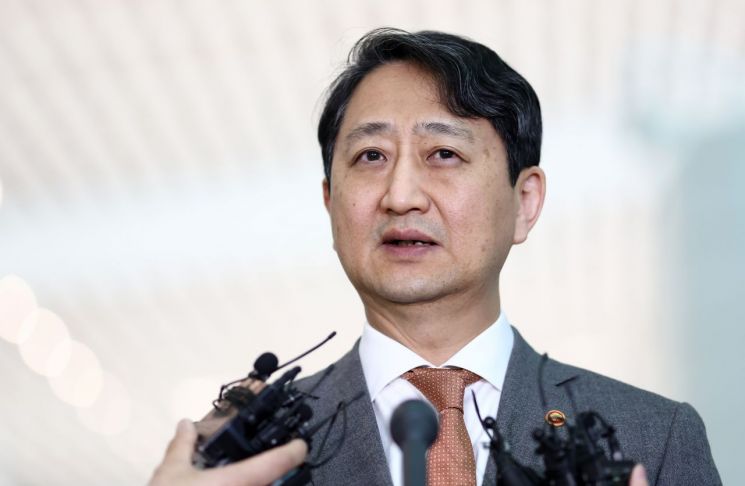
Regarding U.S. demands related to reciprocal tariffs, the official said, "The U.S. wants Korea to purchase more American products or expand investment within the U.S.," and added, "In terms of non-tariff measures, there were no specific demands on particular items, but rather a general request to lower barriers for U.S. products entering the Korean market."
He continued, "When deciding on reciprocal tariffs, the U.S. comprehensively considers various factors such as tariff differences, non-tariff measures, domestic taxes, exchange rates, and policies," and added, "The U.S. has not specifically disclosed how these factors will be evaluated internally to make the final decision, so there is significant uncertainty from our perspective."
He emphasized, "Since President Trump holds the final decision-making authority, even U.S. cabinet members have not reached a definitive conclusion," and said, "From the government's standpoint, even if tariffs are actually imposed, we plan to make long-term efforts to reduce or withdraw them through negotiations."
The government plans to approach the reciprocal tariff issue not as a short-term response but with a long-term perspective. The official said, "We are responding on the assumption of the worst-case scenario where reciprocal tariffs are imposed on the 2nd of next month," and added, "It is important to see how high the reciprocal tariff rate will be and also to review support measures while observing how much tariffs our major competitors will face."
Another official from the Ministry of Trade, Industry and Energy, regarding the recent controversy over Korea's designation as a "sensitive country," said, "While the designation as a sensitive country may strengthen additional approval procedures for cooperation with U.S. national research institutes, the U.S. side has officially confirmed that there are no practical problems in bilateral cooperation," and added, "The government takes the sensitive country designation issue seriously and is discussing solutions through continuous working-level consultations with the U.S."
When asked whether the government would disclose the removal from the sensitive country list in the future, he said, "That has not been decided yet."
© The Asia Business Daily(www.asiae.co.kr). All rights reserved.
![Clutching a Stolen Dior Bag, Saying "I Hate Being Poor but Real"... The Grotesque Con of a "Human Knockoff" [Slate]](https://cwcontent.asiae.co.kr/asiaresize/183/2026021902243444107_1771435474.jpg)
















