Aiming for 50% Energy Self-Sufficiency by 2030
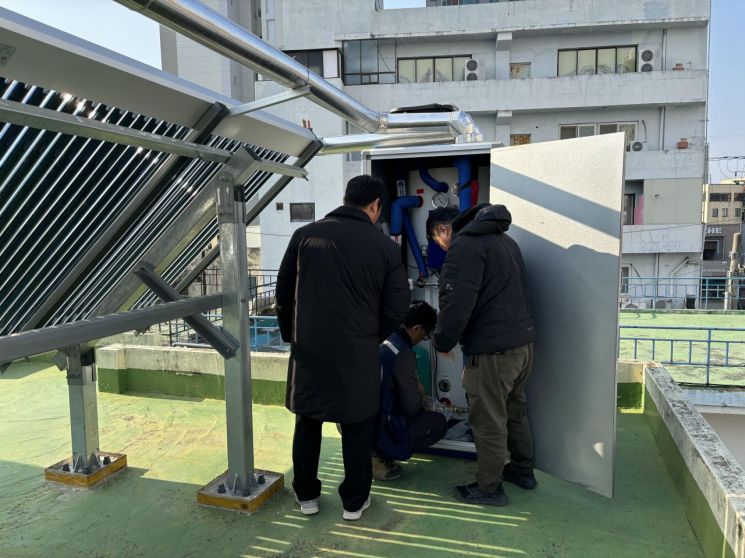 Namgu District in Gwangju aims to achieve a 50% self-sufficiency rate in renewable energy for detached houses by 2030 and is starting to build solar photovoltaic and solar thermal facilities. Photo by Namgu District Gwangju
Gwangju Nam-gu (District Mayor Kim Byungnae) is set to establish solar power and solar thermal facilities with the goal of achieving a 50% renewable energy self-sufficiency rate for single-family homes by 2030.
According to Nam-gu on the 24th, the district will promote this project by forming a consortium between the district office and renewable energy companies, as the government is holding a public contest for next year's renewable energy supply projects targeting local governments nationwide.
Next year, the district plans to supply solar power facilities to 250 locations, including houses, commercial buildings, apartment complexes, social welfare facilities, and senior centers throughout the region. Additionally, solar thermal facilities will be installed at 40 locations, including local administrative welfare centers. The total project cost is expected to be around 3 billion KRW.
Eligibility to participate in the consortium is limited to companies that can jointly handle all processes from installation to monitoring, design, and supervision of renewable energy systems. The consortium must include both a company specializing in solar power installation as the main contractor and companies specializing in solar thermal installation.
In addition, solar power and solar thermal installation companies must have obtained qualification to participate in renewable energy supply projects by submitting supporting documents to the Korea Energy Agency last year. Only monitoring companies certified by the agency as remote terminal unit (RTU) manufacturers are eligible to participate.
Companies wishing to join the consortium must submit a business proposal, PPT booklet, and various supporting documents to the district office by the 27th. The selection of participating companies will be decided at an evaluation committee meeting scheduled for the 1st of next month, and the company with the highest combined score from quantitative and qualitative evaluations will be selected.
After finalizing the consortium participants, the district will submit a project plan for next year to the Ministry of Trade, Industry and Energy. The ministry is expected to conduct public and in-depth evaluations from July to September and select the target regions for next year's projects around October.
Since 2019, the district has been selected for the government-led renewable energy supply project for seven consecutive years, supplying solar power and solar thermal facilities to 2,324 locations, including houses, apartment complexes, and commercial buildings in the region.
A district official stated, "As we are leading the renewable energy sector, we expect to achieve good results in next year's project as well," adding, "We will do our best to be selected for the contest to improve eco-friendly energy self-sufficiency and build an energy-independent city."
© The Asia Business Daily(www.asiae.co.kr). All rights reserved.

















