Business Survey Index for the Second Quarter of This Year
Second Quarter Index Rises to 92, Up 8 Points from Previous Quarter
Slight Improvements in Sales, Operating Profit, and Facility Investment
Negative Business Sentiment Persists in Automobiles, Parts, Machinery, and Equipment
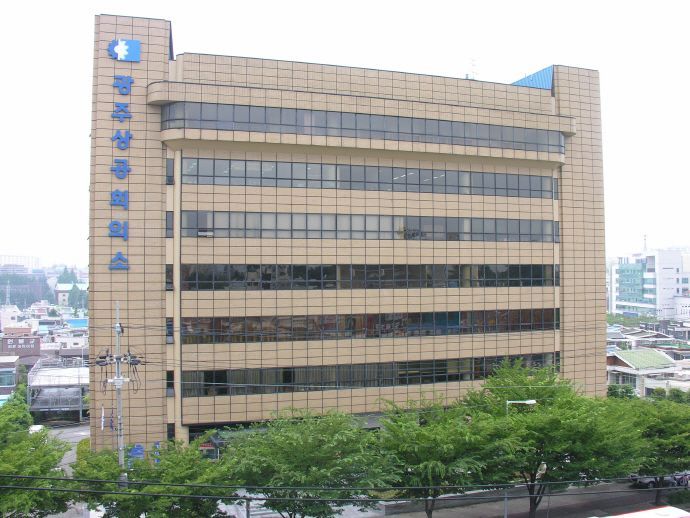
The business outlook for manufacturing companies in Gwangju for the second quarter of this year has risen slightly compared to the first quarter, but signs of stagnation are expected to persist.
According to the Gwangju Chamber of Commerce and Industry on the 24th, a survey of 139 manufacturing companies in the Gwangju area on the '2025 Second Quarter Business Survey Index' (BSI) showed that the BSI outlook rose by 8 points to 92, compared to the previous quarter's 84.
This indicates that, despite factors such as domestic political uncertainty, rising exchange rates dampening investment and consumer sentiment, and the Trump administration's tariff policies further worsening the business climate for local manufacturers, the BSI outlook index has increased slightly. However, the economy is still seen as remaining in a slump.
The BSI indicates that a value of 100 or above means more companies expect the next quarter's economy to improve over the current one, while a value below 100 indicates the opposite.
By management category, sales (85→94), operating profit (78→83), and facility investment (90→94) all saw slight improvements from the previous quarter due to the resumption of production activities in the seasonal peak and new car launches. However, these figures still fall below the baseline (100), suggesting continued economic sluggishness.
Reflecting these results, 71.2% of companies set their sales targets for this year at or below last year's level. Additionally, 81.3% of companies set their investment targets at or below last year's level, confirming that business activities in the region remain significantly subdued.
By industry, electronics and telecommunications (100), steel and metal (117), and chemicals, rubber, and plastics (100) are expected to see improved market conditions. In contrast, automobiles and parts (79), machinery and equipment (90), food and beverages (53), and glass and cement (50) are forecasted to face worsening business sentiment in the second quarter.
▲Electronics and telecommunications (88→100) are expected to benefit from increased demand for seasonal home appliances and rising overseas orders. ▲Steel and metal (94→117) are seeing increased expectations for both domestic and international market improvement due to the peak season for the industry (home appliances, agriculture-related products) and Hyundai Steel's anti-dumping petition. ▲Chemicals, rubber, and plastics (79→100) are expected to see positive prospects due to increased deliveries and market optimism.
Automobiles and parts (74→79) are expected to be directly impacted by U.S. government tariff policies, with negative outlooks due to rising raw material costs and weakening economic conditions. However, there is also some positive anticipation for increased production and exports driven by new car launches.
▲Machinery and equipment (60→90) are facing continued domestic economic stagnation, reduced exports, prolonged high interest rates and exchange rates, and rising material costs. ▲Food and beverages (108→53) are negatively affected by economic downturns, reduced consumer spending, rising raw material costs due to exchange rate increases, and fewer foreign visitors. ▲Glass and cement (33→50) are expected to face a negative outlook due to weakened construction activity stemming from real estate PF restructuring and reduced SOC budgets.
By company size, large and mid-sized companies (67→108) expect an economic upturn due to increased demand for seasonal home appliances and new product launches. However, their first quarter performance (67→67) remained below the baseline (100) and was as sluggish as the previous quarter.
Small and medium-sized enterprises (86→91) saw a slight increase, but still fell short of the baseline due to continued domestic economic stagnation, reduced exports, and economic uncertainty.
By export scale, both export-oriented companies (85→97) and domestic market-oriented companies (84→91) saw slight increases. However, negative outlooks for the second quarter of 2025 persist due to rising raw material costs, exchange rate fluctuations, economic downturns and reduced consumer activity, and increasing labor costs.
Chae Hwaseok, Executive Vice Chairman of the Gwangju Chamber of Commerce and Industry, stated, "While the regional economy continues to stagnate, different industries are showing varying economic outlooks. We will spare no effort in providing practical and multifaceted support so that companies can overcome the recession and establish a foundation for sustainable growth through strategic investment and risk management."
© The Asia Business Daily(www.asiae.co.kr). All rights reserved.

















