This Year, 1.328 Billion KRW Allocated
Up to 7 Million KRW in Removal Support per Building
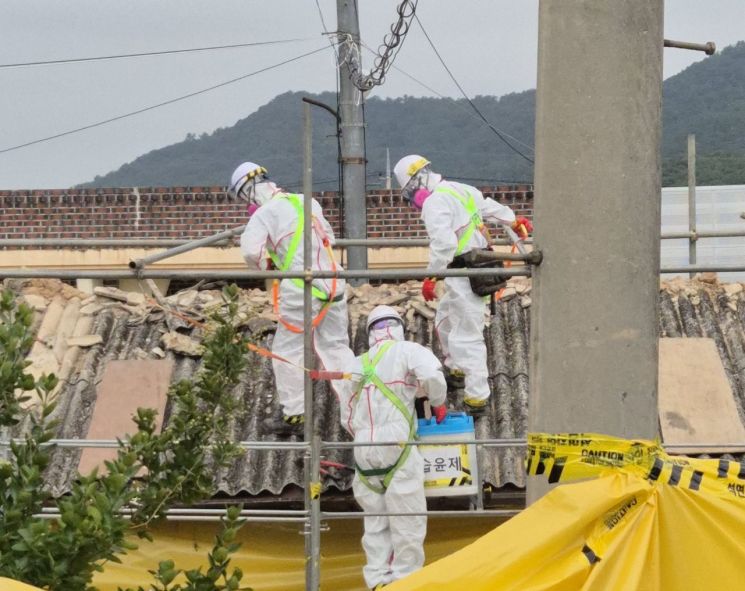
Gwangju City announced on the 24th that it will implement a slate removal support project for buildings containing asbestos, a Class 1 carcinogen.
The “Slate Removal Support Project” provides full or partial financial assistance for the removal of slate structures such as houses, warehouses, and livestock sheds, as well as for roof improvement (for houses only). Tenants may apply only with the consent of the property owner.
This year, the city plans to allocate 1,328 million KRW to support a total of 360 buildings. For residential demolition and removal, general households will receive support ranging from 3.52 million to 7 million KRW per building (priority households receive full support). For non-residential buildings (such as warehouses and livestock sheds), the city will cover the cost of removing up to 200 square meters of slate per building (the same applies to priority households). For roof improvement of houses, 3.14 million KRW will be provided per building (only for priority households). Notably, while support for non-residential buildings was limited to warehouses and livestock sheds last year, this year the program has expanded to include facilities for the elderly and children.
Applicants wishing to receive support must fill out and submit an application to their local district office or community welfare center. After an inspection of the slate area, a construction schedule will be set. For more details, applicants should refer to the district’s official announcement or contact the relevant department. Even after the application period ends, support will continue until the project budget is exhausted. Priority households include basic livelihood security recipients, lower-income households, families with multiple children, and other vulnerable groups, who will be selected and supported in that order.
Asbestos slate is a building material containing about 10-15% asbestos, widely used for ceilings and roofs since the 1970s. Prolonged exposure can cause serious health issues such as lung cancer, making ongoing monitoring essential.
Since 2011, the city has invested a total of 12 billion KRW to remove and support 4,462 slate buildings, thereby protecting citizens’ health and improving residential environments.
Kim Osuk, Director of Environmental Conservation, stated, “Asbestos dust from deteriorated slate buildings poses a threat to citizens’ health. We will do our utmost to ensure safe removal through financial support and to help citizens live in a healthier and more pleasant residential environment.”
© The Asia Business Daily(www.asiae.co.kr). All rights reserved.

















