Seoul Announces Results of Didimdol Income Consistency Study
Proposes Linkage of Public Assistance, Social Insurance, and Social Services
Shifting to Proactive Support to Enhance Resilience
It was found that among the households receiving 'Didimdol Income,' a Seoul Mayor Oh Se-hoon’s income security policy experiment, 8.6% of households experienced an increase in income and no longer needed support over the course of about three years. More than 30% of households also saw an increase in earned income. Mayor Oh stated that based on this welfare model, a detailed welfare safety net can be established in South Korea.
On the 24th, the Seoul Metropolitan Government announced the research results of Didimdol Income, highlighting these findings. The consistency study, which began in March last year, included content on building a virtuous cycle safety net through organic linkage of public assistance, social insurance, and social services.
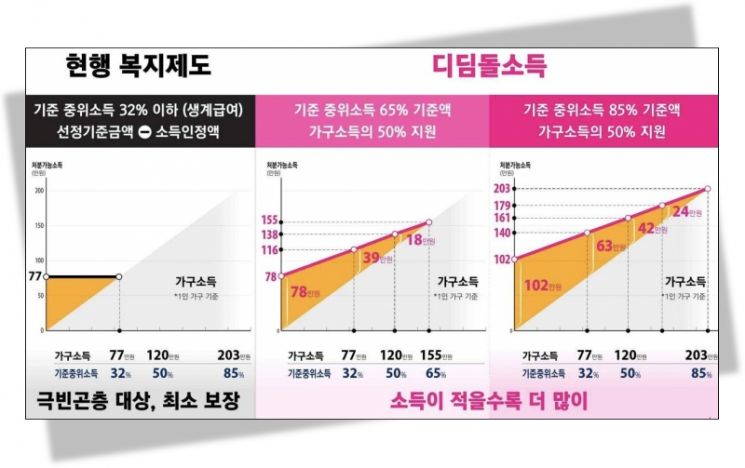
Didimdol Income, which started in 2022 and is now in its third year, is a system that supplements a certain portion of household income lacking compared to the standard income for households earning 85% or less of the median income (with assets of 326 million KRW or less). It is a progressive support model that provides more assistance to those with lower income, selecting participating households based solely on income and asset criteria, ensuring that low-income households in the blind spots of the system receive sufficient support, and maintaining eligibility even if income exceeds the standard. Currently, Seoul provides Didimdol Income to a total of 2,076 households.
As a result of the income experiment over about three years, the rate of households that exceeded 85% of the median income and no longer needed to receive Didimdol Income was 8.6%. Notably, 31.1% of households also experienced an increase in earned income. There were also positive effects in areas such as productive activities like education and training, savings, increased consumption of essential goods, and improved mental health.
Before announcing the research results, Mayor Oh said, "It is necessary to shift the welfare policy paradigm from supporting only after becoming poor to proactively supporting before poverty occurs to enhance resilience," and presented a vision for a K-welfare model centered on Didimdol Income. He stated that by efficiently integrating and linking similar cash benefits based on Didimdol Income and reorganizing the complex income security system, a more detailed welfare safety net can be established. He also proposed building a retirement income security system through Didimdol Income in connection with national pension reform. Beyond income support through Didimdol Income, he mentioned support systems linked to social insurance and social services, including care, employment and job placement, education, and training. Mayor Oh added, "We will establish a stable K-welfare framework to enhance resilience."
The study was conducted by dividing households into ▲high poverty risk group (65% or less of median income) ▲poverty risk group (75% or less of median income) ▲low-income unstable group (85% or less of median income). The model for the high poverty risk group, with 65% or less of the median income, guarantees income similar to the current livelihood benefits while resolving blind spots caused by complex procedures and strict criteria such as support obligation standards, proof of work incapacity, and income conversion of assets, providing a timely and detailed social safety net.
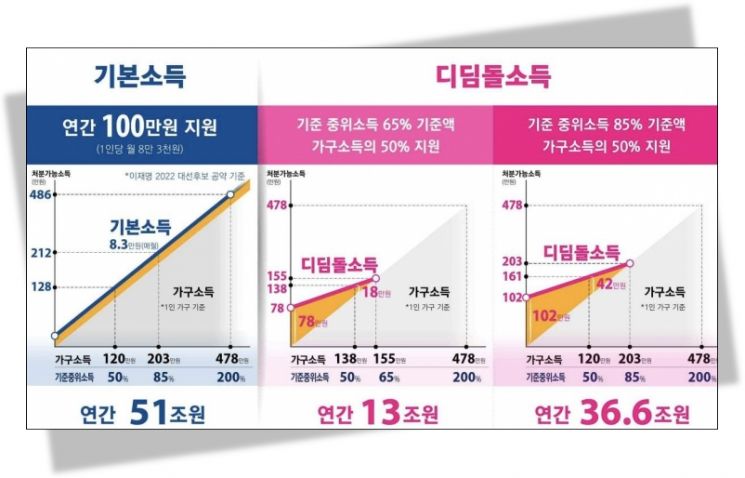
Applying this model, about 5.94 million households, approximately 27% of the total 22.07 million households nationwide, could receive Didimdol Income. To achieve this, integration of 10 systems including the National Basic Livelihood Security System’s livelihood and self-support benefits, the National Employment Support System, and local government supplementary benefits is necessary. The required budget was estimated at about 13 trillion KRW.
The study also included a plan covering the poverty risk group, households with income below 75% of the median income, which is the standard for national emergency welfare. Unlike the current method of temporary, short-term support during specific crises such as unemployment or business closure, this model protects households living in conditions equivalent to poverty from various crises. The key is that it can prevent entry into poverty in advance and guarantee living standards. It is estimated that about 6.53 million households, approximately 30% of all households nationwide, would receive Didimdol Income support, requiring an additional budget of about 23.9 trillion KRW.
Additionally, a model including the low-income unstable group, up to 85% of the median income, identical to the current pilot project, was also studied. This is an inclusive model that can support one-third of all households. Applying this model would exclude risks and anxieties related to income decline, enabling active social participation and self-realization support, and is expected to integrate even housing benefits from the Basic Livelihood Security System. As the guarantee level expands to 42.5% of the median income, additional budget requirements are estimated at about 36.6 trillion KRW.
Based on the results of this consistency study, Seoul plans to develop various experimental models to expand Didimdol Income nationwide. Representative studies include ▲establishing a Didimdol Income-social service delivery system ▲enhancing work incentives of Didimdol Income ▲gradual securing of welfare resources. Mayor Oh said, "The past three years of Seoul’s Didimdol Income pilot project have been a time to confirm the vision and potential of K-welfare," adding, "Didimdol Income is the only alternative that can complement the current system’s blind spots and encompass new policy targets such as poverty risk groups."
© The Asia Business Daily(www.asiae.co.kr). All rights reserved.


















