Even If Later Found "Irrelevant,"
"Seizure Already Conducted Is Not Immediately Illegal"
The Supreme Court has ruled that even if it is later revealed that seized items are unrelated, the search and seizure cannot be deemed illegal. The relevance used to determine the legality of the search and seizure must be based on the time when the seizure was conducted.
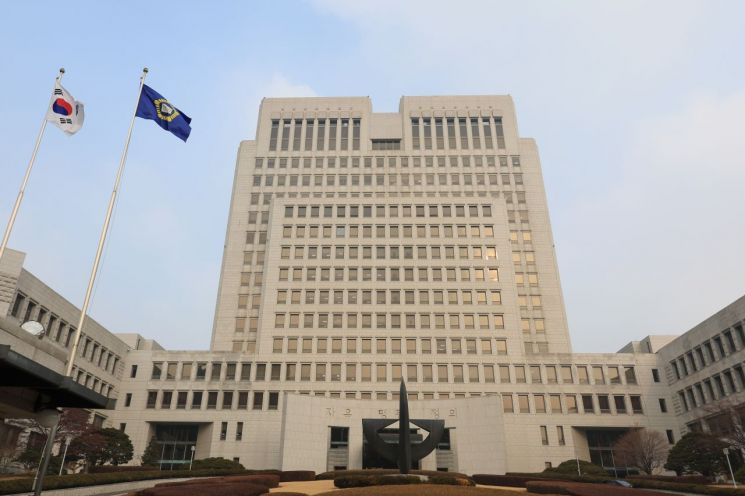
According to the legal community on the 24th, the Supreme Court's Third Division (Presiding Justice Lee Heung-gu) overturned the lower court's verdict that acquitted Mr. A, who was indicted on charges of violating the Military Secrets Protection Act, and remanded the case to the Suwon District Court on the 27th of last month.
Mr. A, who retired as an army colonel in December 2016, was indicted by the military prosecution for allegedly storing military secrets obtained while working as an inspector even after his authorization to handle military secrets was revoked, keeping them at his residence until July 2018. The military prosecution obtained a warrant from the court in July 2018 to search Mr. A's residence while investigating Sergeant Major B of the army, who was suspected of leaking the division relocation plan, a military secret. Documents containing 2nd to 3rd level classified information, such as the deployment status of units near Gyeonggi Province, were found.
The key issue in this case was whether the military prosecution's search and seizure was lawful. Evidence unrelated to the criminal facts cannot be used as evidence in a criminal trial. Both the first and second trials acquitted Mr. A based on relevant legal principles. The documents found at Mr. A's home were obtained during his work as an inspector and were deemed unrelated to Sergeant Major B's alleged crime of leaking the division relocation plan.
However, the Supreme Court held that although it was later revealed during the investigation and trial that the documents seized from Mr. A were not directly related to Sergeant Major B's criminal facts, there was sufficient reason to consider them relevant evidence at the time of seizure.
The Supreme Court stated, "The seized items can serve as indirect and circumstantial evidence regarding the charges in the first warrant against Sergeant Major B and have significant value as corroborative evidence to guarantee the truthfulness of B's confession related to the charges in the first warrant," adding, "Even if circumstances later arise that deny the relevance, the seizure already conducted cannot be deemed immediately illegal."
© The Asia Business Daily(www.asiae.co.kr). All rights reserved.

















