Jongno Academy Analyzes Medical School Transfer Admissions Over the Past Three Years
Average Competition Rate Reaches 59.8 to 1... Even Fiercer in Seoul
There is a forecast that if medical students on strike against the increase in medical school admissions do not return to school and are expelled in large numbers, the scale of transfer admissions next year could increase by dozens of times.
On the 23rd, Jongno Academy announced the results of an analysis of the transfer admission recruitment and application scale of 15 medical schools over the past three years (based on general transfer admissions and university information disclosure). The average competition rate for medical school transfer admissions was 59.8 to 1 (170 recruits with 10,167 applicants). The competition rates for medical school transfers were ▲52.2 to 1 in 2022 (15 universities recruiting 57 students) ▲62.0 to 1 in 2023 (16 universities recruiting 59 students) ▲65.4 to 1 in 2024 (17 universities recruiting 54 students), showing an increase every year over the past three years.
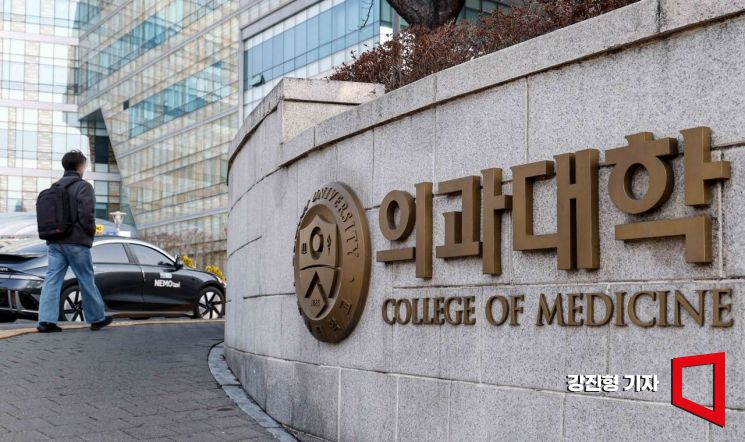 On the 21st, the day approaching the 'deadline' set by some medical schools including Yonsei University, Korea University, and Kyungpook National University for returning, a student is moving at Yonsei University College of Medicine in Seodaemun-gu, Seoul. Photo by Kang Jin-hyung
Competition for transfer admissions to medical schools in the Seoul area was even fiercer. The competition rate for Seoul-area medical school transfers in 2024 was 137.6 to 1, about 2.3 times higher than that of regional areas (59.5 to 1). Over the past three years, the competition rates for Seoul-area medical school transfers were ▲70.6 to 1 in 2022 ▲137.2 to 1 in 2023 ▲137.6 to 1 in 2024, increasing every year.
Experts predict that if medical students who have not returned are expelled and the transfer admission scale increases in a situation where the competition rate for medical school transfers is already 50 to 60 to 1, the competition rate could reach hundreds to one. Medical school transfers are conducted by students who have completed their sophomore year entering the first year of medical school after passing written exams in subjects such as chemistry and biology, interviews, and document screening. Because there is a written exam, students in science and engineering who studied natural sciences at university have a relative advantage.
Lim Seong-ho, CEO of Jongno Academy, said, "There are 7,500 students in the first and second years of medical school, and if more than half of them do not return to school, about 4,000 students will be expelled." He estimated, "Considering that universities usually recruit about 30% of transfer students to prepare for mid-course dropouts, this time each university might recruit about 1,000 transfer students." He added, "As the number of transfer students increases, not only will students enrolled in general science and engineering departments apply for transfers, but also students from regional medical schools may apply to medical schools in the metropolitan area. If students expelled from medical schools attempt to reapply, competition for medical school admissions is expected to become even more intense."
© The Asia Business Daily(www.asiae.co.kr). All rights reserved.

















