A Perfect Trio of Taste, Style, and Sights: Jeollanam-do's Top Tourist Destination
Baeksu Coastal Road, Forestjaengi Park, and More Must-Visit Attractions
Traces of Four Major Religions Add a Touch of Mystery
A Journey Through Baekje-Era History at Bulgapsa and Beyond
Rich in Maritime Heritage with Centuries-Old Salt Farms and Songido
If you head diligently toward the northwestern tip of Jeollanam-do, you will encounter Yeonggwang-gun, known as the "hometown of Gulbi (dried yellow corvina)." Situated on the ridges stretching southwest just past the Honam Mountain Range, Yeonggwang-gun is nestled beneath Jangamsan and Bulgapsan, with Taecheongsan as its pillar, exuding a mysterious aura where the past and present coexist.
Yeonggwang-gun, which boasts a long history with its name in use since the Goryeo Dynasty, is filled with curious tales, befitting its Chinese characters meaning "divine spirit (靈)" and "light (光)." The "Yeonggwang 9 Scenic Views" scattered throughout the region are the keys to unlocking these secrets.
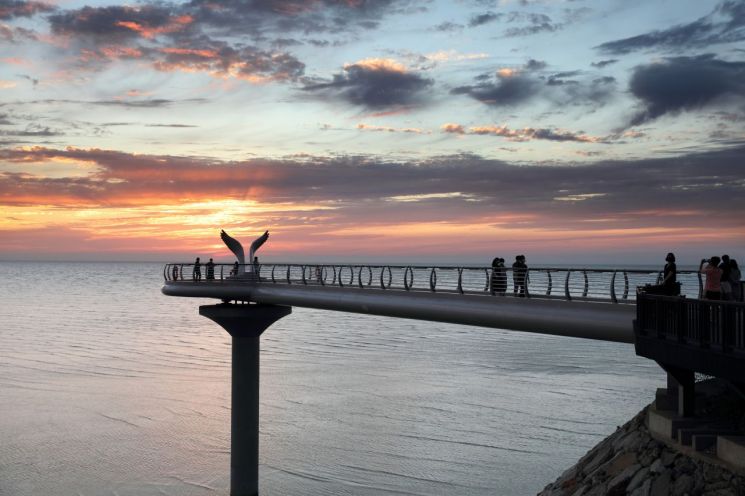 The red sunset floating beyond the Sunset Square on Baeksu Coastal Road in Yeonggwang is evoking admiration from viewers. Provided by Yeonggwang County
◆Scenic Drive: Baeksu Coastal Road
Chilsan Sea, known as the largest fishing spot in Korea, sets the backdrop for the Baeksu Coastal Road, which stretches about 16.8 km (from Gilyong-ri to Seokgumi Village in Baeksu-eup). This road is a tourist attraction that rivals any in the world, not just Korea.
When the red sun sinks below the horizon, the experience is intoxicating. On clear days, major islands of the West Sea such as Chilsando, Songido, and Anmado are visible at a glance.
Walking along the 2.3 km wooden deck sunset trail beneath the coastal road helps lighten the burdens of daily life.
The trail was selected as one of the "100 Most Beautiful Roads in Korea" by the Ministry of Construction and Transportation in 2006, and won the grand prize at the 1st Korea Natural Scenery Awards by the Ministry of Land, Transport and Maritime Affairs in 2011, already proving its value. The area around Baeksu Coastal Road is filled with charming pensions, cafes, and restaurants, making it especially recommended for those seeking a gourmet trip.
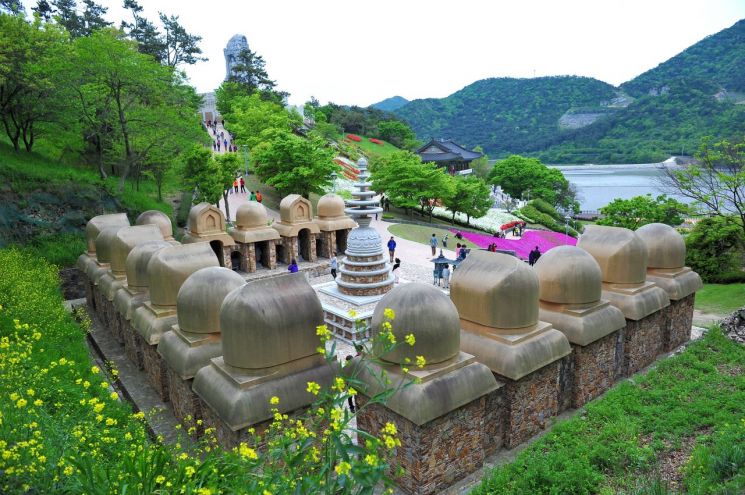
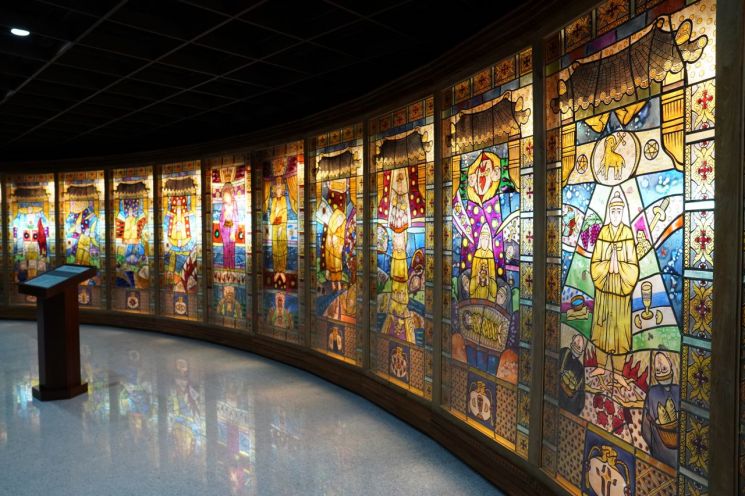
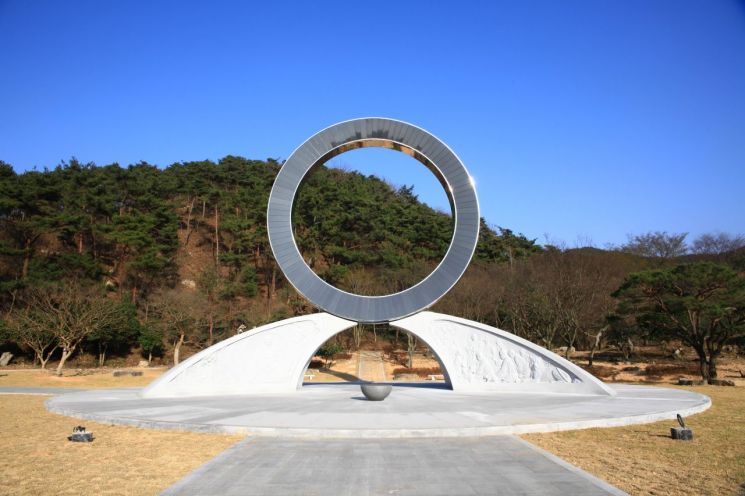
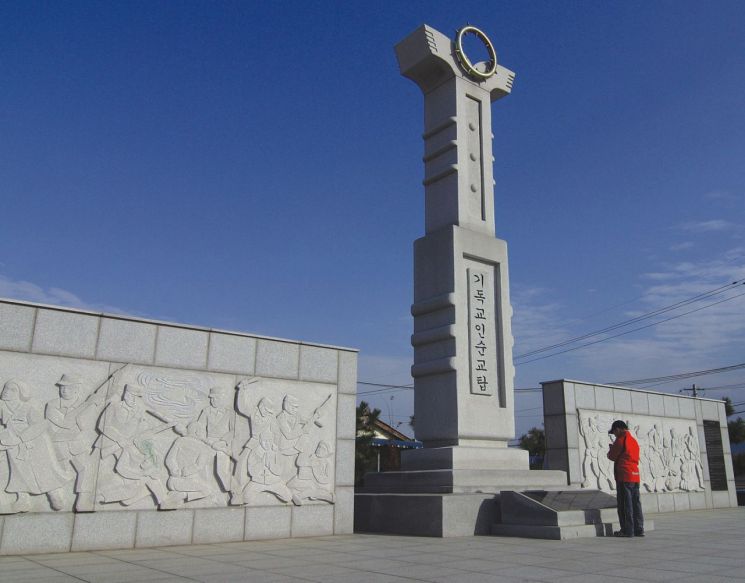
◆Traces of Four Major Religions at a Glance
I once heard a famous composer and singer say on a variety show that "a singer follows the title of their song." This means that the invisible power of a song's title greatly influences the singer.
Yeonggwang is just like that. As explained earlier, the Chinese characters for Yeonggwang mean "land of sacred light," indicating its mystical nature. Perhaps for this reason, traces of various religions that have continued for hundreds of years remain here.
First, Yeonggwang is home to the Baekje Buddhist Transmission Site, where Buddhism was first introduced to Baekje during the Baekje period. In 384 AD, Indian monk Marananta first spread Buddhism to Beopseongpo. The site features a Gandhara-style relics museum and four-faced Buddha statues, offering a taste of Buddhist culture.
The Yeongsan Holy Site of Won-Buddhism is also worth a visit. It is the birthplace of Won-Buddhism, where its founder, Sotaesan Park Jungbin, attained enlightenment, making it a place of sacred significance.
During the Korean War, the Christian Martyrs' Site commemorates the 194 Christians who were martyred for their faith in defiance of North Korean oppression. The Catholic Martyrs' Site, where Catholics were martyred during the Sinyu Persecution of the Joseon Dynasty, can also be found in Yeonggwang. These places, regardless of religious affiliation, are sites where the pure spirit of sacrifice of our ancestors can be remembered. They are precious places that still retain their religious aura.
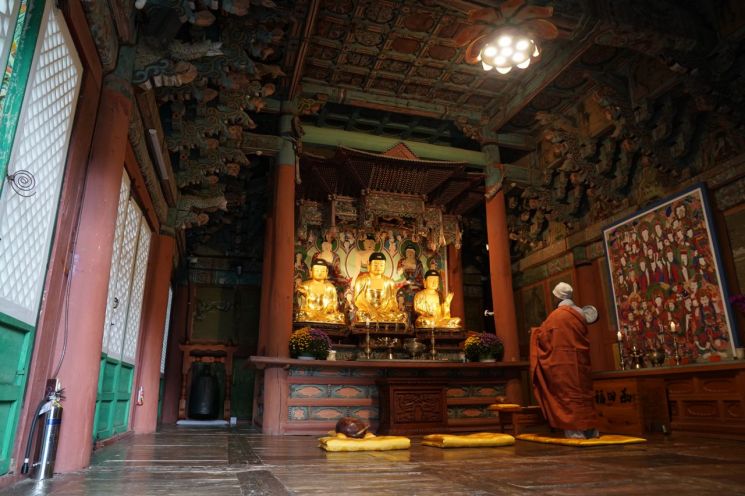
◆Bulgapsa: A Temple Steeped in Grand History
Bulgapsa is known as the first temple established by the Indian monk Marananta, who introduced Buddhism to Baekje through Yeonggwang Beopseongpo. The name Beopseongpo is said to mean "the port where the sage arrived" after Marananta's arrival.
Bulgapsa bears the traces of Marananta, who was so revered that King Chimnyu of Baekje allowed him to stay in the palace. At Bulgapsa, you can see precious cultural assets such as Daeungjeon Hall (Treasure No. 830), which preserves mid-Joseon architectural style, the Wooden Seated Shakyamuni Triad (Treasure No. 1377), and the Buddhist Relics Collection (Treasure No. 1470). The area around Bulgapsa is also home to the northernmost natural habitat of the Japanese bay tree (Natural Monument No. 112), adding to the wonder of nature.
Through temple stay programs and other Buddhist cultural experiences, you can make precious memories at Bulgapsa. It is a unique healing destination where historic Buddhist relics and beautiful nature come together in every season.
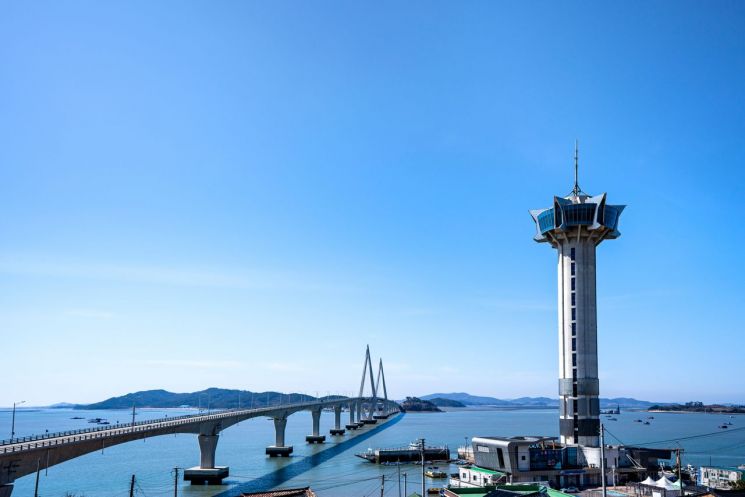 Chilsadaegyo Bridge and Chilsan Tower, connecting Muan County and Yeonggwang County, stand magnificently facing each other. Photo by Yeonggwang County
◆Chilsan Tower: Panoramic View of the West Sea
After driving along Baeksu Coastal Road during your Yeonggwang trip, you can reach Chilsan Tower by following National Road 77. Facing Chilsan Bridge, which connects Muan-gun and Yeonggwang-gun and spans 1.82 km, Chilsan Tower is known as one of the tallest observatories in Jeollanam-do. The observatory itself is 111 meters high, symbolizing the unity of Yeonggwang-gun's 11 towns and villages.
From the observatory, you can see the vast Chilsan Sea and numerous fishing boats clustered together. Especially at sunset, when the sea is dyed red, the view is truly spectacular. There are also restaurants and sashimi centers, attracting gourmets from all over the country.
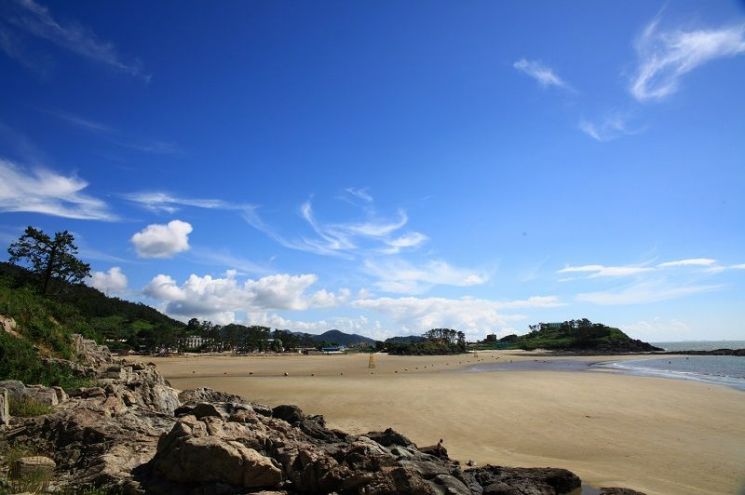 Gamami Beach boasts a natural landscape that represents the West Coast of Jeollanam-do. Photo by Yeonggwang County
◆Gamami Beach
The west coast is usually covered with thick mudflats, making it difficult to enjoy swimming. This is why Yeonggwang Gamami Beach is so special. With over 1 km of fine white sand, it offers refreshing enjoyment to visitors.
Lying under the shade of about 200 pine trees feels like paradise. The beach's crescent shape makes it cozier and more comfortable than other beaches. The water is exceptionally clean, and the temperature is just right, making it perfect for swimming for people of all ages. The spectacular sunset, a pride of Yeonggwang, is another attraction here.
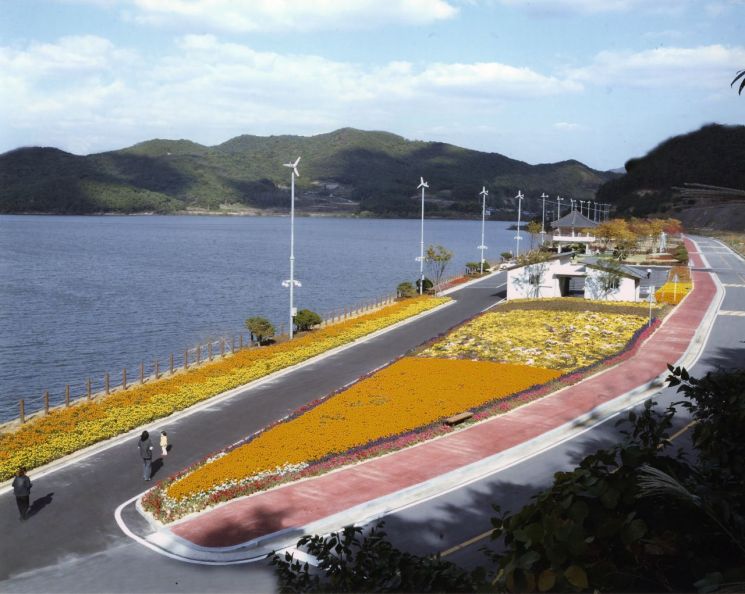
◆Rest and Relaxation at Bulgab Reservoir Waterfront Park
Bulgab Reservoir Waterfront Park, created around Bulgab Reservoir, captivates visitors with blooming flowers in every season. The circular drive course around the reservoir offers healing not only for couples but also for families.
In summer, the water ski resort, the best playground for water activities, is perfect for those seeking excitement. At the entrance to the road from the upper reservoir to Bulgapsa, you will find a thousand-year-old millstone, about 16 meters in size, which is an unusual sight to behold.
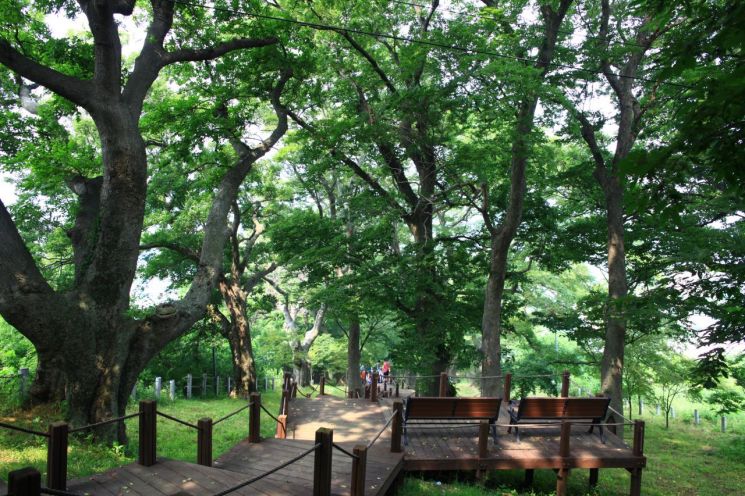 Various trees planted in Yeonggwang Supjaengi Park are creating a spectacular view. Provided by Yeonggwang County
◆Forestjaengi Park: Between Flowers and Trees
Forestjaengi means "fortress made of forest," referring to a place where trees have grown and intertwined over a long period. Yeonggwang Forestjaengi Park was created to extend Beopseongjin Fortress during the Joseon Dynasty, serving as a windbreak to protect the port and village using nature.
Although its purpose and form differ, it is similar to Damyang Gwanbangjerim in Jeollanam-do, where hundreds of hackberry trees were planted to prevent floods. Forestjaengi Park is home to various trees such as zelkova and hackberry, planted since the Joseon Dynasty and still preserved today.
Designated as National Scenic Site No. 22, Forestjaengi Park features a walking trail connected to the Baekje Buddhist Transmission Site, offering not only visual enjoyment but also the joy of walking. The panoramic view of Beopseongpo from below the park is so beautiful that it is often called a "scenic restaurant."
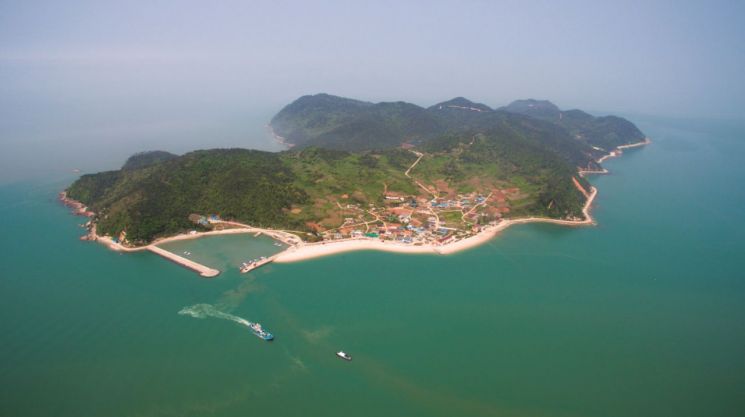
◆Songido: The Mysterious Island
Songido, named for its resemblance to a human ear, was selected as one of Korea's 100 most beautiful islands by the Ministry of Oceans and Fisheries in 2003. Although it takes about two hours from the mainland (Hyanghwado Port), the effort is well worth it.
The pebble beach, a masterpiece created by the waves, stretches for 4 km, and thousands of geometrically shaped pine trees surround the island, creating a stunning landscape.
The largest group of Quercus aliena trees in the country amazes visitors. It is also an ecological treasure trove, home to rare birds such as the Chinese egret (Natural Monument No. 361) and otters (Natural Monument No. 330). For fishing enthusiasts, this is a must-visit spot, as large black sea bream await.
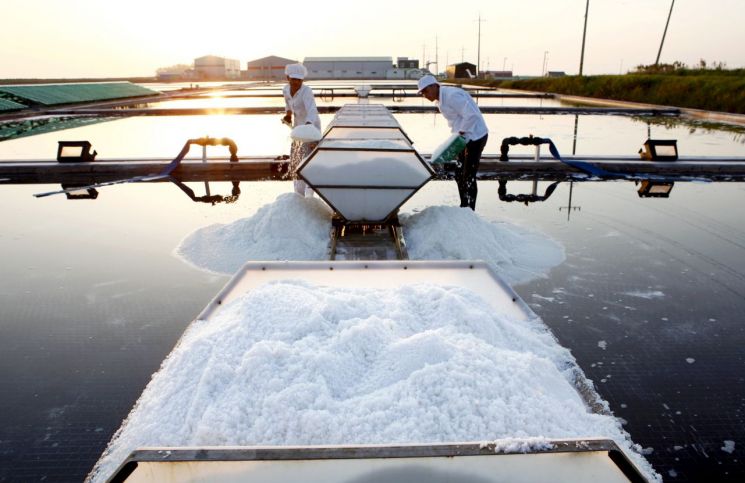 Producing solar salt at the Yeonggwang salt farm, which holds a thousand years of history. Provided by Yeonggwang County
◆The Pride of Korean Salt: Sea Salt
Yeonggwang has long been called the "land of four whites" for its abundance of snow, cotton, rice, and salt. Its history with salt is especially deep. The tidal flats of Yeomsan Duuri have been Korea's top salt production site for over 1,000 years.
The name Yeomsan literally means "salt mountain" in Chinese characters. In the Silla Dynasty, it was called Yeomhae, meaning "sea of salt," and in the Goryeo and Joseon Dynasties, it was called Yeomso, meaning "place where salt is made," highlighting its deep connection to salt.
Even today, Yeomsan is the second largest sea salt production site in Korea after Shinan. Yeonggwang sea salt is renowned worldwide for its rich minerals and excellent taste. It is even said that Yeonggwang's famous Gulbi owes its reputation to this salt.
Currently, salt farms are mainly found in Songam-ri, Yawol-ri, Duuri in Yeomsan-myeon, and Hasari in Baeksu-eup. In Yeomsan-myeon, you can experience salt gathering, transporting, and waterwheel operation, making it worth trying at least once.
© The Asia Business Daily(www.asiae.co.kr). All rights reserved.
![Clutching a Stolen Dior Bag, Saying "I Hate Being Poor but Real"... The Grotesque Con of a "Human Knockoff" [Slate]](https://cwcontent.asiae.co.kr/asiaresize/183/2026021902243444107_1771435474.jpg)


















