Tracking Nighttime Sleep and Daytime Napping Patterns
Dementia Risk Doubles in the "Increased Daytime Sleepiness Group"
"Generalization to Broader Populations is Difficult... Further Research Needed"
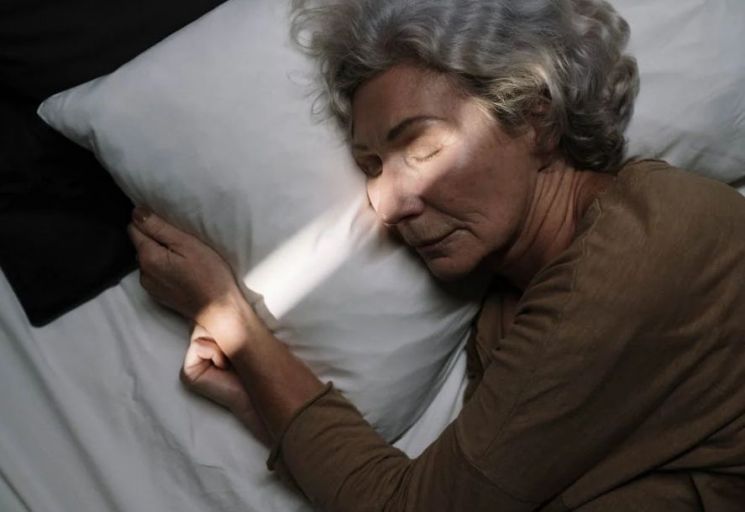
A study has found that when nighttime sleep duration decreases and daytime napping increases in elderly women in their 80s, the risk of developing dementia nearly doubles.
On the 20th (local time), Dr. Wei Leng's team at the University of California, San Francisco (UCSF) in the United States conducted a five-year longitudinal study on over 700 women in their 80s, tracking nighttime sleep, daytime naps, and the risk of cognitive impairment and dementia. The results were published in the journal Neurology® of the American Academy of Neurology (AAN). The research team explained the background of the study, stating, "Sleep is essential for cognitive health, but little is known about how changes in sleep and cognition are related over time, and how these changes relate to dementia risk in later life."
The researchers followed 733 women in their 80s (average age 83) who had no mild cognitive impairment (MCI) or dementia at the start of the study, observing the relationship between changes in nighttime sleep, daytime naps, circadian rhythms, and the risk of cognitive impairment and dementia over five years. Participants wore wrist devices capable of measuring nighttime sleep duration and quality, daytime naps, and circadian rhythm patterns for three days at both the beginning and end of the study.
As a result, more than half of the participants (56%) experienced significant changes in sleep patterns over the five years. Among all participants, 164 (22%) were diagnosed with mild cognitive impairment, and 93 (13%) were diagnosed with dementia. Additionally, 44% of participants were classified into the "stable sleep group," 35% into the "nighttime sleep reduction group," characterized by decreased duration and quality of nighttime sleep, and 21% into the "increased daytime sleepiness group," characterized by increased duration and quality of both nighttime and daytime sleep and worsened circadian rhythms. Dementia was diagnosed in 25 participants (8%) in the stable sleep group, 39 participants (15%) in the nighttime sleep reduction group, and 29 participants (19%) in the increased daytime sleepiness group.
The research team explained, "Considering health factors such as age, race, education level, and the presence of diabetes or hypertension, the risk of developing dementia in the increased daytime sleepiness group is twice as high compared to the stable sleep group. However, this association was not found in the nighttime sleep reduction group." They also noted, "Since this study primarily involved white women, there are limitations in generalizing the findings to diverse populations."
Dr. Leng also stated, "We found that sleep problems may be related to cognitive aging and could act as early indicators or risk factors for dementia in women in their 80s. While increased daytime sleepiness has not been proven to cause dementia, it shows an association with it." He added, "Further research is needed to examine all aspects of everyday sleep patterns to better understand the relationship between sleep changes and dementia risk."
© The Asia Business Daily(www.asiae.co.kr). All rights reserved.

















