The Gyeonggi-do Institute of Health and Environment announced on the 21st that it conducted residual pesticide tests on 110 cases of spring vegetables distributed within the province, confiscated and disposed of 4 cases that exceeded the allowable standards, and requested administrative action from related agencies.
This inspection was carried out over three weeks from February 24 to March 14 to verify the safety of spring agricultural products. The inspection targeted 110 cases of 24 types of spring vegetables, including Minari, Naengi, and Dallae, which are popular among consumers in both online and offline distribution stores.
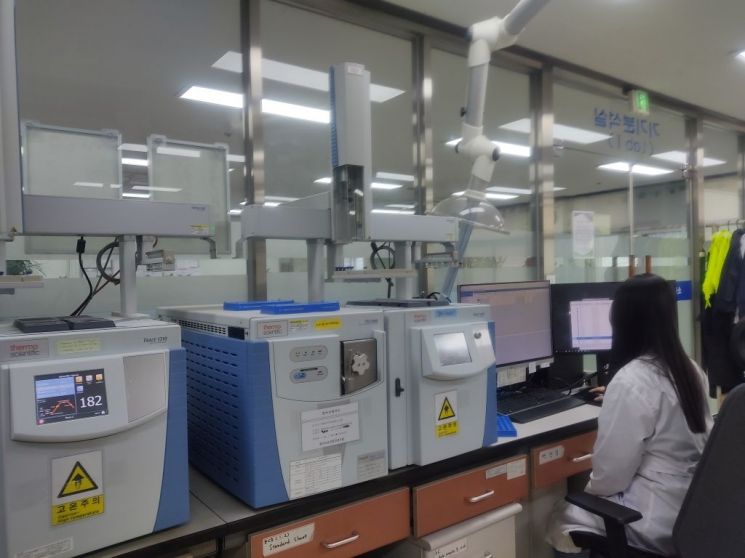 Gyeonggi-do Institute of Health and Environment is testing residual pesticides on water dropwort and other products distributed in the market. Photo by Gyeonggi-do Institute of Health and Environment
As a result of analyzing a total of 475 types of residual pesticides, 106 cases were judged to be suitable within the standard limits. However, residual pesticides exceeding the standards were detected in 4 cases of Dolnamul, Geundae, Minari, and Ssukbujeongi.
By item, Dinotefuran, a fungicide component, was detected exceeding the standard (standard 0.01 mg/kg, detected amount 0.05 mg/kg) in Dolnamul, and Prosaimidon (standard 0.15 mg/kg, detected amount 0.30 mg/kg) was detected exceeding the standard in Minari. In Geundae and Ssukbujeongi, the insecticide component Terbufos (standard 0.01 mg/kg) was detected at 0.03 mg/kg and 3.75 mg/kg, exceeding the standard.
An official from the Gyeonggi-do Institute of Health and Environment stated, "We plan to maintain a thorough inspection system so that residents can consume agricultural products with confidence, especially those whose consumption increases depending on the season and timing."
© The Asia Business Daily(www.asiae.co.kr). All rights reserved.

















