Seven out of Ten Expect Household Finances to Worsen This Year
Price Increases Cited as Main Cause; Over Half Foresee Further Deterioration
Seven out of ten citizens perceive their household financial situation to have worsened compared to last year. The biggest cause identified is the rise in prices. More than half also believe the situation will deteriorate further this year.
According to a survey conducted on the 20th by the Korea Economic Association targeting 1,000 men and women aged 19 and older nationwide, 71.5% of respondents answered that their household economy has worsened compared to one year ago. Those who responded that it has improved accounted for 28.5%. When asked how much the household economy has improved or worsened, the most common answer was ▲20?30% worse (26.4%), followed by ▲0?10% worse (23.2%), ▲10?20% worse (21.5%), and ▲0?10% improved (18.5%).
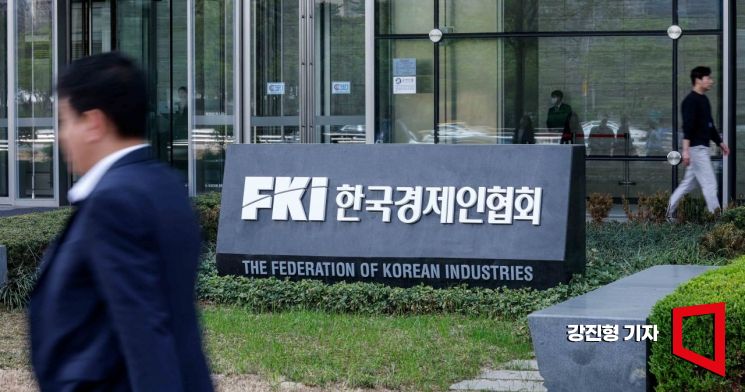 Employees of tenant companies are moving at the Korea Economic Association in Yeouido, Seoul. Photo by Kang Jin-hyung
Based on the median values of each range, it was calculated that the household economy has worsened by an average of 7.7%.
The area of greatest economic difficulty was overwhelmingly price increases (71.9%). This was followed by real income reduction (11.9%), and job shortage and instability (9.5%). The sector with the highest price increase was food and dining expenses (72.0%), followed by energy costs (11.0%), housing costs (4.5%), and public utility fees (3.4%). Regarding job and business stability, the proportions were highest for unstable (43.1%), moderate (30.4%), and stable (26.5%) in that order.
Regarding the outlook for next year, 64.2% responded that it will "worsen," while 35.8% believed it will "improve." Income outlook was "decrease" at 52.1% and "increase" at 47.9%. Spending outlook was "increase" at 54.2% and "decrease" at 45.8%.
The most needed price policies were stabilization of essential goods prices (58.4%), energy price stabilization (13.9%), targeted support for vulnerable groups (9.7%), and tax reductions related to consumption (7.9%) in that order. In the job sector, tailored job support for vulnerable groups (24.6%), fostering manpower and job creation in future promising industries (17.3%), strengthening reemployment and job transition support (16.8%), and securing labor market flexibility and fairness (14.0%) were highlighted.
Regarding household debt, the most common response (41.1%) was that policies to resolve factors increasing household debt should be strengthened, followed by real estate market stabilization (31.6%) and debt repayment support for vulnerable groups (13.0%).

Lee Sang-ho, Head of the Economic and Industrial Division at the Korea Economic Association, said, "Due to prolonged economic recession and high inflation, the household financial situation of the public is becoming very difficult," adding, "We must create a business-friendly environment to induce investment and employment expansion and focus all efforts on stabilizing food prices."
Meanwhile, this survey was conducted from the 21st to the 27th of last month through an online panel survey commissioned to Monoresearch. The sampling error is ±3.09 percentage points at a 95% confidence level.
© The Asia Business Daily(www.asiae.co.kr). All rights reserved.
![Clutching a Stolen Dior Bag, Saying "I Hate Being Poor but Real"... The Grotesque Con of a "Human Knockoff" [Slate]](https://cwcontent.asiae.co.kr/asiaresize/183/2026021902243444107_1771435474.jpg)

















