"Rise in Tuberculosis Due to Malnutrition and Exposure to Harsh Winter Conditions"
A report has emerged estimating that nearly half of the population in North Korea, which is suffering from a persistent food shortage, is malnourished.
According to Radio Free Asia (RFA) on the 18th, Elizabeth Salmon, the UN Special Rapporteur on human rights in North Korea, recently submitted a report to the UN Human Rights Council stating that the prevalence of malnutrition in North Korea averaged 45.5% over three years from 2020, with an estimated 11.8 million people suffering from malnutrition during the same period.
The report explained, "Despite North Korea's efforts to increase food production, chronic food insecurity persists due to a combination of aging production infrastructure, poor technology, lack of investment, and natural disasters," and added, "The food crisis appears to have worsened as North Korea shifted to re-monopolize the distribution of essentials such as rice and corn by restricting private commercial activities like Jangmadang (markets)."
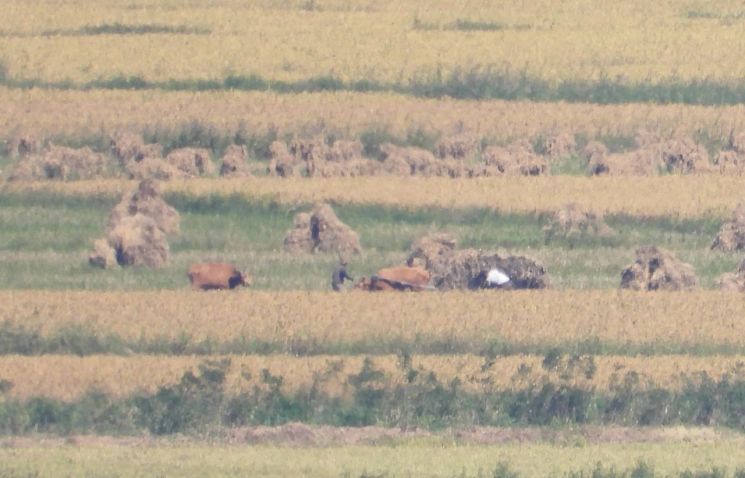 On the afternoon of September 23 last year, North Korean residents were harvesting in the fields of Kaepung County, Hwanghae Province, North Korea, as seen from the Ganghwa Peace Observatory in Ganghwa County, Incheon. Photo by Yonhap News
The report also pointed out that health and sanitation conditions have not improved. It stated, "The World Health Organization (WHO) has identified North Korea as one of the 30 'high burden countries' for drug-resistant tuberculosis, indicating a significant strain on the health system," and noted, "There are reports that malnutrition and exposure to harsh winter conditions are increasing tuberculosis cases."
Vaccination rates have also been steadily declining. Before the COVID-19 pandemic, the national vaccination rate in North Korea exceeded 96%, but by mid-2021, it had dropped below 42%. The report noted, "In 2022, no children received vaccinations against major diseases, including tuberculosis," and added, "It was only after UNICEF support in August last year that vaccinations were administered to about 120,000 children and pregnant women."
Sanitation of human waste is also understood to be carried out in unsanitary conditions. The report stated, "52% of households in North Korea handle human waste in unsanitary environments, which seriously impacts public health by causing diseases such as diarrhea." 'Unsanitary facilities' include the use of traditional toilets or improved facilities that do not function properly, making waste disposal unsafe.
© The Asia Business Daily(www.asiae.co.kr). All rights reserved.

















