One-Fourth of Seoul Now a Transaction Permission Zone
All Apartments in Gangnam 3 Districts and Yongsan Included
Initial "No Major Market Volatility" Judgment
Flip-Flopping Administration Inevitably Damages Policy Credibility
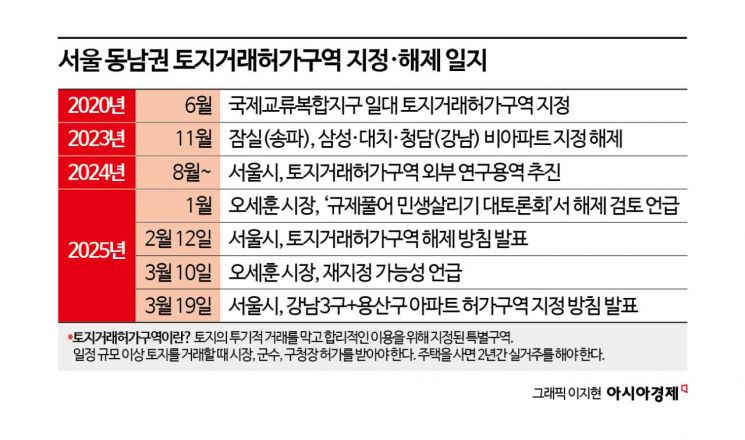
The Seoul Metropolitan Government is once again designating the three Gangnam districts (Gangnam, Seocho, and Songpa) as Land Transaction Permission Zones (LTPZ) just over a month after lifting the designation. After lifting the LTPZ in areas such as Jamsil, Samsung, Daechi, and Cheongdam (collectively referred to as Jam-Sam-Dae-Cheong), housing prices, led by Jamsil, soared, prompting the authorities to abruptly close the market to transactions. The hasty removal and subsequent re-designation of the LTPZ in major areas of Seoul-despite the clear and significant impact such measures have on the broader housing market-has only added to the confusion in the market.
In particular, since the second half of last year, the central government has been working to stabilize the housing market through measures such as tighter lending regulations. However, the Seoul Metropolitan Government’s actions, which effectively fueled the rise in housing prices before reversing course, have inevitably damaged the credibility of government policy. Even though the market had been consistently pointing out the unusual surge in housing prices over the past month before the re-designation, both the central and city governments denied these concerns until now. Criticism regarding the government’s responsiveness is expected to follow.
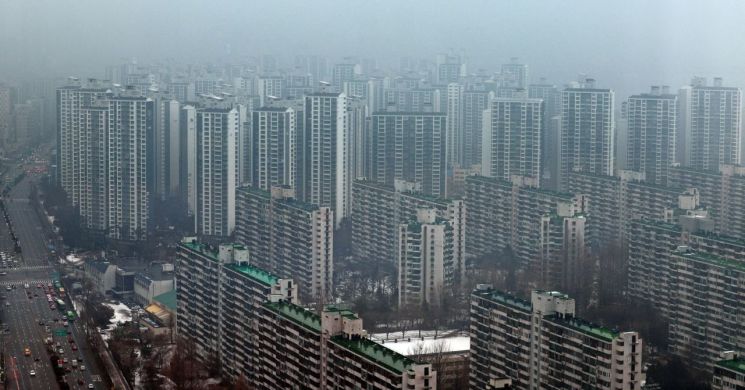
One-Fourth of Seoul Now a Transaction Permission Zone-All Apartments in Gangnam 3 Districts and Yongsan Included
The Ministry of Land, Infrastructure and Transport, Seoul Metropolitan Government, Ministry of Economy and Finance, Financial Services Commission, Bank of Korea, and Financial Supervisory Service held a meeting on March 19 to discuss housing market stabilization measures. The meeting, which was not originally scheduled, was convened in response to clear signs of market instability, such as increased transaction volume and surging prices in the Gangnam area following the lifting of the LTPZ. Seoul Mayor Oh Sehoon stated, “We humbly accept the criticism that real estate market volatility has increased, especially in Gangnam, after the lifting of the restrictions,” and added, “We sincerely apologize to the citizens for any concern this has caused.”
The government has decided to designate all apartments in the three Gangnam districts and Yongsan-gu as LTPZs. In addition to the three Gangnam districts, which are believed to be attracting speculative demand such as gap investments, all apartments in Yongsan-gu will also be subject to the restrictions. The designation covers 2,200 complexes and approximately 400,000 households across four districts. Complexes previously designated as LTPZs will remain under the existing designation period.
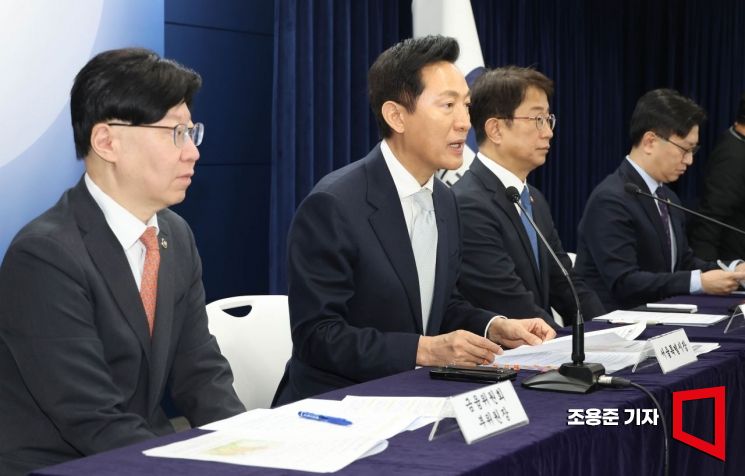 Seoul Mayor Oh Sehun is announcing measures to stabilize the housing market, including real estate regulations, finance, and speculative transactions, at the Government Seoul Office in Jongno-gu, Seoul on the 19th. The briefing was attended by Park Sangwoo, Minister of Land, Infrastructure and Transport, Kim Beomseok, First Vice Minister of the Ministry of Economy and Finance, and Kim Soyoung, Vice Chairman of the Financial Services Commission. Photo by Jo Yongjun
The new designation will be in effect for six months, from March 24 (based on contract date) until September 30, 2025. This is somewhat shorter than the usual one-year period, and the authorities have stated that they may extend the designation if necessary. From now on, anyone wishing to purchase an apartment in these areas will need approval from the district office, and must reside in the property for two years after purchase, effectively making gap investments impossible. Mayor Oh said, “While I cannot specify particular areas, if we determine that speculative demand is spreading to neighboring regions-a so-called balloon effect-we will consider designating those areas as well.”
The newly designated area covers about 111 square kilometers across the four districts. With this additional designation, the total LTPZ area in Seoul will increase to 164 square kilometers, which is more than one-fourth of the city’s total area (605 square kilometers). Previously, natural green areas in Gangnam and Seocho, as well as major redevelopment and reconstruction complexes in Apgujeong, Yeouido, Mok-dong, and Seongsu-dong, were also designated as permission zones.
Initial “No Major Market Volatility” Judgment-Flip-Flopping Administration Inevitably Damages Policy Credibility
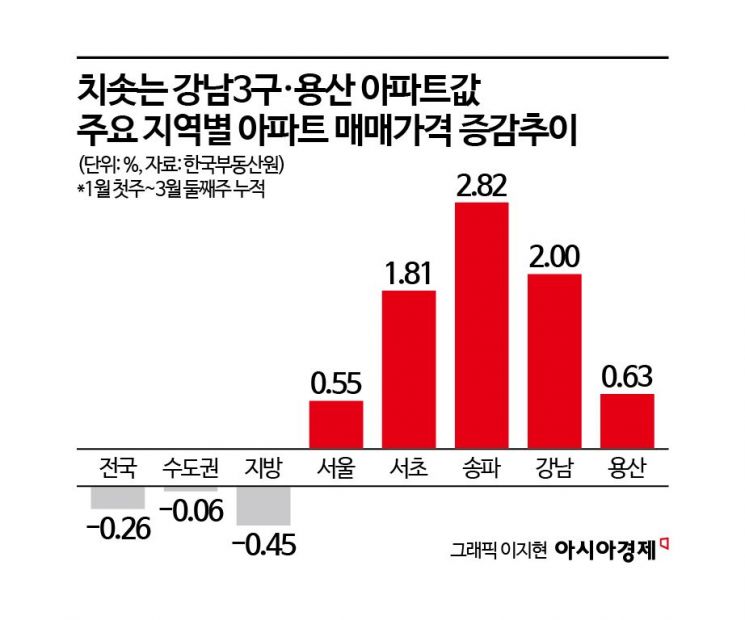
Until early this month, the Seoul Metropolitan Government continued to emphasize that there was no significant volatility in the market following the lifting of the LTPZ. However, this assertion was merely an illusion caused by differences in the timing of transaction reports. In reality, there were clear signs of overheating, such as record-high transaction prices in major apartment complexes. According to statistics from the Korea Real Estate Board, Songpa-gu in Seoul saw a sharp 2.8% increase in prices through the second week of March this year, marking the highest rate of increase since 2018. Taking into account transaction volume, prices, buyer characteristics, and market sentiment, the government believes that the trend could spread from the Gangnam area to all of Seoul.
Mayor Oh stated, “In the initial one to two weeks after the lifting of restrictions, there were mixed transactions of both increases and decreases in areas such as Jam-Sam-Dae-Cheong, Gangnam, and Songpa, with no particular complex showing a continuous sharp rise. However, from March, when most of the February transactions were officially reported, there was a noticeable surge in reported cases, which strongly suggested the potential for further price increases.”
The authorities also indicated the possibility of expanding regulated areas if market overheating persists. The government explained that it may extend the designation of areas currently classified as regulated or speculative zones in the three Gangnam districts and Yongsan-gu to other regions as well. Household loan management will also be strengthened. In addition to the existing monthly and quarterly household loan management systems, the government will now monitor regional household loan trends, particularly in the Seoul metropolitan area. For key areas in Seoul, oversight of mortgage lending will be intensified. Furthermore, the government will move up the planned reduction of the Korea Housing and Urban Guarantee Corporation (HUG) jeonse loan guarantee ratio from the second half of the year to May, two months earlier than originally scheduled. Given the continued increase in policy loans such as the Didimdol loan, the authorities are also considering additional interest rate hikes.
Minister of Land, Infrastructure and Transport Park Sangwoo stated, “The recent upward trend is analyzed to have resulted from a renewed expansion of housing demand, which had previously slowed, due to macroeconomic conditions and policy changes. Sudden volatility could pose unexpected burdens on macroeconomic management and the stability of people’s livelihoods.”
The government will continue joint inspections and intensive monitoring to ensure order in market transactions. For market-disrupting activities such as abnormal transactions, price collusion, illicit loans, or false reporting, the authorities will conduct planned investigations and ad hoc probes into sources of funds. Any suspicious transactions will be immediately reported to relevant agencies. To accelerate redevelopment projects, which are considered key to expanding supply in the city center, the government also plans to pursue legal revisions and amendments.
However, with political uncertainty rising due to impeachment and other factors, and the uncertain situation in the National Assembly, it remains to be seen whether legislative activity will proceed smoothly. As a supplementary measure for the sluggish local construction market, the government is also considering additional purchases of unsold homes by Korea Land and Housing Corporation (LH), beyond the initially planned 3,000 units. The Ministry of Land, Infrastructure and Transport expects that Corporate Restructuring (CR) REITs will show results in the second quarter.
© The Asia Business Daily(www.asiae.co.kr). All rights reserved.



















