Three WTO Complaints Prompt U.S. to Agree to Consultation Procedures
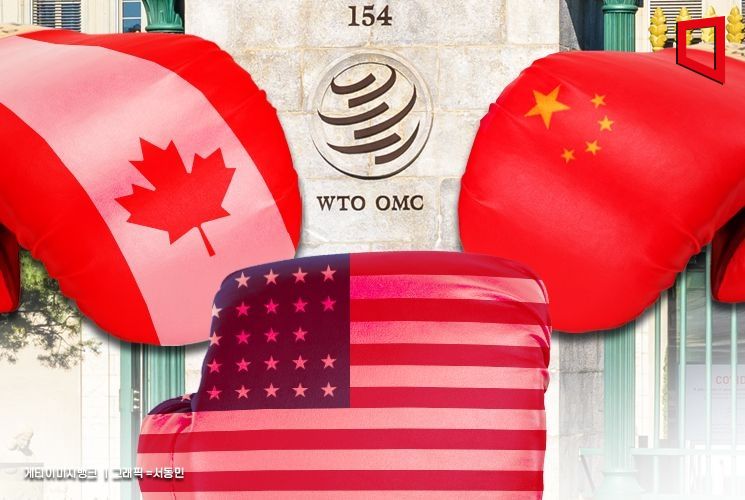
The United States, engaged in a 'tariff war' against the world, is involved in disputes with Canada and China at the international organization, the World Trade Organization (WTO).
On the 18th (local time), Reuters reported that the U.S. has agreed to participate in consultation procedures in response to WTO complaints filed by Canada and China.
In Canada's case, it filed complaints against the U.S. on the 4th of this month regarding an additional 10% tariff on Canadian products, and on the 12th concerning an additional 25% tariff on steel and aluminum. China immediately filed a complaint last month on the 4th, the same day the U.S. imposed an additional 10% tariff on Chinese products. China also plans to file an additional complaint regarding the U.S.'s decision on the additional 10% tariff made on the 3rd of this month.
The Donald Trump administration expressed its readiness to hold dispute consultations with Canada and China in documents submitted to the WTO. It also stated that the complaints filed by Canada and China, accusing the U.S. of violating WTO rules, are groundless and that the complainants themselves appear to have violated the rules.
Requesting dispute consultations is the first step in the WTO complaint process. The disputing parties have 60 days to seek a resolution through consultations; if no compromise is reached within this period, the case is referred to a WTO panel (expert adjudication body) for a ruling. This process can take several years.
Some trade representatives told Reuters that "given the current heightened tensions among WTO member countries, the U.S.'s participation in consultations itself is seen as a positive signal."
However, since the appellate body, which acts as the 'supreme court' in the WTO dispute settlement system, became ineffective during the first Trump administration, the possibility of a substantive agreement remains uncertain. The WTO appellate body has been paralyzed since 2019 due to the U.S. refusing to appoint appellate judges, resulting in a lack of quorum. The U.S. was engaged in a trade war with China and sought to undermine the dispute settlement system, arguing that it favored China, which held developing country status. Subsequently, the Biden administration has undertaken efforts to restore the appellate body to normal functioning.
© The Asia Business Daily(www.asiae.co.kr). All rights reserved.

















