Scott Vestent, U.S. Treasury Secretary
"Some tariffs will be pre-negotiated and not imposed"
U.S. companies likely to face stronger investment restrictions in China
Scott Vestent, U.S. Treasury Secretary, announced on the 18th (local time) that "numbers indicating tariffs by country will be received" regarding the mutual tariffs announcement scheduled for the 2nd of next month. This means that customized tariff rates will be imposed on a country-by-country basis. He also suggested that some countries could avoid mutual tariffs through prior negotiations with the United States.
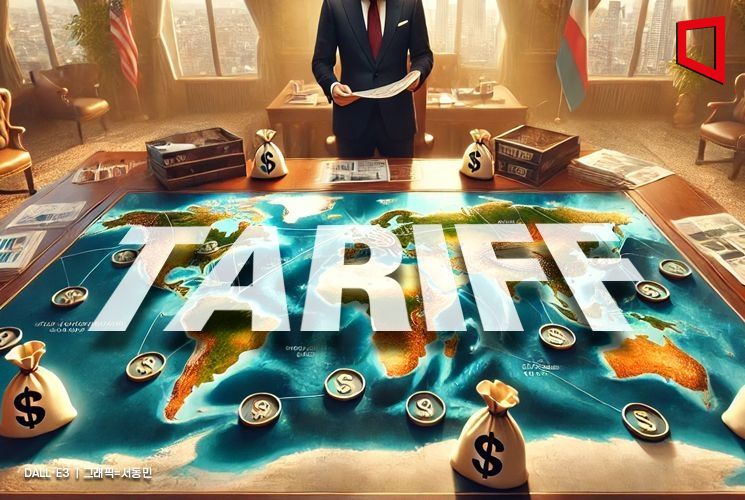
In an interview with Fox News on the same day, Secretary Vestent said about mutual tariffs on countries worldwide, "Some countries may have quite low rates, while others may have quite high rates." Although he said, "I have not seen the numbers," he explained that mutual tariff rates would vary by country. He added that the U.S. Trade Representative (USTR) and the Department of Commerce are calculating tariff rates by country.
Previously, U.S. President Donald Trump had announced that mutual tariffs corresponding to each country's tariffs and non-tariff barriers would be imposed starting April 2. According to The Wall Street Journal (WSJ), the Trump administration initially considered classifying U.S. trading partners into three groups and setting tariff rates by group but later abandoned the plan.
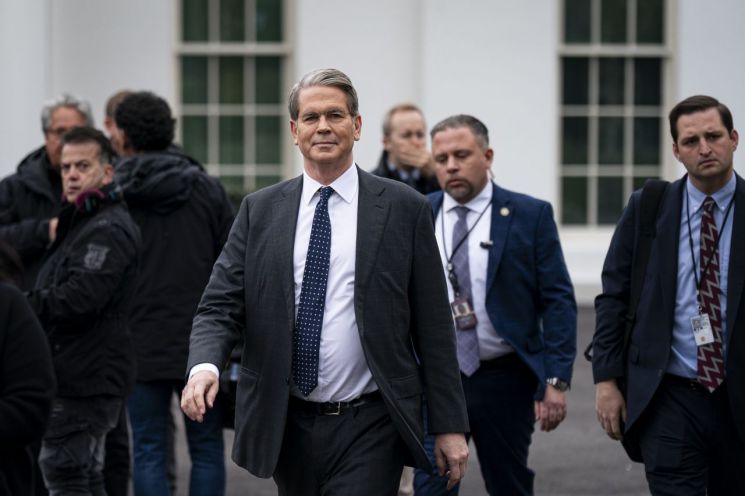
Secretary Vestent expected that some countries could avoid tariffs before the mutual tariffs are imposed on April 2. He said, "Some of the worst trade partners in how they treat us have already proposed to President Trump to significantly reduce very unfair tariffs," and expressed optimism that "some tariffs will be pre-negotiated and not imposed." He added, "Once countries receive the mutual tariff numbers, they will come to us to negotiate tariff reductions."
Earlier, U.S. Secretary of State Mark Rubio stated on the 16th that bilateral trade negotiations with countries could begin after imposing mutual tariffs. Secretary Vestent's remarks on this day reaffirmed the 'tariffs first, negotiations later' policy and suggested that some countries might present concessions to resolve the U.S. trade deficit and thus avoid tariffs in advance.
Secretary Vestent also pointed out, "There are countries we call 'the dirty 15' that impose significant tariffs on the U.S.," noting that these countries implement inspections unrelated to safety on U.S. food and products and require a certain amount of domestic production, constituting "non-tariff barriers as important as tariffs."
Regarding recent tariff-driven recession concerns shaking Wall Street, he said the U.S. economic indicators are healthy, making such a possibility low, but he could not be certain that a recession would not occur. He stated, "Nothing can be guaranteed," and called questions demanding guarantees that there will be no recession "foolish." He added, "What I can guarantee is that there is no reason we must experience a recession," noting that credit card and banking figures show "very good fundamental data."
He also emphasized that the Trump administration is shifting from government spending-led growth to private sector-led growth. Secretary Vestent said that as the economy enters a transition period with reduced dependence on government spending, there might be a "pause" in growth, asserting, "The government will control spending, bring manufacturing back domestically, and make things more affordable for American workers."
He announced plans to strengthen restrictions on U.S. companies' investments in China, which were initiated under the previous Biden administration. Secretary Vestent said, "We will ensure our overseas investments change direction so they do not work against us," adding, "We will continue to investigate and block them if necessary." Previously, the Biden administration issued executive orders last year regulating U.S. companies' investments in China related to semiconductors, artificial intelligence (AI), and quantum computing, and this suggests that regulatory levels may be increased.
Additionally, the U.S. is pursuing measures to include controls on circumventing semiconductor exports to China in new trade agreements with various countries. Howard Lutnick, U.S. Secretary of Commerce, attending the Department of Commerce's Bureau of Industry and Security (BIS) conference on the same day, said, "We are seeking help from companies and foreign governments to prevent China from acquiring U.S.-made semiconductors," and stated that trade agreements with countries will include provisions to block this.
© The Asia Business Daily(www.asiae.co.kr). All rights reserved.


















