Destruction of the Original or Reflection of the Times?
Disney Faces Backlash and Applause for Diverse Casting Choices
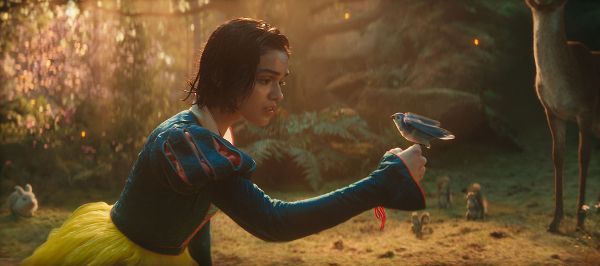
Is it the destruction of the original, or a reflection of the times? How will audiences respond to a Snow White with tanned skin and a yellow dress?
Released on March 19, Disney's live-action film "Snow White" is a new musical adaptation of the Brothers Grimm fairy tale, which was first made into the world's first full-color animated feature, "Snow White and the Seven Dwarfs," in 1937 and has been beloved for nearly a century. The film tells the story of Snow White, who stands up with kindness and courage to reclaim her kingdom stolen by the Queen.
This film has been mired in controversy since its early production stages. When Colombian-born Latina actress Rachel Zegler was cast as Snow White, critics argued that the casting did not align with the original story. In the original tale, Snow White is depicted as a German girl with black hair, skin as white as snow, and lips as red as blood. However, with Zegler, who has tanned skin, cast in the lead role, accusations of "damaging the original" arose.
Perhaps in response to this controversy, the Snow White premieres held in Hollywood and Spain were conducted quietly. For a Disney tentpole live-action film, it is typical to have a red carpet event and large-scale interviews with the lead actors, but this time, there was no red carpet event featuring Zegler or other main cast members.
Since 2016, Disney has consistently produced live-action films but has rarely escaped criticism over casting choices that do not match the original images. When African American actress Halle Bailey was cast as Ariel in the 2023 live-action film "The Little Mermaid," opinions were divided. Critics argued that the original Andersen fairy tale depicted the mermaid as a red-haired, Nordic white woman, making it difficult for some to immerse themselves in the story.
There were also concerns in 2019 when actor and singer Will Smith was cast as Genie in "Aladdin," but Smith's outstanding performance dispelled those worries. "Aladdin" went on to become the 25th film in Korea to attract over 10 million viewers, achieving major box office success.
Disney's efforts to feature leads of various ethnicities have been notable, but some point out that Asian casting remains relatively scarce. In the 2020 live-action adaptation of "Mulan," Disney initially cast white actress Jennifer Lawrence as the lead, which drew criticism, and eventually cast Chinese actress Liu Yifei. The film also faced controversy for allegedly justifying the Chinese government's human rights abuses in its end credits.

The reason Disney has continued to cast unconventional leads in recent years, despite some backlash, is clear. Disney animations have long been criticized for repeatedly depicting passive characters who await rescue by a prince. In response, Disney has promoted the "New-wave Princess" concept, introducing proactive characters such as Moana, Jasmine from Aladdin, and Mulan. In 2020, Disney+ even included a warning about racial stereotypes, stating, "The stereotypes depicted in this work were wrong then and are wrong now."
Since then, Disney has actively incorporated "Political Correctness"-a social movement against prejudice-into its works. Some view this as a positive reflection of changing times, while others argue that excessive political correctness undermines the appeal of the films.
Despite the controversy, most Hollywood actors have responded positively. Latina actress Eva Longoria commented on the Snow White debate, saying, "The time has come for Latina actors to take on leading roles," and added, "Hollywood has long lagged behind in terms of diversity."
There are also calls to break the "whitewashing" stereotype-the practice of casting white actors regardless of the character's race-that insists princesses must be white. The casting of a Latina Snow White is especially meaningful in that it offers hope to Latina children.
Some believe that a character's identity is more important than skin color. Popular culture critic Jung Dukhyun stated, "Casting actors of color is necessary for cultural diversity and is not a problem. What matters more is the overall quality of the work." He added, "Content today must resonate with contemporary audiences. It is essential to thoroughly examine whether any discriminatory or outdated elements remain, and we should be wary of dismissing change as excessive political correctness without careful consideration."
© The Asia Business Daily(www.asiae.co.kr). All rights reserved.


















