Bank of Korea and FSS Hold "Climate Finance Conference" on June 18
Estimated Losses Could Reach 45.7 Trillion KRW by 2100 Without Climate Response
Credit, Market, and Insurance Losses Projected for 14 Financial Institutions
"The scale of losses for financial institutions due to climate risks could reach up to 45.7 trillion KRW. To reduce climate risks, banks need to strengthen management of credit losses, while insurance companies should enhance management of market losses and insurance losses related to wind and flood disasters."
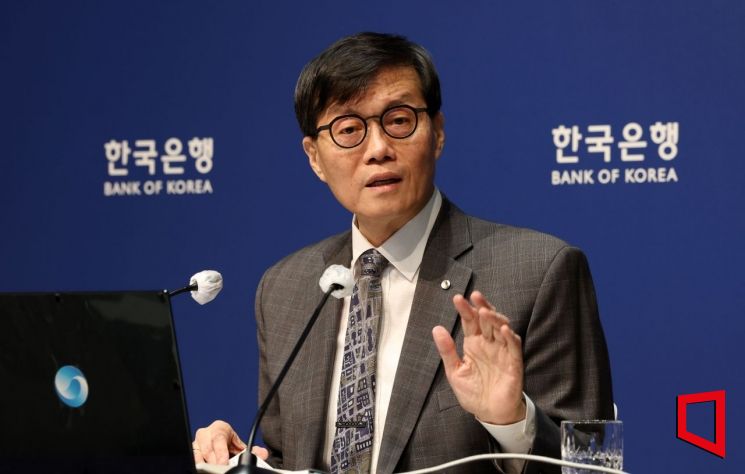
The Bank of Korea stated this on the 18th at a climate finance conference jointly held with the Financial Supervisory Service (FSS) at the Bank of Korea in Jung-gu, Seoul, saying, "In the future, climate risks will act as a key risk undermining the soundness of domestic financial institutions and financial stability." By industry, it explained that risk management should be strengthened for high-carbon manufacturing sectors such as steel under climate response policy implementation, and for climate-vulnerable sectors such as food and construction under no-response scenarios.
In its presentation titled 'Introduction to Climate Scenarios and Bank of Korea Top-Down Test Results,' the Bank of Korea estimated the negative impact of climate risks on gross domestic product (GDP) to be smallest under the 1.5℃ response pathway aiming for carbon neutrality by 2050, and largest under the no-response pathway. From 2024 to 2100, South Korea's greenhouse gas reduction pathways were set into four scenarios: ▲1.5℃ response (achieving carbon neutrality by 2050), ▲2℃ response (reducing carbon emissions by 80% compared to current levels by 2050), ▲delayed response (no response until 2030, then late implementation of carbon neutrality policies), and ▲no response (no climate policy adoption). The real economy ripple effects were analyzed for each pathway.
The Bank of Korea analyzed that the cumulative losses for financial institutions due to climate risks during the analysis period would reach 45.7 trillion KRW under the no-response scenario. Under the delayed response scenario, losses would be 39.9 trillion KRW; under the 2℃ response, 27.3 trillion KRW; and under the 1.5℃ response, 26.9 trillion KRW. In the 1.5℃ response case, the loss scale peaks around 2050 and then decreases, whereas under no response, losses continue to expand over time. These estimates of credit, market, and insurance losses were made for 14 financial companies participating in the climate stress test task force. In this case, the banks' Basel Committee on Banking Supervision (BIS) capital adequacy ratio could fall by 5.3 to 7.6 percentage points, and insurance solvency ratio (K-ICS) could decline by 13.6 to 26.1 percentage points.
The FSS's climate stress test results, conducted on 36 financial companies with corporate credit exposure exceeding 1 trillion KRW, also followed a similar pattern. The FSS estimated that credit losses would reach 25.1 trillion KRW by 2100 under the no-response scenario, decreasing to 19.5 trillion KRW under the 1.5℃ response scenario. The FSS explained, "the total capital ratio of banks could decline by 3.8 percentage points under no response and by 3.1 percentage points under carbon neutrality, while the insurance sector's K-ICS ratio could fall by 2.9 and 1.8 percentage points, respectively."
It was analyzed that the total capital ratio of domestic banks would meet the minimum capital regulatory ratio under other scenarios, but under the no-response scenario, seven banks would fall below the ratio by 2100. The regulatory level for total capital ratio is 11.5%. However, for domestic systemically important banks and bank holding companies (D-SIBs) such as Kookmin, Shinhan, Hana, Nonghyup, and Woori, it is 12.5%.
More than 70% of credit losses are expected to occur in high-carbon emission manufacturing sectors such as steel and in natural disaster loss-sensitive sectors such as wholesale and retail. The loss rate of regional financial companies (2.0%) exceeded that of commercial banks (1.3%), indicating that proactive climate risk management is necessary in regions densely populated with high-carbon emission industries.
Meanwhile, the Bank of Korea announced that, based on a survey conducted on 62 domestic banks and insurance companies, large financial institutions (21 companies, 34%) are conducting climate stress tests and establishing risk assessment systems. However, most institutions focused on developing climate stress test methodologies, and practical climate risk reduction using the test results is still at an early stage.
Domestic financial companies face difficulties related to uncertainties in long-term horizon analysis and lack of related data during the climate stress test process, and hope that policy authorities will provide common climate scenarios and related data. The Bank of Korea stated, "We will continue to improve the common climate scenarios established last year by the Bank of Korea, FSS, and Korea Meteorological Administration, and provide these scenarios to financial companies to help strengthen the financial sector's climate risk management capabilities." The FSS proposed future climate risk supervisory directions including supporting smooth supply of low-carbon transition funds, strengthening cooperation with local governments and regional financial companies, and establishing enterprise-wide climate risk management systems.
After the conference, the plan is to continue cooperation between the central bank and financial supervisory authorities for climate risk management and to strengthen collaboration with various domestic and international expert groups. In line with the domestic economic structure with a high proportion of high-carbon emission manufacturing, efforts will be made to foster an environment where the financial sector can actively supply low-carbon transition funds, and in the context of increasing uncertainty in global climate crisis cooperation such as the U.S. withdrawal from the Paris Agreement, flexible climate risk supervisory directions will be presented.
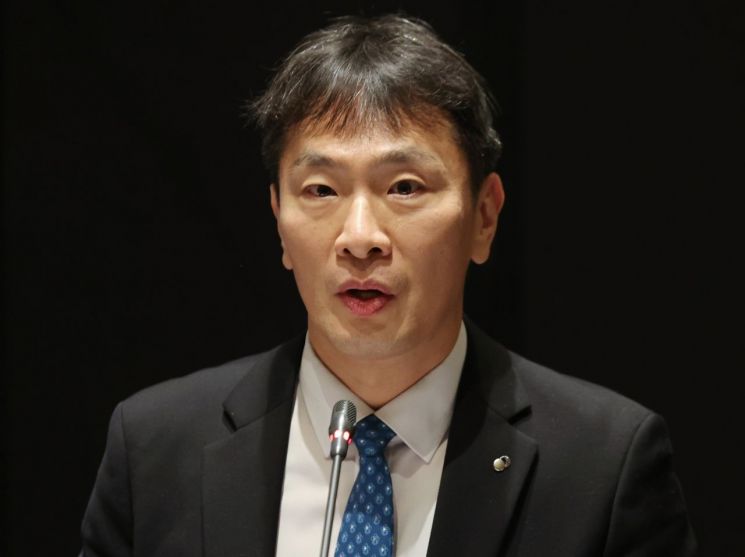
At the opening speech, Lee Bok-hyun, Governor of the FSS, emphasized, "Although there are movements weakening international cooperation on climate crisis response due to the U.S. withdrawal from the Paris Agreement, active climate crisis response is necessary for the future." He added, "The climate stress test results show that carbon reduction benefits long-term economic growth and financial stability, so a long-term perspective response is needed," and "Since the economic impact is significant in regions densely populated with high-carbon emission industries, local governments and regional financial companies should pay more attention." As future climate risk supervisory measures, he suggested activating low-carbon transition finance and providing incentives related to green loans, strengthening cooperation with local governments, and encouraging the adoption of enterprise-wide climate risk management systems.
Kim Wan-seop, Minister of Environment, emphasized in his congratulatory speech, "We will continue to strengthen discussions and cooperation with financial authorities, the financial sector, and the Bank of Korea to ensure that the real economy and financial system operate stably despite the climate crisis." The Ministry of Environment plans to expand development and provision of the 'Climate Risk Impact Analysis Model' and build a 'Climate Crisis Adaptation Information Integrated Platform' to support the financial sector in preparing more macro and long-term climate crisis response strategies.
In his welcoming remarks, Lee Chang-yong, Governor of the Bank of Korea, stressed that climate risks could spread to the financial system through physical damages caused by heatwaves and extreme heavy rains, as well as increased corporate production costs and asset value declines during the carbon reduction process. Governor Lee explained, "Financial institutions should function as risk managers for physical risks and as risk takers supplying green transition funds for transition risks." Emphasizing that climate risks could become a key risk undermining financial stability according to the stress test results, he added that he hopes this conference will serve as an opportunity to promote structural transformation efforts across the Korean economy.
© The Asia Business Daily(www.asiae.co.kr). All rights reserved.


















