"No One Taught Me, So I Studied with Books and Videos"
Future Medical Forum: "What Were Professors Doing When Residents Left?"
Seoul National University Medical Professors: "Arrogant Juniors... The Real Victims Are Patients"
The representative of residents and the Professors' Association expressed criticism of Seoul National University College of Medicine professors who condemned those criticizing the return movements of some medical students.
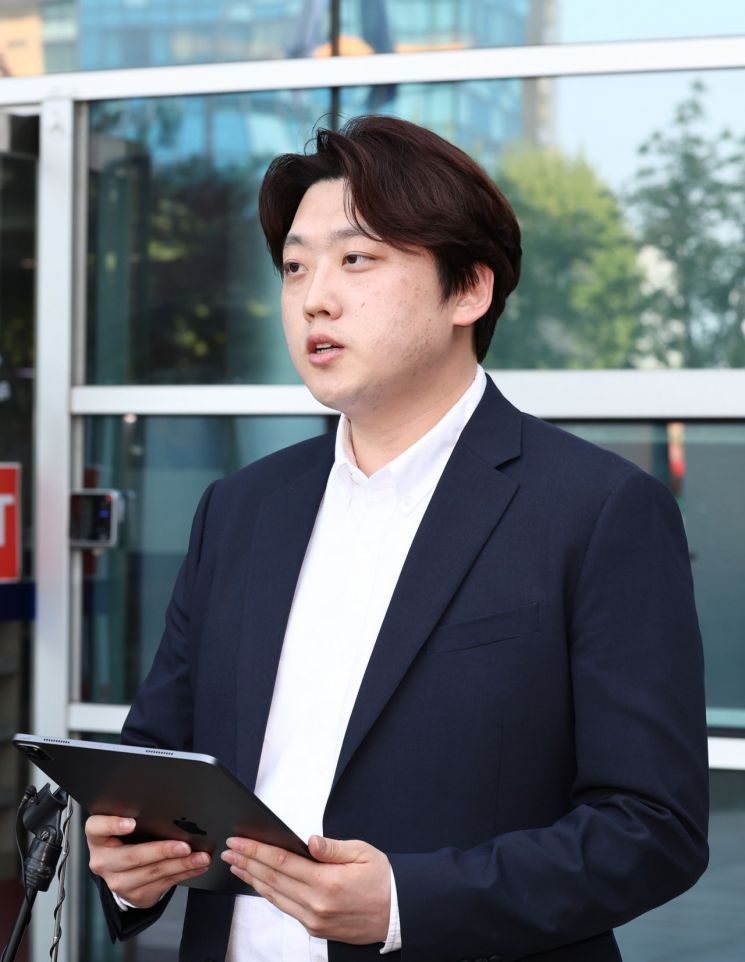 Park Dan, Emergency Response Committee Chair of the Korean Intern Resident Association. Yonhap News Agency
On the 17th, Park Dan, the emergency committee chair of the Korean Intern Resident Association, posted on personal SNS (social networking service), addressing "some individuals unqualified to be called professors," stating, "I did not learn (skills such as emergency treatment) from nurses or emergency medical technicians. No one taught me; I studied alone by watching books and videos and cautiously learned by asking fellow residents."
He added, "The ones responsible for teaching that are you. It is bewildering that you speak confidently without reflecting on your failure to fulfill your duties as professors."
The Future Medical Forum, a medical organization, also issued a statement demanding the withdrawal of the declaration and an apology, asking, "Where and what were these professors doing while residents gave up training and left hospitals?"
Earlier, professors Ha Eun-jin, Oh Ju-hwan, Han Se-won, and Kang Hee-kyung of Seoul National University College of Medicine and Seoul National University Hospital released a statement titled "To those who claim that returning colleagues are no longer colleagues, now is the time to decide."
In the statement, they said, "It would be better if there were some humility, but the attitude of expecting expert treatment just by holding a medical license is extremely arrogant," and "Reading those writings makes me think, 'I am afraid that I or my family will be treated by them when we are sick.'"
They continued, "You showed courage and wisdom by pointing out the error that increasing the medical school quota by 2,000 is not the solution, but you have spent a year without a roadmap to improve the medical system or any persuasive alternatives," adding, "There is only tangping (lying still and doing nothing) and opposition without alternatives."
They emphasized, "The current method and goals of the struggle are neither just nor seem capable of persuading society," and "You must now choose whether to continue to sympathize with this method of struggle or to raise a proper voice, and you must take responsibility for that choice."
They also defined the victims as the patients and their families who were neglected for a year, not the residents and medical students who voluntarily chose resignation or leave of absence.
Furthermore, they criticized, "You criticize fellow doctors and professors who protect the field and mock their dedication. Where is the camaraderie?" and "You do not hesitate to disparage nurses and healthcare workers with the arrogant attitude that 'only doctors can provide medical care.' Let's be honest. Didn't you learn emergency treatment skills such as emergency care and intravenous injection from emergency medical technicians and nurses in the emergency room?"
Meanwhile, ahead of the government’s deadline for residents’ return, which is a condition for returning the medical school admission quota to 3,058 next year, other medical organizations also issued statements directed at medical school deans and students on the same day.
The Korean Association of Medical School Professors (Jeon-ui-gyo-hyeop) stated in a letter "To the Deans of Medical Schools," "The Ministry of Education and some medical school deans mention the possibility of expulsion along with the refusal to accept the collective leave of absence of medical students," and added, "Education normalization cannot be achieved through pressure and persuasion."
They asked, "Before talking about expulsion, have the deans and presidents had sufficient direct conversations with the students who applied for leave of absence?" and said, "Professors must protect students' right to learn as much as possible within principles and common sense."
The Korean Academy of Medical Sciences, a senior scholarly organization in the medical community, urged the government to promote policies based on 'agreement' with the medical community, and expressed concern, "If the chronic problems of the medical system that need to be fixed in the long term are to be resolved by the extreme sacrifices of medical students and young doctors who should be responsible for future medicine, Korean healthcare will be shaken to its roots and become desertified."
© The Asia Business Daily(www.asiae.co.kr). All rights reserved.

















