KDCA Confirms 129 Positive Cases Out of 410 Tested Last Year
Expanding Target Diseases and Regions This Year to Improve Diagnostic Access for Suspected Patients and Families
The Korea Disease Control and Prevention Agency (KDCA) announced that it will double the number of beneficiaries for the '2025 Visiting Rare Disease Diagnosis Project' to about 800 people, starting from the 19th, to support rare disease patients and their families who face difficulties in diagnosis and treatment.
The Rare Disease Diagnosis Support Project is designed to assist undiagnosed rare disease patients in receiving timely treatment through early diagnosis by providing genetic testing and interpretation support. Since over 80% of rare diseases are genetic disorders, early diagnosis is crucial. However, due to the diversity and rarity of these diseases, many patients experience a "diagnostic odyssey," wandering through multiple hospitals without receiving a proper diagnosis for a long time.
Last year, the KDCA supported diagnostic testing (WGS, whole genome sequencing) for 410 suspected rare disease patients, resulting in 129 confirmed positive cases (a positive rate of 31.5%). Most of these confirmed positive patients were children and adolescents (80.6%), highlighting the success of early diagnosis and timely treatment linkage.
Additionally, the period from symptom onset to rare disease diagnosis was less than one year for 19.6% (21 patients), while 25.2% (27 patients) took more than 10 years. This indicates that early diagnosis of suspected patients and resolving the diagnostic odyssey for those undiagnosed for over a decade were significant contributions, according to the KDCA.
Notably, 101 positive patients (78.2%) are eligible for the Special Case Copayment Reduction Program, which reduces their out-of-pocket expenses, and depending on income (below 140% of the median income in 2025) and property criteria, they also receive medical expense support for rare disease patients.
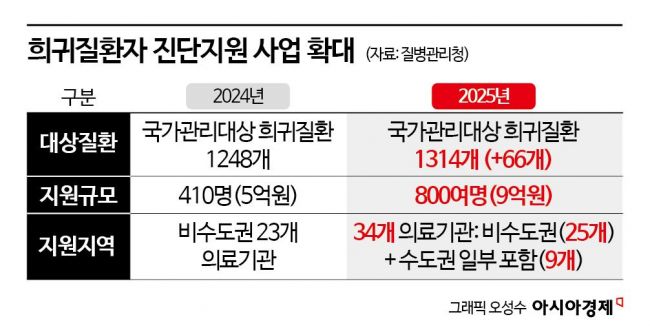
This year, the KDCA plans to increase the number of supported diagnostic target diseases from 1,248 to 1,314, adding 66 diseases. Considering the actual demand for diagnosis and the increasing trend of rare diseases, the agency will double the scale of diagnostic support to about 800 people compared to the previous year. The regions and institutions for diagnostic test requests will also be expanded, adding medical institutions in some metropolitan areas to the existing 23 non-metropolitan institutions, totaling 34 medical institutions (25 non-metropolitan, 9 metropolitan) to strengthen diagnostic accessibility based on patients' residences.
Furthermore, if a hereditary rare disease is confirmed, additional family testing (about three people including parents and siblings) will be supported to proactively manage high-risk groups such as carriers. Screening and confirmatory tests will also be provided for suspected spinal muscular atrophy (SMA) patients, who have relatively high treatment cost demands and require early diagnosis.
If the diagnosis confirms a rare disease, patients and families can reduce their medical expenses through national support policies linked with the National Health Insurance Service's Special Case Copayment Reduction Program and the KDCA's Rare Disease Medical Expense Support Project, enabling timely treatment through early diagnosis.
Information on how to apply for the Visiting Rare Disease Diagnosis Support Project, participating medical institutions, and related details can be found on the KDCA website under the 'Rare Disease Helpline.'
© The Asia Business Daily(www.asiae.co.kr). All rights reserved.

















