U.S. Retail Sales in February Rise 0.2% from Previous Month
January Revised Down to -1.2%... Largest Decline in 43 Months
Concerns Grow Over Weakening Consumption, the Core of the U.S. Economy
U.S. retail sales fell short of market expectations last month. The sharply declining January figures were further revised downward. As consumption, which supports two-thirds of the U.S. economy, shows signs of cooling, concerns about an economic slowdown are expected to persist.
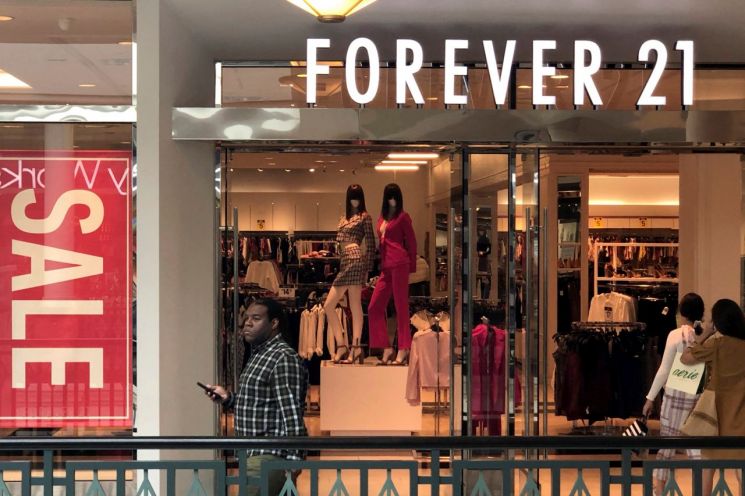
According to the U.S. Department of Commerce on the 17th (local time), retail sales in February this year totaled $722.7 billion, marking a 0.2% increase from the previous month.
Initially, the market had expected retail sales to have increased by 0.6% last month, but the actual figure fell significantly short of this forecast. January retail sales were also revised from an initial 0.9% decline to a 1.2% decrease, marking the largest drop in three years and seven months since July 2021.
Among the 13 retail categories, seven showed a decline. Consumption decreased in food and beverage stores (-1.5%), gas stations (-1.0%), clothing stores (-0.6%), automobile and parts dealers (-0.4%), sporting goods and bookstores (-0.4%), miscellaneous stores (-0.3%), and electronics stores (-0.3%). Meanwhile, consumption increased in online retailers (2.4%), health and personal care stores (1.7%), and grocery stores (0.4%). However, excluding automobiles, retail sales rose 0.3% month-over-month, aligning with market expectations. Core retail sales (control group), which exclude volatile sectors, also increased by 1%, surpassing the forecast of 0.2%. Core retail sales exclude food services, automobiles, building materials, and gas station sales and are reflected in the calculation of Gross Domestic Product (GDP), making them a key focus for experts.
Jennifer Timmer, an investment strategy analyst at Wells Fargo Investment Institute, analyzed, "The February retail sales report released this morning (17th) provides evidence of a limited and gradual economic slowdown rather than a signal that a recession is imminent."
The February retail sales data came amid spreading concerns about an economic slowdown. With growing fears of stagflation (rising prices amid economic slowdown) due to U.S. President Donald Trump's indiscriminate tariff hikes, consumption falling short of expectations has raised worries that the economy could quickly enter a downturn phase.
Consumer sentiment is also deteriorating. The University of Michigan Consumer Sentiment Index, a key U.S. economic indicator, dropped from 64.7 in February to 57.9 in March, marking its lowest level in two years and four months since November 2022.
Earlier, U.S. retailers had also warned of consumption contraction due to tariff-driven inflation. Gary Millerchip, Chief Financial Officer (CFO) of Costco, a U.S.-based warehouse discount retailer, said during a conference call after the earnings announcement on the 6th, "Consumers are being very selective about where they spend, and we believe this will continue," adding, "Inflation is returning in some areas, and the potential impact of tariffs may lead to even more selective spending."
As concerns about a U.S. economic downturn persist, the market is focusing on the Federal Open Market Committee (FOMC) regular meeting scheduled for the 18th-19th. With the Federal Reserve (Fed) expected to keep the benchmark interest rate steady at 4.25-4.5% per annum, attention is on the dot plot outlining rate projections. In December last year, the Fed significantly reduced its forecast for rate cuts in 2025 from four cuts of 0.25 percentage points each (totaling 1.0 percentage point) to two cuts (totaling 0.5 percentage points). The key question is whether the Fed will emphasize inflation concerns and adopt a hawkish stance by reducing the expected rate cuts this year to one, or focus on economic slowdown worries and take a dovish stance by increasing cuts to three. However, Wall Street largely expects the Fed to maintain its forecast of two rate cuts this year.
Amid concerns over declining consumption, U.S. Treasury yields are falling, especially in long-term bonds. The 10-year U.S. Treasury yield, a global benchmark for bond yields, is currently at 4.28%, down 2 basis points (1bp = 0.01 percentage points) from the previous trading day.
© The Asia Business Daily(www.asiae.co.kr). All rights reserved.
![Clutching a Stolen Dior Bag, Saying "I Hate Being Poor but Real"... The Grotesque Con of a "Human Knockoff" [Slate]](https://cwcontent.asiae.co.kr/asiaresize/183/2026021902243444107_1771435474.jpg)
















