Spotlight on Poseok Jo Myunghee
Drawing Attention from Both Domestic and International Audiences
The "Koryoin Hangeul Literature Special Exhibition," currently being held at the Koryoin Cultural Center under the Gwangju Koryoin Village, is attracting the attention of both domestic and international figures and researchers.
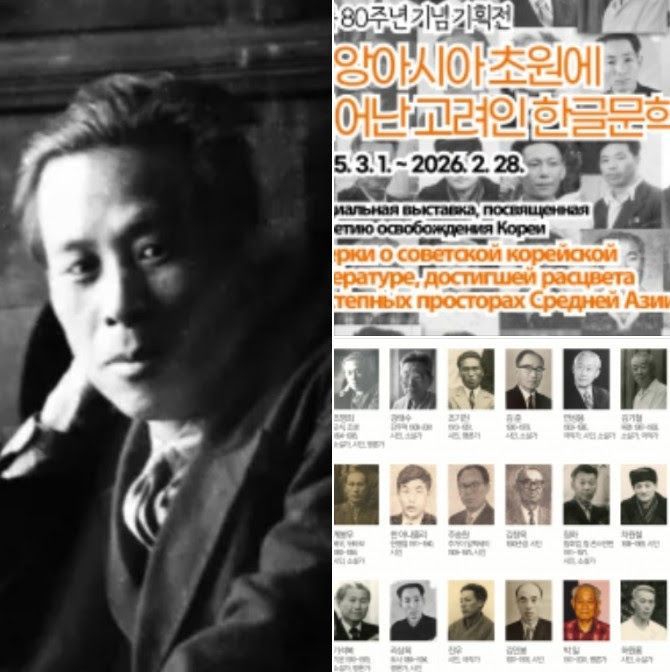 The "Koryoin Hangul Literature Exhibition," held at the Koryoin Cultural Center under the Gwangju Koryoin Village, is attracting visitors from domestic and international figures and researchers. Photo by Goryoin Village
According to the Koryoin Village on the 17th, this exhibition, organized to mark the 80th anniversary of Korea's liberation, sheds light on the roots of Koryoin Hangeul literature during the turbulent era of the 1920s and 1930s. In particular, it is centered around the life and literary world of the pioneering writer Poseok Jo Myunghee.
Koryoin Hangeul literature began in earnest with the launch of the newspaper "Seonbong" in 1923. Koryoin living in Russia and Central Asia continued their literary activities through "Seonbong."
Poseok Jo Myunghee went into exile in the Soviet Union in 1928 and led the literary movement within the Koryoin community. Through poetry and novels, he captured the realities and identities of the Koryoin people, and expanded the literary movement by nurturing disciples and publishing poetry collections.
Kim Byunghak, director of the Koryoin Cultural Center, said, "Koryoin Hangeul literature, which flourished from 1923 to 1937, left an important mark on the history of national literature," and added, "The literary spirit of Poseok Jo Myunghee and his disciples still resonates strongly today."
© The Asia Business Daily(www.asiae.co.kr). All rights reserved.

















