Casebook on Educational Welfare Priority Support Project Published
Distributed to 120 Schools, Customized Support Strengthened
'Educational welfare' is being deeply integrated into school sites. The Gwangju Office of Education has published a casebook compiling experiences in educational welfare practices, aiming to strengthen welfare capabilities in schools.
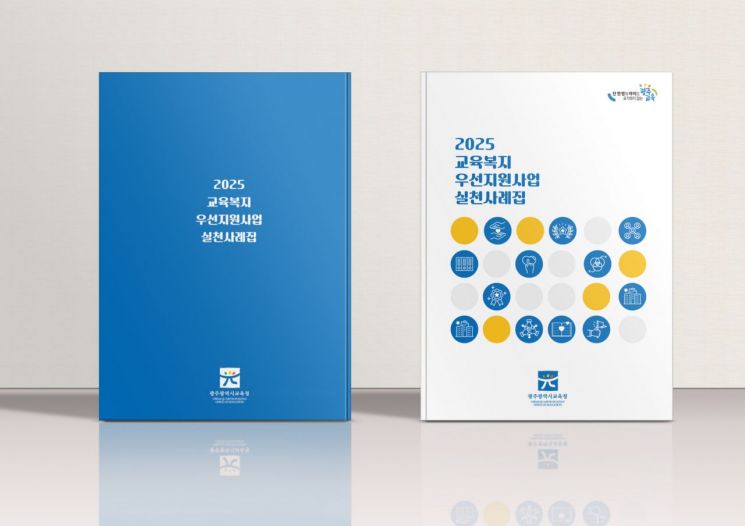 A Collection of Best Practices for the Priority Educational Welfare Support Project. Gwangju Office of Education Building Exterior
The Gwangju Office of Education announced on the 17th that it has recently produced a casebook on the Educational Welfare Priority Support Project and will distribute it to schools in the district. The Educational Welfare Priority Support Project is a system in which schools and local communities cooperate to support students from vulnerable groups and build a local educational community.
This casebook contains the necessity and operational direction of the educational welfare project, and was produced based on this year's basic plan for the Educational Welfare Priority Support Project. In particular, it shares field-oriented know-how by including 90 outstanding cases and practice records from schools operating the project in the Gwangju area. The casebook also includes tasks for future project implementation.
The Gwangju Office of Education plans to utilize the casebook for 120 schools participating in the project and for staff training, and will upload the material on the city education office's website so that field staff can easily refer to it.
Lee Jungseon, Superintendent of Gwangju Office of Education, said, "I hope this casebook will help operate educational welfare projects more efficiently on the ground," and added, "We will continue to actively promote outstanding cases to ensure the successful settlement of educational welfare projects at the field level."
This year, the Educational Welfare Priority Support Project in Gwangju covers a total of 120 schools, including 90 with educational welfare officers assigned and 30 without. For the first time, two high schools have been newly included this year. These schools will strengthen students' life skills through customized programs such as support for students in crisis and the student-led program 'Main Character School,' and will address tasks such as restructuring educational welfare, enhancing integrated support, and solidifying school-community collaboration.
© The Asia Business Daily(www.asiae.co.kr). All rights reserved.

















