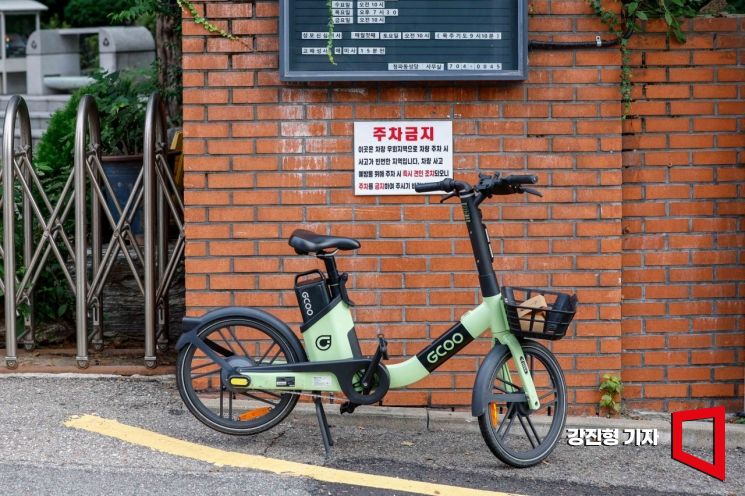
The Ministry of Environment will spend 16 billion KRW in subsidies this year to supply 20,000 electric two-wheelers. It will also provide 5 billion KRW to facilities for the ‘battery-swapping’ system, a core technology for electric two-wheeler distribution.
On the 17th, the Ministry of Environment announced the finalization of the "2025 Electric Two-Wheeler Supply Project Subsidy Processing Guidelines," which include these details. According to the guidelines, the 16 billion KRW subsidy will be allocated more to electric two-wheelers with superior performance in fuel efficiency, battery capacity, and hill-climbing ability.
In particular, the subsidy criteria for battery-swapping electric two-wheelers will change. Battery-swapping electric two-wheelers are devices that quickly replace a discharged battery with a fully charged one at designated external locations. This technology is essential for electric two-wheeler distribution as it compensates for the disadvantage of limited charging capacity.
The subsidy payment ratio for battery-swapping electric two-wheelers has been increased from 60% to 70%. The subsidy for battery-swapping electric two-wheelers is calculated by multiplying a certain ratio by the subsidy amount determined based on performance. However, since it is difficult to increase battery capacity for the user in battery-swapping electric two-wheelers, they previously received less subsidy. There were many opinions that differentiating subsidies like general electric two-wheelers was disadvantageous, so the payment ratio was raised.
Vehicles with fast charging speeds or those that provide battery status information to users will also receive preferential treatment. There have been many complaints that electric two-wheelers have inconveniently slow charging speeds. If the charging speed is improved to 3kW or higher, an additional subsidy of up to 100,000 KRW will be provided for that electric two-wheeler. Electric two-wheelers that allow users to check battery status information via vehicle displays and user applications will receive the same benefit.
Battery-swapping charging facilities that do not meet national (KS) standards will have their subsidies discontinued. Although battery pack and charging facility standards were established in 2023, manufacturers still produce different models. Users must visit specific facilities to swap batteries. From this year, the Ministry of Environment plans to support installation costs only for facilities that meet the standards to enhance user convenience.
Currently, there are about 1,872 battery-swapping charging facilities. The number of charging facilities rapidly expanded from 30 units in 2020 to 898 units in 2023, but last year only 661 units were supplied, slowing the pace of infrastructure development.
Oh Ilyoung, Director of Air Environment Policy at the Ministry of Environment, said, “The electric two-wheeler market, which has strengths in improving urban air quality and reducing noise pollution, has high growth potential. We will promote support projects to induce technological innovation in the industry and expand consumer choices such as battery-swapping to supply more convenient and competitive electric two-wheelers.”
© The Asia Business Daily(www.asiae.co.kr). All rights reserved.

















