Court: "Seed Origin Must Be Indicated"
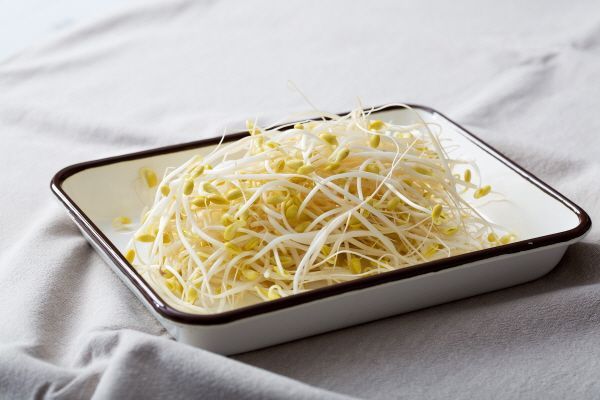
In a legal dispute over the country of origin labeling of bean sprouts grown domestically from Chinese soybeans, the first trial court ruled that the origin of the seeds should be indicated.
The Jeonju District Court Criminal Division 4 (Judge Kim Mi-kyung) announced on the 16th that it sentenced a woman in her 50s, identified as A, who was indicted without detention on charges of violating the Act on the Labeling of Origin of Agricultural and Fishery Products, to six months in prison with a two-year probation and a fine of 10 million won.
A is accused of fraudulently labeling the origin of bean sprouts and kimchi used in stews as domestic at a restaurant she operated in Gimje-si, Jeollabuk-do, from September 2018 to January 2024, thereby obtaining unjust profits.
According to the investigation, from November 2023 to January 2024, A served 56 kg of bean sprouts made from Chinese soybeans as domestic to customers, and from September 2018 to January 2024, 1,120 boxes (11,200 kg) of Chinese bean sprouts were labeled as domestic and sold in stews.
It was found that the unjust profits gained from selling kimchi stew made with Chinese kimchi amounted to approximately 179 million won.
The key issue in this trial was whether the country of origin of the bean sprouts should be labeled as "Chinese" or could be labeled as "domestic."
A’s lawyer argued, "The bean sprouts used in the restaurant were grown in Korea from Chinese soybeans, so they should be considered domestic."
However, the court stated, "If seeds are imported and the 'crop' itself is produced, the origin of the agricultural product can be considered changed, but simply sprouting or growing the plant does not constitute a change in origin." The court pointed out, "The defendant cultivated bean sprouts by applying only simple processes such as watering and controlling temperature and humidity to the soybean seeds, so the origin should have been labeled as the origin of the seeds."
The court further ruled, "Falsely labeling the origin disrupts distribution order and betrays consumers' rightful expectations. The defendant used Chinese bean sprouts and kimchi, which are cheaper than domestic products, for a considerable period while falsely labeling the origin, and has not shown remorse, so the guilt is heavy."
© The Asia Business Daily(www.asiae.co.kr). All rights reserved.

















