Cloven-Hoofed Animals Such as Cattle and Pigs Infected
Spread Through Body Fluids and Airborne Droplets
No Direct Threat to Humans Due to Viral Characteristics
Virus May Survive on Certain Parts of the Human Body
Concerns Over Humans Acting as Carriers to Animals
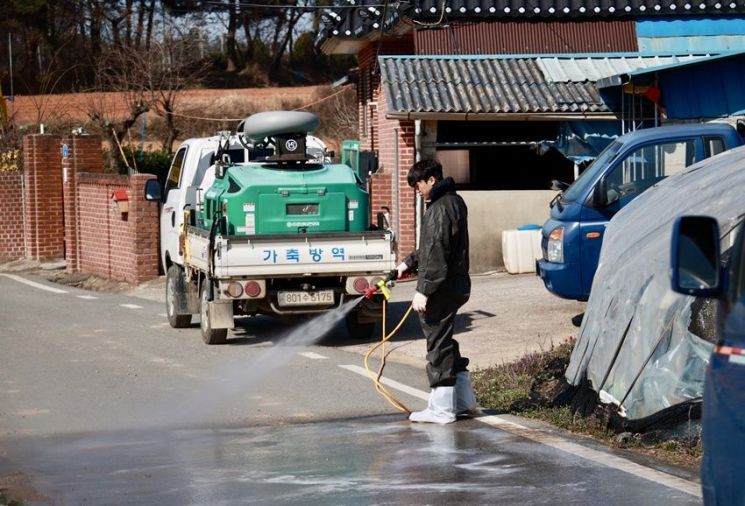 A quarantine operation at a livestock barn in Yeongam County, Jeollanam-do. Provided by Yeongam County
For the first time in Jeonnam, Foot-and-Mouth Disease (FMD) has been reported at four livestock farms under the jurisdiction of Yeongam-gun, causing nationwide shock and raising public interest in this livestock disease. Since FMD itself is quite unfamiliar and there is a lack of accurate information about the disease, vague fears are spreading among the public.
◇ Transmission Routes = Foot-and-Mouth Disease is an acute viral disease that affects cloven-hoofed animals such as cattle and pigs. FMD is mainly transmitted through animal body fluids (such as urine), airborne droplets, or contaminated objects. It is especially known to spread up to 50 km or more through the air.
◇ Symptoms = Animals infected with FMD initially experience fever and loss of appetite. This is followed by pain around the mouth and hooves, where blisters form. Similar symptoms were confirmed at the livestock farms in Yeongam-gun where FMD was first reported. Once infected, animals are said to have almost zero chance of recovery. Fortunately, a vaccine has been developed, so FMD can be somewhat prevented through vaccination.
◇ Can Humans Be Infected? = To get straight to the point, FMD is not classified as a zoonotic disease in Korea. In other words, FMD does not infect humans. Some symptoms are similar to hand, foot, and mouth disease, which leads to confusion, but due to the nature of the FMD virus, it does not directly affect humans according to the medical community. However, the FMD virus can remain in the respiratory tract or other areas of people who have come into contact with infected animals for a certain period. If these people then come into contact with animals at other farms, they can transmit the disease to those animals. In other words, humans can act as carriers. Therefore, avoiding visits to areas where FMD has occurred is one of the best ways to prevent its spread.
© The Asia Business Daily(www.asiae.co.kr). All rights reserved.

















