Possibility of Restrictions on Cooperation with the U.S. in Nuclear and AI Sectors Due to 'Prior Approval' Process
South Korea Placed in Lowest Category; Removal from List Needed Before April 15 Enforcement
The U.S. Department of Energy (DOE) officially confirmed on the 14th (local time) that South Korea has been included in the 'Sensitive Countries and Other Designated Countries List' (SCL), drawing attention to the restrictions that come with being on the SCL.
According to the DOE website, the SCL currently includes 25 countries. Most of these are nations designated by the U.S. as hostile, such as North Korea, China, and Russia. Six countries, including North Korea, Iran, Cuba, Libya, Sudan, and Syria, are classified as state sponsors of terrorism and are listed on the SCL.
The U.S. cites national security, nuclear non-proliferation, and terrorism support as reasons for SCL designation. Regional instability and economic security threats are also known to be factors behind the designation. In other words, the U.S. is specially managing countries it deems a threat to national security. Being included on the SCL restricts access to advanced technologies overseen by the DOE, such as nuclear weapons technology and artificial intelligence (AI). Research cooperation and technology sharing with the U.S. are also limited. Special approval is required to access information on DOE headquarters as well as affiliated research institutes, facilities, and programs.
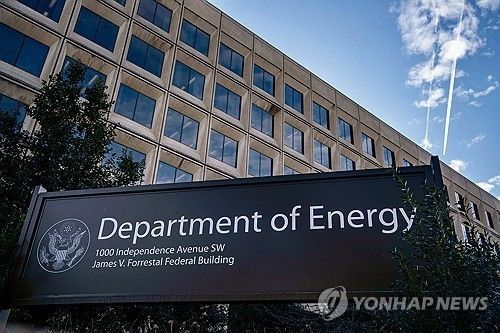
In a response sent to Yonhap News, the DOE stated that inclusion on the SCL does not prohibit Americans or DOE employees from visiting or conducting business in the designated countries. Similarly, nationals of those countries are allowed to visit the DOE. However, it added that prior internal review procedures are necessary for visits and cooperation. This is interpreted to mean that while nationals of SCL countries are not categorically excluded, restrictions may be imposed after internal review. Previously, research and development and information sharing with the U.S. were freely possible, but now a prior approval process by the DOE has been added. This is likely to reduce opportunities for cooperation.
The DOE manages SCL countries by dividing them into several categories based on the level of security threat. South Korea was included in the lowest category, 'Other Designated Country.' The DOE explained that the SCL is an 'extensive' list and inclusion does not necessarily mean a hostile relationship with the U.S. "Many designated countries are those with whom we regularly cooperate on various issues such as energy, science, technology, counterterrorism, and non-proliferation." These countries are not hostile but are included on the SCL for various reasons. Israel is known to be designated due to nuclear non-proliferation issues, and Taiwan due to conflicts with China.
South Korea's inclusion on the SCL is likely to have negative effects. Simply being listed may reduce opportunities for cooperation with the U.S. and raise concerns about spreading negative perceptions in the international community. The DOE stated that South Korea was included on the SCL in early January of this year. This measure was decided before the start of the second Trump administration, during the previous Biden administration. South Korean diplomatic authorities now face the task of seeking to negotiate with the Trump administration to remove South Korea from the list before the SCL application is fully enforced on April 15.
© The Asia Business Daily(www.asiae.co.kr). All rights reserved.
![Clutching a Stolen Dior Bag, Saying "I Hate Being Poor but Real"... The Grotesque Con of a "Human Knockoff" [Slate]](https://cwcontent.asiae.co.kr/asiaresize/183/2026021902243444107_1771435474.jpg)
















