Taking High Risks to Get Rich Quickly
"Most Face Unfavorable Outcomes, Only Buying Stocks Destined to Crash"
An analysis has emerged suggesting that Korean individual investors are behind unusual phenomena in the U.S. stock market, such as the concentration in leveraged exchange-traded funds (ETFs) and the sharp fluctuations of stocks in specific sectors. On the 13th (local time), Owen Lamont, Senior Vice President of the U.S. asset management firm Acadian Asset Management, posted an article titled "The Squid Game stock market" on the company's website. The article argues that the aggressive investment tendencies of Korean individual investors are increasing volatility in the U.S. market and provides concrete evidence to support this claim.
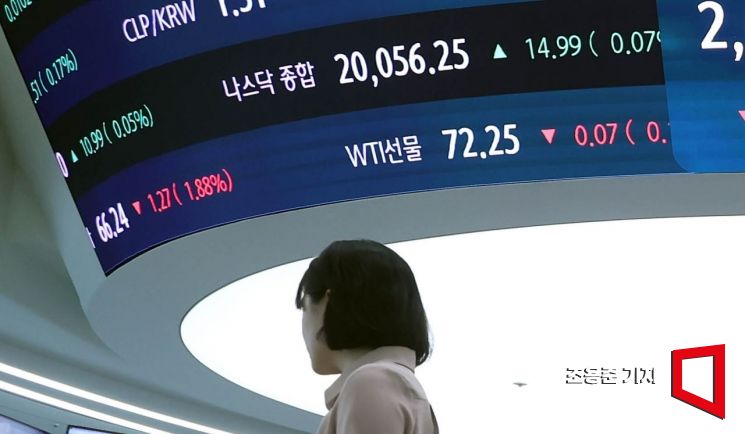 An analysis has emerged suggesting that Korean individual investors are behind the unusual phenomena in the U.S. stock market, such as the concentration in leveraged exchange-traded funds (ETFs) and the sharp fluctuations in stocks of specific sectors. Photo by Jo Yongjun
First, Vice President Lamont explained that "the U.S. stock market is becoming Korean-ized." He added, "Korean individual investors are playing a significant role in this process," noting that although the holdings of Korean individual investors in U.S. stocks amounted to $112.1 billion (approximately 163 trillion KRW) last year?only 0.2% of the total U.S. stock market capitalization ($62 trillion)?they exert considerable influence in certain niche markets.
Specifically citing the case of quantum computing-related stocks, he pointed to 'Rigetti Computing,' which Korean investors heavily purchased with $111 million (about 161 billion KRW) at the end of last year, resulting in a 1,400% surge in its stock price within a month. However, the stock has since fallen 55% from its peak. Furthermore, he analyzed that Korean investors' concentrated investments in artificial intelligence (AI) stocks, small modular reactor (SMR) companies, virtual assets, and leveraged ETFs have contributed to increased market volatility.
"Korean Investors Exhibit a Pattern of Concentrated Buying in Specific Stocks Just Before Market Crashes"
Lamont pointed out that Korean investors tend to concentrate their purchases in specific stocks right before stock market crashes. He emphasized, "Just before major disasters in U.S. financial history?such as the 2008 Lehman Brothers collapse, the 2018 'Volmageddon' event, the Nikola fraud allegations, and the Silicon Valley Bank (SVB) collapse?Korean individual investors' purchases of related stocks surged sharply."
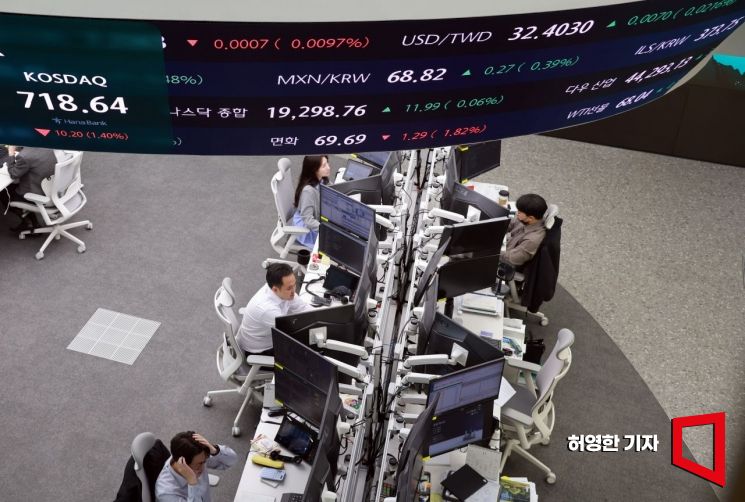 Vice President Lamont pointed out that Korean investors tend to concentrate their purchases on specific stocks just before a stock market crash. He emphasized, "Just before the collapse of Lehman Brothers in 2008, the 'Volmageddon' incident in 2018, the Nikola fraud allegations, and the collapse of Silicon Valley Bank (SVB), there was a sharp increase in purchases of related stocks by Korean individual investors right before these disasters in American financial history." Photo by Huh Young-han
He likened this investment behavior to the Netflix series 'The Squid Game,' stating, "Just as participants in 'The Squid Game' jump into dangerous games without fully understanding the rules, Korean investors take on great risks to get rich quickly," warning that "most meet unfavorable outcomes." Furthermore, referencing groups of individual investors who suffered losses at global financial firms in the past, he said, "Just as Japanese salarymen in 1989, growth fund investors in 1999, and Robinhood investors who bought meme stocks in 2021 did, today Korean individual investors occupy that position." He advised, "I recommend individual investors worldwide to buy index funds even if it seems boring, and when given the chance to participate in the Squid Game, the best decision is not to participate at all."
Meanwhile, Acadian Asset Management, founded in 1986, is a global quantitative hedge fund currently managing approximately $117 billion (about 169 trillion KRW). Vice President Lamont holds a Ph.D. in economics and is a financial market expert who has served as a professor at Yale University, the University of Chicago Booth School of Business, and a lecturer at Harvard University.
© The Asia Business Daily(www.asiae.co.kr). All rights reserved.


















