Key Tasks for Korea's Sustainable Growth: Solving Low Birthrate and Climate Change Issues
Easing Seoul-Centric Entrance Exam Competition with Regional Proportional Selection in University Admissions
Reducing Metropolitan Concentration by Fostering Two to Six Regional Hub Cities
"The key to solving the low birthrate problem lies in addressing the overheated entrance exam competition and the resulting concentration of population in the Seoul metropolitan area."
Lee Chang-yong, Governor of the Bank of Korea, emphasized this during his keynote speech at 'GEEF 2025' held at Yonsei University in Seodaemun-gu, Seoul on the 14th, stating, "The core issues that our country must resolve to achieve sustainable growth are the low birthrate and aging population problems, as well as climate change issues."
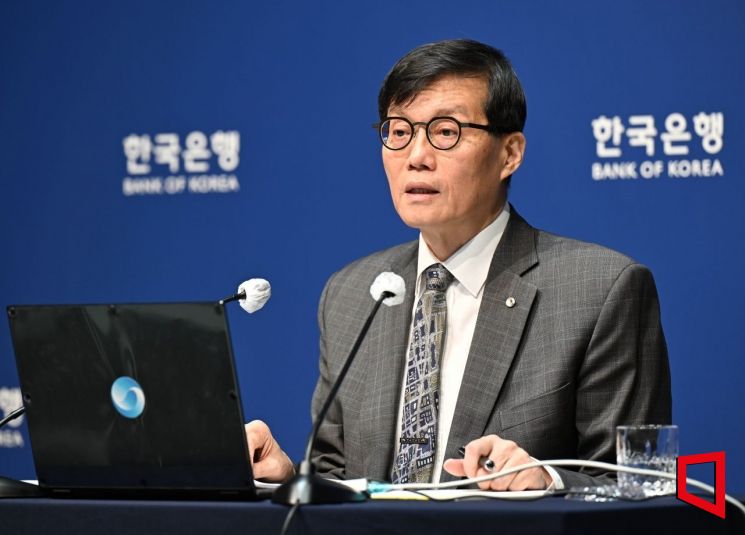 Lee Chang-yong, Governor of the Bank of Korea, is holding a press conference on monetary policy direction and answering reporters' questions after the Monetary Policy Committee meeting held at the Bank of Korea headquarters in Jung-gu, Seoul on February 25. 2025.02.25 Photo by Joint Press Corps
The Governor said, "The ultra-low fertility rate (last year's total fertility rate was 0.75), excessive concentration of population in the Seoul metropolitan area, and overheated entrance exam competition may seem like separate issues, but in fact, they are deeply interconnected," warning, "If we do not respond promptly to these problems, there is a high possibility that severe side effects difficult for our society to tolerate will materialize, such as population extinction, permanent negative growth, social conflict explosion, and loss of opportunities and confidence among the youth." The Bank of Korea has recently proposed bold policies such as 'development of hub cities' and 'regional proportional selection system' as measures to solve these problems.
The Governor emphasized, "Considering the land area and population of our country, fostering two to at most six hub cities is the most effective strategy." He explained that it is important to concentrate core infrastructure and resources such as hospitals, movie theaters, and sports centers in a few regional hub cities to create living conditions comparable to those in the Seoul metropolitan area.
Regarding the university entrance system, he proposed introducing a 'regional proportional selection system' that grants universities autonomy in selecting freshmen but requires the final selection results to be proportional to the school-age population by region. He said, "If this system is introduced, it will reduce the influence of socioeconomic backgrounds such as parents' economic power and private education environment on entrance exams, thereby expanding social mobility through education," adding, "By alleviating the entrance exam competition concentrated in Seoul, it will help curb population concentration in the metropolitan area and the rise in housing prices in Seoul, which will also aid in boosting the birthrate." He explained that by universities selecting students from various regions, students will have opportunities to learn from different backgrounds and perspectives, which will contribute to easing regional conflicts in the long term.
The Governor stated, "We are now at the forefront of technological advancement and facing an era where we must create new industries," emphasizing, "Going forward, rather than uniformly selecting compliant talents, it is more important to enable talents with diverse backgrounds and experiences who are not afraid of new challenges to cooperate and interact with each other."
Regarding the other key issue of climate change, he stressed that it is no longer a problem affecting only export industries but a realistic issue that must be resolved immediately. He said, "We need to reorganize our country's 'green taxonomy' to align with international standards." As of April last year, the global average price of carbon emission permits was about $30 per ton, and the European Union (EU) price reached $60, while Korea's price remained at around $6. The Governor emphasized, "If the price is excessively low, companies will find it more economical to purchase emission permits rather than reduce carbon emissions," and stressed, "The carbon emissions trading system (K-ETS) must be improved in a more rational direction."
© The Asia Business Daily(www.asiae.co.kr). All rights reserved.

















