Low Likelihood of Reciprocal Tariffs on April 2
Plans to Propose Measures to Reduce Trade Surplus with the U.S.
Jung In-kyo, the head of the Trade Negotiation Department at the Ministry of Trade, Industry and Energy, who visited the United States to respond to President Trump's tariff policy, stated that he would highlight South Korea's strategic cooperation value.
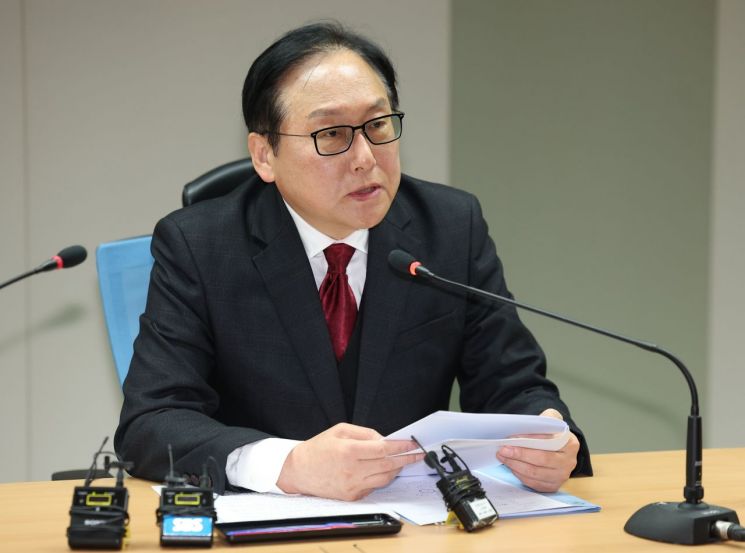
On the 13th, at Dulles International Airport nearby, Jung met with Korean correspondents and said, "I believe South Korea is in the top group among countries with the easiest cooperation in the U.S. economic security policy," adding, "We plan to discuss our strategic advantages with the U.S. side and request reciprocal measures for our country."
During his visit to the U.S., which lasts until the 15th, Jung is scheduled to meet with key trade officials, including Jamie Jamison Greer, the U.S. Trade Representative, as well as members of Congress and industry representatives.
Jung said, "Basically, a friendly cooperative relationship has been maintained between South Korea and the U.S. not only in industry but also in trade, and this cooperation will continue during President Trump's second term," adding, "In that regard, we intend to actively explain to the U.S. side the industrial advantages we have and the improvements related to our trade system."
Jung plans to convey the South Korean government's position on trade issues with the U.S. and focus on minimizing the impact of the reciprocal tariffs scheduled for April 2.
Regarding the U.S. reciprocal tariffs, Jung stated, "The U.S. steel and aluminum tariffs have clearly been applied without exception, but reciprocal tariffs inevitably vary significantly depending on the country and product," emphasizing, "If we consider this a test, there must be some grading criteria, so first we need to understand those criteria, quickly fix what needs to be corrected, and persuade where necessary."
He also evaluated, "We should see that the full-scale consultations between South Korea and the U.S. regarding reciprocal tariffs have just begun," and forecasted, "It will likely take at least one to two months before reciprocal tariffs are actually imposed. The possibility of reciprocal tariffs being enforced starting April 2 seems very low."
Before the announcement of reciprocal tariffs scheduled for April 2, he said he would present tariff rate data to leave room for negotiation with the U.S. Jung said, "There is a possibility that on April 2, the U.S. will announce country- and product-specific tariff rates based on its own judgment, but even if announced then, it will not be final, and ultimately, negotiations with individual countries will be unavoidable," and added that he would present data to the U.S. side in preparation for the tariff rate determination on April 2.
Regarding the South Korean government's negotiation goals with the U.S. on reciprocal tariffs, Jung responded, "The goal is that they will not be imposed," and when asked whether South Korea would impose retaliatory tariffs if they are actually imposed, he said, "At this point, I cannot give a clear answer."
Jung said that regarding one of the U.S. tariff policy goals to reduce their trade deficit, "We will have no choice but to explain to the U.S. side our efforts to reduce the trade deficit (South Korea's trade surplus with the U.S.)," and that he has plans and persuasive arguments to reduce the trade surplus with the U.S.
Regarding the U.S. industry’s demand to lift restrictions on imports of U.S. beef over 30 months old into South Korea, he said, "That is the industry's opinion, not the position of the U.S. Trade Representative," and added, "We plan to explore this during the meeting."
On President Donald Trump's mention of repealing the U.S. Semiconductor Act linked to subsidies for South Korean semiconductor companies, Jung said, "Since amendments or repeal will be discussed within the U.S. Congress, we need to watch the situation a bit longer."
Regarding President Trump's mention of South Korea's participation in the Alaska gas pipeline project, he said, "It seems there is insufficient information related to the project," and added, "In that regard, I think the working-level consultative body we proposed will be activated, and through that process, the decision on participation will be made."
© The Asia Business Daily(www.asiae.co.kr). All rights reserved.

















