After the Disaster, Jeju Air Regains Top Spot in February Domestic LCC Passenger Numbers
Jeju Air: 879,000, Jin Air: 863,000, T'way Air: 838,000
"Significant Portion of Customer Concerns Over Safety Issues Alleviated"
Jeju Air, which had seen a decline in passengers due to reduced flights following the Muan Airport passenger plane disaster, reclaimed its position as the number one domestic low-cost carrier (LCC) last month.
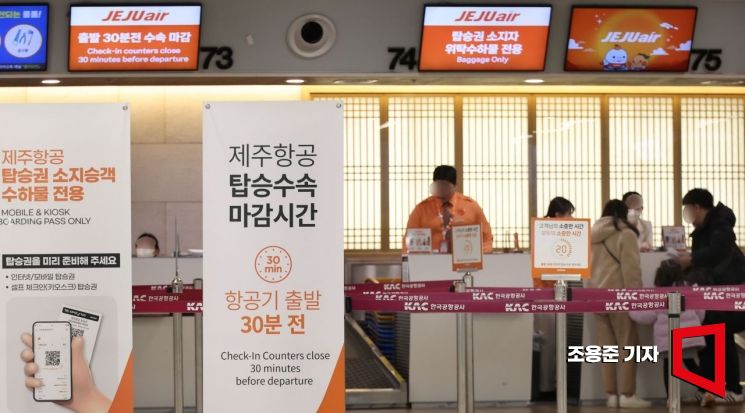
According to aviation statistics from the Ministry of Land, Infrastructure and Transport on the 12th, a total of 7,248,276 passengers used flights operated by 10 domestic airlines last month. Of these, 1,978,079 were domestic passengers and 5,271,970 were international passengers. Passenger numbers in February decreased by 9.4% overall compared to January, with domestic passengers down 12.5% and international passengers down 8.2%. This is partly due to February having three fewer days than January and the base effect of the Lunar New Year holiday, which increased passenger numbers in January.
In contrast, Jeju Air's passenger numbers only decreased by 0.2%, from 881,000 in January to 879,000 last month. This was the smallest decline among domestic airlines. While international passengers (599,000) decreased by 1.2%, domestic passengers (279,000) increased by 2.1%. As a result, Jeju Air surpassed Jin Air (863,000, down 7.6%) and T'way Air (838,000, down 9%) to record the highest number of passengers among LCCs. Immediately after the accident in January, Jeju Air had fallen to third place behind Jin Air and T'way Air, but it has now returned to its previous ranking. The February LCC passenger share was Jeju Air (22.7%), followed by Jin Air (22.3%) and T'way Air (21.7%).
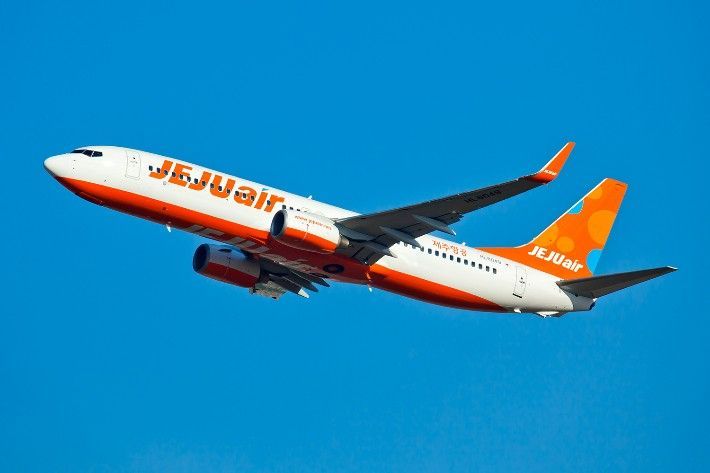
Earlier, following the Muan Airport Jeju Air passenger plane disaster on December 29 last year, there was a surge in flight reservation cancellations. According to Jeju Air on the 30th, from midnight the previous day until 1 p.m. on the 30th, about 68,000 tickets were canceled. Domestic cancellations accounted for approximately 33,000, and international cancellations about 34,000. Subsequently, due to flight reductions aimed at enhancing operational stability and punctuality, Jeju Air fell to third place in January this year with a 9.1% share, behind Jin Air (10.2%) and T'way Air (10.1%), losing the top spot in domestic LCC passenger share it had held from January to December of the previous year.
Since then, Jeju Air has made strenuous efforts to regain customer trust in service safety and recover demand. Although it implemented the drastic measure of reducing the number of flights, it focused on increasing load factors through ticket price reductions to minimize revenue losses and boldly pursued new route launches. Rumors that Jeju Air tickets were cheaper than those of other airlines led to such a surge in app access that the Jeju Air app was temporarily difficult to use.
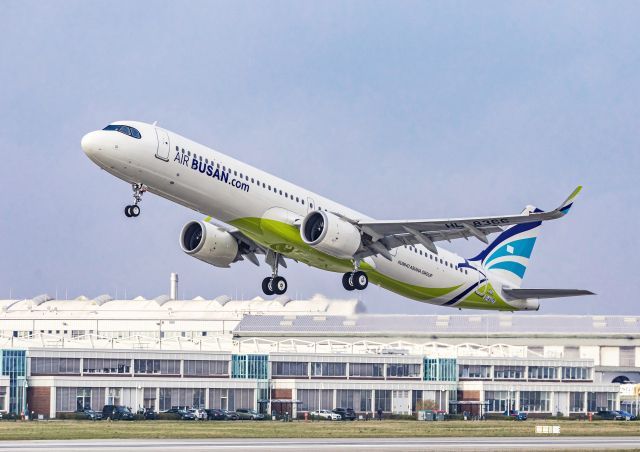
Meanwhile, Air Busan, which experienced a fire accident at the end of January, saw a 26.3% decrease in passengers last month, with 494,000 passengers. Domestic passengers dropped 52.8% to 122,000, and international passengers decreased 9.6% to 371,000.
An industry insider commented, "Despite significantly reducing the number of flights to improve operational stability, Jeju Air's passenger decline is smaller than other LCCs, and the recent recovery in passengers is noticeable. This appears to be the result of alleviating a significant portion of customer concerns regarding safety issues." The insider added, "Air Busan will also focus on strengthening safety for some time to recover."
© The Asia Business Daily(www.asiae.co.kr). All rights reserved.



















