Over 7,000 Vacant Houses Last Year... 1.6 Times Increase in 5 Years Despite Annual Maintenance of 400 Houses
"Utilization Over Demolition"... Promoting Transactions Through Vacant House Information Platform
Gangwon Special Self-Governing Province (Governor Kim Jin-tae) announced on the 13th that, in response to the acceleration of regional decline and local extinction due to aging and population decline, it will proactively address the vacant house issue by directly establishing a maintenance plan at the provincial level.
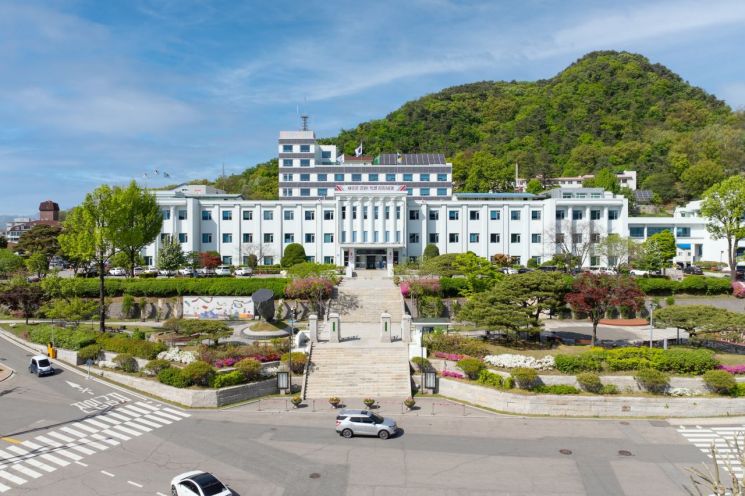
Despite Gangwon Province maintaining about 400 vacant houses annually, the number of vacant houses continues to increase*, making it urgent to establish comprehensive countermeasures. The number of vacant houses in Gangwon Province increased 1.6 times over the past five years, from 4,394 units in 2020 to 6,381 units in 2022, and 7,089 units in 2024.
Currently, vacant house maintenance and management are promoted mainly by mayors and county heads, with urban and rural areas managed separately. This structure makes it difficult to comprehensively grasp the status of vacant houses and results in insufficient systematic institutional improvements. Accordingly, Gangwon Province plans to establish highly effective policies by broadly collecting opinions from local governments and private experts.
Gangwon Province plans to maintain a total of 443 vacant houses through the Ministry of the Interior and Safety’s national subsidy project for vacant house maintenance and individual city/county vacant house maintenance projects, supporting a project budget of 3.337 billion KRW. The maintenance methods will be implemented according to the circumstances of each city/county, either through fixed-amount subsidies or direct demolition, including demolition, improvement, and utilization of vacant houses.
To ensure systematic and efficient management of vacant houses, Gangwon Province will encourage cities and counties without established vacant house maintenance plans to develop such plans and will also conduct domestic and international case studies to increase interest and strengthen capabilities. Additionally, this year, through expert collaboration, the province plans to present an integrated vacant house maintenance guideline at the Gangwon Province level.
The main contents include ▲basic directions for vacant house maintenance ▲vacant house status surveys ▲demolition and utilization plans ▲safety management plans, and the province plans to actively discover and promote pilot projects tailored to local conditions, such as revitalizing vacant house transactions using a vacant house information platform. Through continuous meetings with city and county officials, the province will actively consult with central government agencies to address difficulties and suggestions in project implementation to ensure improvements and reflections.
In particular, regarding vacant house maintenance, the policy will shift from simple demolition to utilization-centered maintenance. Various methods will be introduced to utilize vacant houses as affordable housing, parking lots, urban gardens, etc., through remodeling linked to regeneration projects. This aims to prevent regional population outflow and attract external population, thereby maximizing the effects of responding to local extinction and improving urban landscapes.
Kim Soon-ha, Director of the Architecture Division of Gangwon Special Self-Governing Province, stated, “Despite maintaining about 400 vacant houses annually, the number of vacant houses continues to increase as population decline and regional extinction accelerate. Since vacant houses rapidly deteriorate once neglected, we will actively work to establish a systematic vacant house information provision system to revitalize vacant house transactions.”
© The Asia Business Daily(www.asiae.co.kr). All rights reserved.
![Clutching a Stolen Dior Bag, Saying "I Hate Being Poor but Real"... The Grotesque Con of a "Human Knockoff" [Slate]](https://cwcontent.asiae.co.kr/asiaresize/183/2026021902243444107_1771435474.jpg)











