Canada Imposes Retaliatory Tariffs Worth 31 Trillion Won on US Products...
EU Also Announces Retaliatory Tariffs
Trump Hints at Further Retaliation:
"Flexibility Until April 2" Demands Negotiation Proposals from Countries Before Reciprocal Tariffs Are Imposed

On the 12th (local time), the Canadian government decided to impose retaliatory tariffs on US products worth 21 billion dollars (approximately 31 trillion won) in response to US President Donald Trump's implementation of 25% tariffs on steel and aluminum. This is a retaliatory measure against the United States following the European Union (EU). President Trump immediately hinted at further retaliation and stated that he would exercise "flexibility" until April 2, the date when reciprocal tariffs are announced, effectively pressuring countries to lower trade barriers and bring negotiation proposals to resolve the US trade deficit by that deadline.
Canada imposes retaliatory tariffs on US products worth 31 trillion won... EU also announces retaliatory tariffs
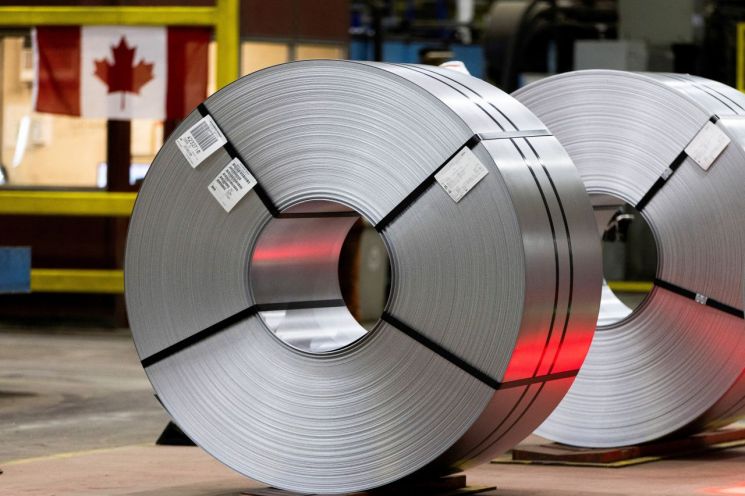
Dominic LeBlanc, Canadian Minister of Finance, held a press conference that day and announced that retaliatory tariffs of 25% would be imposed on US steel, aluminum, computers, sports equipment, and cast iron products.
This is a countermeasure against the Trump administration's enforcement of 25% tariffs on all steel and aluminum products entering the US starting at midnight that day. Minister LeBlanc explained that this measure would take effect from the 13th, one day after the US tariff enforcement. This tariff imposition is separate from the 30 billion dollar (approximately 44 trillion won) US imports tariff imposed by Canada on the 4th. The Trump administration imposed 25% tariffs on Canadian imports on the 4th but granted a grace period until April 2, which Canada has maintained.
Minister LeBlanc criticized, "The US administration is once again causing disruption and disorder in an incredibly successful trade partnership," adding, "This will increase the cost of everyday products for both Canadian and American households."
Earlier, the EU also announced on the same day that it would impose retaliatory tariffs on US imports worth 28 billion dollars (approximately 41 trillion won) starting in April in response to the Trump administration's steel and aluminum tariff enforcement. US imports such as steel, aluminum, beef, motorcycles, and whiskey are subject to retaliatory tariffs.
Trump hints at further retaliation: "Flexibility until April 2" demands negotiation proposals from countries before reciprocal tariffs are imposed
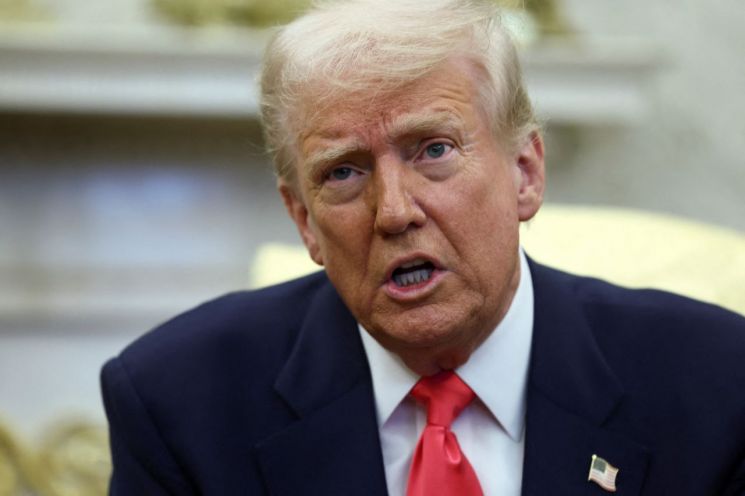
President Trump, angered by the EU and others' countermeasures against the steel and aluminum tariffs he initiated, warned of further retaliation.
During a press briefing at the White House that day, when asked whether he would respond to the EU's tariff measures, he replied, "Of course, we will respond." He added, "The problem is that our country has not responded until now," and claimed, "Look, the EU was established to take advantage of the United States."
Jamie Harrison, US Trade Representative (USTR), also criticized the EU's retaliatory tariffs in a separate statement that day, blaming the EU for ignoring the oversupply problem that led to the US steel and aluminum tariffs.
Regarding criticisms that his tariff policy is inconsistent due to repeated enforcement and suspension, President Trump responded, "I have the right to adjust." He emphasized, "It's not inconsistency but exercising flexibility," adding, "I will always maintain flexibility, but once I start, there will be very little flexibility."
He stressed, "April 2 will be a very important day for the United States," and said, "The US will recover a significant portion of what other countries have stolen from us and what our incompetent leaders have allowed them to steal." This is interpreted as pressure on countries to ease trade barriers and present solutions to the US trade surplus before the reciprocal tariff announcement on April 2, which he has warned about several times.
During a meeting with Irish Prime Minister Miche?l Martin at the White House that day, President Trump also expressed dissatisfaction with the trade deficit, saying, "We are seeing a huge deficit in trade with Ireland." Prime Minister Martin explained that Ireland has increased investment in the US compared to before.
While the Trump administration continues to impose tariffs almost daily, countries' responses vary. The EU and Canada have immediately retaliated against the US. In particular, Canada has stated that it will respond with retaliatory measures whenever the US imposes tariffs. On the other hand, Mexico is refraining from countermeasures and focusing on avoiding tariffs through negotiations with the US. Claudia Sheinbaum, President of Mexico, said that "Considering that we have a trade agreement and that goods from Mexico to the US are not subject to tariffs, reciprocal tariffs should not be imposed," adding, "We will wait until April to decide whether to impose reciprocal tariffs."
© The Asia Business Daily(www.asiae.co.kr). All rights reserved.



















